Yes—molded pulp trays can be a suitable option for many fragile items, but only when the packaging job matches what molded pulp does well. In practical buying terms, that usually means the tray can hold the product securely, reduce movement, create separation from hard contact, and provide some cushioning through its structure. It is a weaker candidate when the product is highly scratch-sensitive, unusually heavy, exposed to moisture, or likely to face severe repeated impacts.
So the useful answer is not “molded pulp works for fragile products” or “it does not.” The useful answer is: it can work well for some fragile product types, but buyers should screen fit, surface sensitivity, weight, and distribution risk before moving to samples.
Short Answer: Suitable for Many Fragile Items, but Not All
If you need the commercial answer first, molded pulp trays are often worth considering when a custom structure can immobilize the item and support it at stronger contact areas instead of letting force concentrate on its weakest points.
That is why molded pulp is being positioned for electronics, delicate products, lighting, toys, and some premium insert applications.
But buyers should be cautious when the product:
- scratches or scuffs easily
- has delicate protrusions or tight-clearance features
- is heavy for its size
- may face humidity or wet handling
- must tolerate repeated severe impacts
- needs a very clean or premium surface presentation
In other words, molded pulp is often a viable candidate, not an automatic approval.
Start With the Real Question: What Kind of “Fragile” Item Are You Packaging?
A common mistake is treating “fragile” as a single packaging category. It is not.
Different products fail in different ways. One product may shatter from impact. Another may chip at the rim. Another may survive drops but fail because of cosmetic rubbing. A consumer electronic device may have a strong outer shell but still be vulnerable at its screen, corners, or connectors.
Before you judge any tray material, identify the actual failure mode:
- shattering
- chipping
- corner breakage
- compression damage
- cosmetic scuffing
- internal movement damage
- damage to screens, ports, necks, handles, or lids
This matters because molded pulp usually performs best when it can cradle stable support zones and prevent free movement. It is less straightforward when the main risk is visual surface damage, very tight tolerance control, or repeated heavy abuse.
So the real starting point is not “Is this item fragile?” It is “How does this item fail, and what kind of packaging behavior do we need?”

What Molded Pulp Trays Do Well
Within the right project boundaries, molded pulp trays have a few strengths that matter to both commercial buyers and packaging teams.
The most defensible advantages are:
- custom shaping around the product
- movement control inside the pack
- separation from adjacent items or carton walls
- compatibility with tray and insert formats
- a plastic-reduction and recyclable packaging story
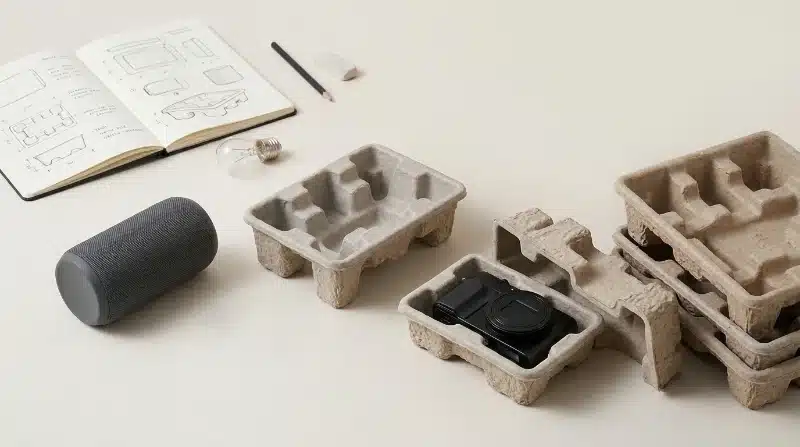
These strengths help explain why suppliers now present molded pulp for more than legacy egg-style applications. Current supplier materials show custom size and structure options for trays used with electronics and delicate products.
That said, molded pulp does not protect fragile products simply because it is molded from fiber. Its value comes from structure, fit, contact-point design, and how well it works with the outer packaging system.
Secure positioning and movement control
This is often the clearest reason to use molded pulp.
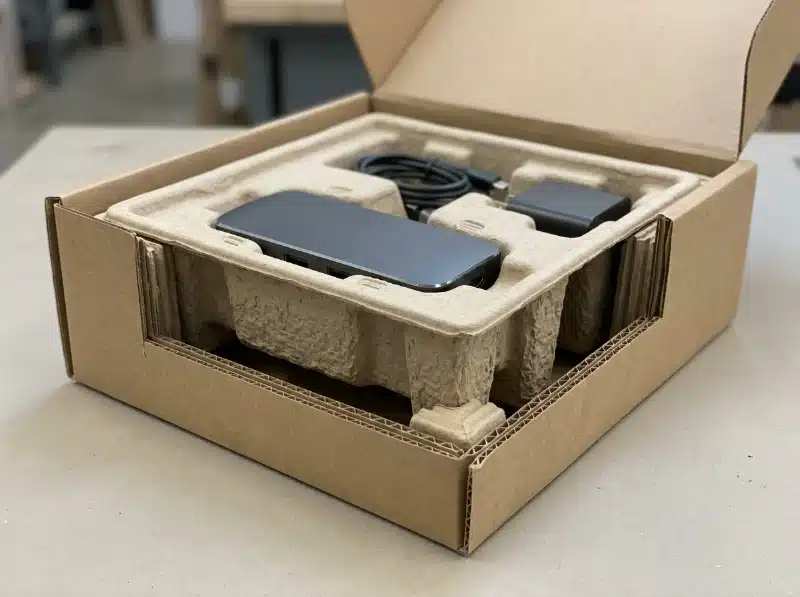
A tray designed around the product’s geometry can hold the item in a repeatable position, reduce shifting, and keep vulnerable areas away from hard carton walls or neighboring products. For many fragile products, damage is not caused by one dramatic impact alone. It is caused by repeated smaller knocks, vibration, rubbing, and uncontrolled movement.
A well-designed tray should at least do three things:
- locate the product consistently
- prevent product-to-product contact
- keep fragile zones away from likely impact paths
That is why “custom” matters more than the material name. A generic insert may look acceptable at first glance but still allow too much motion. Supplier-side information available for this topic specifically emphasizes tray designs built from product size, shape, weight, and fragility inputs.
For buyers, the key takeaway is simple: if the tray cannot control movement well enough, much of its protective value disappears.
Shock absorption through deformation
Molded pulp can provide cushioning, but it is important to describe the mechanism carefully.
Its practical protection comes from shaped support geometry plus controlled deformation. Under impact, parts of the structure can compress or crush and absorb some of the energy before it reaches the product. That can be useful in one-way shipping systems where the goal is to survive the actual distribution cycle, not to rebound perfectly after every hit.
How do molded pulp trays provide shock absorption for breakables?
They usually provide shock absorption in two linked ways.
First, they reduce movement. If the product cannot rattle, slide, or build momentum inside the pack, the tray is already lowering damage risk.
Second, the molded structure can deform under load. Instead of transferring the full impact directly into the product, the tray may compress or crush at designed contact zones and absorb part of the shock.
That does not mean every molded pulp tray has the same cushioning performance. In practice, protection depends on:
- the tray geometry
- wall thickness and structure
- where the product is supported
- product weight and center of gravity
- clearance between tray and outer carton
- whether the overall pack system prevents secondary impacts
The cautious buyer conclusion is that molded pulp can absorb some handling shocks, but results depend heavily on design. Without product-specific testing, it is safer to treat molded pulp as a potentially suitable cushioning structure for some breakables rather than assume it will match every foam-based system.
Sustainability and brand fit
For many companies, molded pulp is considered for more than protection alone.
It is also attractive because it can support plastic-reduction goals and a more fiber-based presentation. Supplier materials commonly position these trays as recyclable and plastic-free, which can align with brand, retailer, or internal procurement objectives. Current product pages also market molded pulp as a fit for modern brand packaging, including custom trays promoted as recyclable and plastic-free for delicate products.
There can also be a presentation benefit. In some categories, molded pulp supports a natural, minimal, or eco-premium look that fits the brand better than foam.
Still, sustainability value does not replace protection requirements. A tray only helps commercially if it protects the product adequately as well.
How can I ensure proper fit and protection when ordering custom molded pulp inserts?
Start by giving the supplier more than basic outer dimensions.
To improve the odds of a good fit, provide:
- accurate product dimensions
- product weight
- center of gravity, if relevant
- the product’s fragile points
- the surfaces that can and cannot contact fiber
- required orientation in the box
- accessory layout, if multiple items share one insert
- details about the shipping channel and storage conditions
This matters because a custom tray is only as good as the design inputs behind it. Trays can be designed around product size, shape, weight, and fragility, which is a useful starting framework.
Then insist on validation steps before mass approval:
- review a structural drawing or 3D concept
- check fit on the real SKU, not only a drawing
- confirm that contact points avoid weak or visible areas
- review how the tray works with the outer box
- run route-relevant transport testing before launch
If the product is tolerance-sensitive, polished, or high-value, also ask whether a smoother premium format is available. Supplier materials indicate that wet-pressed or premium dry-pressed options may be proposed for higher-value products such as cosmetics, which is relevant when appearance matters, but you still need real samples to confirm acceptable finish.
How are molded pulp trays tested for drop protection of fragile goods?
The cautious answer is that they should be tested as part of the full packaging system for the actual product and shipping route.
The current evidence set behind this article does not provide verified third-party drop-test numbers by product type, so it would be unreliable to claim a standard pass level for all molded pulp trays. What a buyer can do instead is require project-specific validation.
A sensible approval approach includes:
- fit testing with the actual product
- review of support points and clearances
- packaged drop testing in the real outer carton
- transport testing that reflects the intended channel
- inspection for both breakage and cosmetic damage after testing
If a supplier says the tray has “excellent shock absorption,” ask what that means in your exact configuration: your SKU, your box, your orientation, and your route. Generic claims are not enough for fragile goods.
Where Molded Pulp Trays Can Struggle
Molded pulp can be commercially attractive, but buyers should screen its limits early.
The main caution areas are:
- humid or wet logistics environments
- scuff or dust risk on appearance-sensitive products
- tolerance-sensitive or complex shapes
- severe distribution abuse
- applications needing repeat-impact resilience
These are not automatic disqualifiers. They are checkpoints that should influence whether you sample molded pulp at all, and whether you compare it against foam or hybrid alternatives.
Moisture and humid logistics environments
Fiber-based packaging should be reviewed carefully when the route includes prolonged humidity, condensation, or wet handling.
The practical concern is that if moisture changes stiffness or dimensional stability, product fit and protection may change too. For fragile products, even small changes in support behavior can matter.
Because the current evidence does not include strong independent test data for high-moisture transit conditions, the safest position is conservative: if moisture is part of the actual route, do not approve molded pulp based only on a dry sample review.
This matters especially for:
- export shipments with long dwell time
- humid warehouses
- cold-to-warm temperature swings that may create condensation
- wet loading areas
- products needing tight support at specific contact points
Surface finish, dust, and scuff risk
Some fragile products are not only breakable. They are appearance-sensitive.
That means the packaging can succeed structurally and still fail commercially if the insert leaves rub marks, visible fiber contact, or cosmetic dulling.
Use extra caution for:
- glossy electronics
- polished glass
- decorated cosmetic containers
- reflective finishes
- premium retail packs with visible luxury expectations
Supplier information for this topic implicitly acknowledges that finish level matters by offering smoother premium options such as wet-pressed or premium dry-pressed inserts for higher-value applications, including insert options intended for more appearance-sensitive products.
For buyers, the rule is straightforward: if appearance is a major acceptance criterion, do not judge molded pulp only by whether it prevents breakage.
Tolerance-sensitive or complex shapes
A custom tray only works if the production fit is good enough, not just the concept.
This becomes more important when the product has:
- delicate protrusions
- narrow clearances
- exposed ports or switches
- asymmetrical geometry
- several accessories in one insert
- weak areas close to likely contact points
In those projects, the real challenge is often dimensional control as much as cushioning. Sampling is not optional. A digital concept may show the intention, but it cannot replace checking how the real tray loads, holds, releases, and protects the real SKU.
Severe distribution abuse or multi-impact needs
Some shipping routes are simply harsher than others.
Where packaging must tolerate repeated drops, rough parcel handling, or unpredictable rehandling, buyers should not assume all cushioning materials behave the same way after impact. Molded pulp often protects through controlled deformation. That can be useful, but it may be less suitable in projects where repeated serious hits and rebound consistency are critical.
This caution is most relevant when:
- the product is heavy for its size
- the parcel route is harsh
- rehandling is frequent
- outer-carton clearance is limited
- one hit at a weak point could cause immediate failure
Because the available evidence does not include verified comparative drop-testing across materials, this section should be treated as a buyer checkpoint, not a universal rule that molded pulp fails severe routes. The decision still needs route-specific testing.
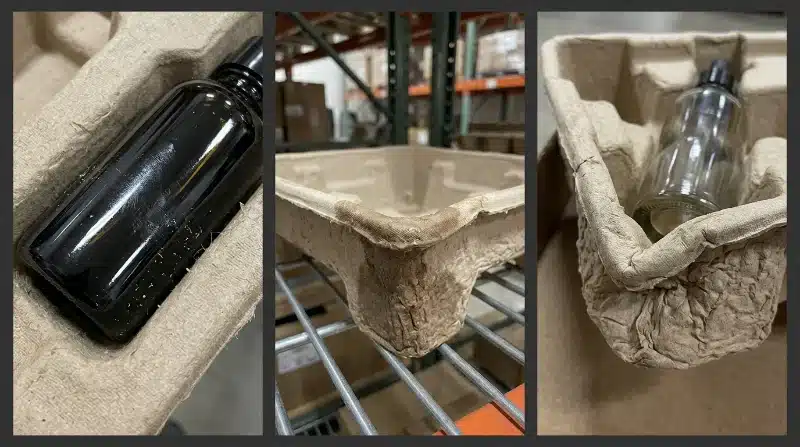
Product-by-Product Screening Guide
With that validation mindset in place, the next step is product screening.
This is where buyers save time or waste it. Molded pulp trays can be a strong candidate for many fragile items, but only if the product’s actual failure mode matches what the tray is good at doing: locating the item, reducing movement, separating hard contact, and absorbing some handling energy through its structure.
The categories below are best treated as an early-stage filter:
- likely fit
- conditional fit
- higher-risk fit
They are not absolute verdicts. The same product class can move between categories depending on weight, finish, route, and required protection margin.
Glass bottles and jars
Glass bottles and jars are often one of the more plausible starting points for molded pulp trays.
Many bottle and jar formats have repeatable geometry, defined support areas, and enough structure for a tray to separate each unit and keep it from striking the carton wall or neighboring products. If the tray supports the base and stable body zones while preventing glass-to-glass contact, molded pulp is often worth serious evaluation.
But not all glass behaves the same way. A standard condiment bottle and a thin decorative perfume bottle may both be fragile, yet the packaging problem is very different.
Better candidates
Glass formats tend to be better candidates when they have stable geometry and the tray can hold them at strong contact zones rather than at decorative or weak features.
Typical examples include:
- wine bottles
- condiment and sauce bottles
- standard cosmetic jars
- candle jars packed inside a carton or gift box
- similar containers with enough body shape for separation ribs or pockets
In these cases, molded pulp is often doing a realistic job: keeping units apart, limiting rattling, and maintaining safe clearance inside the outer pack.
Higher-risk cases
Risk rises when the glass is thin, unusually heavy, or visually sensitive.
Screen more cautiously for:
- thin perfume bottles
- very heavy glass in a compact footprint
- luxury bottles with sharp corners or protruding features
- visible premium surfaces that scuff easily
- products where slight rubbing is already a quality failure
In those cases, the tray may still hold the product securely and still fail commercially if it creates abrasion, force concentration, or visible surface marking.
Cosmetics and beauty packaging
Cosmetics are often misjudged because buyers focus only on breakage. In practice, beauty packaging usually combines several risks at once:
- glass breakage
- decoration scuffing
- coating or metallization damage
- leakage concerns
- premium presentation requirements
That makes molded pulp a category that can work well in some beauty projects and disappoint in others.
A useful screening question is whether the tray is mainly acting as a structural insert inside secondary packaging, or whether it must also help protect a highly visible luxury finish.
Supplier materials do show molded pulp being positioned for higher-value inserts, including smoother options for products such as cosmetics, but that should be treated as a design possibility rather than proof that the finish will be acceptable for every SKU. The same materials also emphasize custom design based on size, shape, weight, and fragility, which is the right starting point for cosmetic packaging as well.
More suitable formats
Cosmetic formats are usually more suitable when the tray mainly positions and cushions the item inside an outer presentation box.
Examples include:
- glass cream jars
- boxed skincare bottle sets
- gift sets with multiple items
- products already enclosed in a carton or sleeve
- packs where the insert is mostly internal rather than the main visible luxury surface
Less suitable formats
Suitability drops when direct fiber contact conflicts with high-end surface expectations.
Use more caution for:
- bare-finish luxury bottles
- metallized or decorated containers
- glossy or coated packs that mark easily
- leakage-prone products needing more than structural support
- presentation-led packs where surface consistency is part of the brand promise
Consumer electronics
Consumer electronics are one of the clearest commercial use cases for molded pulp trays.
That is not because all electronics are easy to protect. It is because many electronics benefit from the same strengths molded pulp can offer: custom geometry, organized placement, edge support, and lower-plastic presentation.
Supplier application pages explicitly market molded pulp trays for electronics packaging, including designs intended to fit exact product dimensions and provide cushioning structures for vulnerable corners and edges.
Still, electronics should not be treated as one packaging class. A modem, charging accessory, lighting component, and polished touchscreen device may all sit under the same procurement category while having very different risks.
More suitable formats
Molded pulp is often easier to justify for electronics that mainly need positioning and impact separation.
Common examples include:
- accessories and peripheral items
- routers and modems
- boxed small devices
- lighting products
- products where the insert mainly protects outer geometry or stabilizes a primary carton
Conditional formats
Some electronics are plausible candidates, but only with tighter control of finish quality and contact surfaces.
This group often includes:
- smartphones
- earbuds and charging cases
- polished consumer devices
- products with high visible-surface expectations
The challenge is not only drop risk. It is also surface quality. If the device is sold on a clean premium look, buyers need to decide whether fiber contact is acceptable or whether a smoother molded fiber format or additional wrap is needed.
Higher-risk formats
Risk increases when the device is heavy, awkwardly balanced, or vulnerable at a specific exposed feature.
Be more cautious with:
- heavier consumer appliances
- devices with fragile screens
- products with exposed ports or connectors
- products with delicate protrusions
- SKUs with strict parcel-drop requirements and little room for failure
Small appliances and electrical tools
Small appliances usually sit in the middle: not automatically unsuitable, but not low-risk by default.
A hair dryer is a good example. Supplier product pages visibly pair molded pulp with hair-dryer packaging, which shows that molded pulp is being considered commercially for this class of product. But that should be read as an application example, not as independent proof of performance.
What matters is whether the tray controls the product’s center of gravity and supports protruding features instead of letting them absorb accidental load.
Molded pulp becomes more credible when:
- the item cannot rotate freely
- handles, nozzles, cords, or accessory cavities are controlled
- the product is supported at stable load-bearing zones
- the outer box provides enough clearance for the insert to work
Ceramics, candles, and home fragrance
These categories often look like natural fits because many items are regular in shape. That helps, but it does not settle the decision.
Ceramics and home fragrance products often fail through:
- rim chipping
- lid damage
- decorative abrasion
- hard components striking each other in the box
So molded pulp can be a reasonable starting point for:
- boxed candle jars
- regular ceramic vessels with protected rims
- home-fragrance sets with clear separation between items
- products whose visible surfaces are not highly scuff-sensitive
But buyers should screen more carefully when the project includes thin ceramic rims, loose lids, handles, extended features, decorative glazes, or very tight gift-set layouts.
Medical devices and precision components
This is one of the categories where supplier application claims are least sufficient on their own.
Supplier materials may list medical devices among possible applications, but many device or precision-component programs require stricter cleanliness, dimensional repeatability, or documented validation than ordinary consumer packaging projects.
That means buyers should ask for stronger evidence before adoption, especially if the tray is intended for final shipment rather than simple internal handling.
Areas to review carefully include:
- cleanliness expectations
- fit-critical tolerance control
- whether the tray is for transit only or final packout
- compatibility with the rest of the packaging system
- any internal or regulated validation requirements
When to Choose Molded Pulp Trays — and When to Escalate to Foam or Hybrid Packaging
Once the checklist is done, the next decision is not theoretical. It is operational: is molded pulp the right starting point for this SKU, or is it wiser to move directly to foam or a mixed-material design?
The most useful conclusion for buyers is this: molded pulp trays are usually strongest when they are being asked to locate, separate, and moderately cushion a product inside a well-matched pack system. They become less comfortable when the project needs tighter cosmetic protection, more repeat-impact resilience, or more tolerance forgiveness than the tray can reliably provide.
That means the decision should be based on failure risk, not on a blanket preference for any one material.
Choose molded pulp first when
Molded pulp is often the best first option to explore when most of the following are true:
- the product has stable geometry
- the tray can hold it securely at stronger support zones
- direct fiber contact is acceptable, or limited to non-visible areas
- the product is not unusually heavy for its footprint
- the route is controlled enough that one-time deformation-based cushioning can be acceptable
- sustainability or plastic-reduction goals matter commercially
In these cases, molded pulp gives buyers a realistic chance to combine custom fit, product organization, and lower visible plastic use. Molded pulp trays are actively offered for electronics and other delicate products, with custom sizing and structure options rather than only stock shapes custom molded pulp tray applications and structure options).
A good example is a product that mainly needs immobilization and separation rather than a highly elastic cushion. Many bottles, jars, accessories, and some boxed electronics fit that pattern.
Consider hybrid packaging when
Hybrid packaging is often the most practical answer when molded pulp is close to suitable but not fully sufficient by itself.
This usually happens when the tray can handle the product structurally, but one or two risk factors still remain, such as:
- scuff risk on a visible surface
- a delicate corner or connector
- minor cleanliness concerns
- the need for extra spacing around one weak point
- a premium presentation requirement that standard pulp texture does not fully meet
In that situation, buyers do not always need to abandon molded pulp. Often they need to localize protection. That may mean adding:
- a bag or sleeve
- tissue or wrap
- a thin liner
- a corrugated reinforcement feature
- localized soft cushioning at the most vulnerable point
This is especially common for cosmetics, polished electronics, decorated glass, and gift sets where the tray still does most of the positioning work but another layer reduces surface or point-load risk.
Escalate to EPS, EPE, or another material when
Buyers should move more quickly toward foam or another cushioning material when the project needs a larger protection margin than molded pulp is likely to offer comfortably.
Warning signs include:
- very heavy products
- highly polished or easily marked surfaces
- fragile screens or exposed functional parts
- strict tolerance sensitivity
- humid storage or long moisture-exposed transit
- harsh parcel handling with little room for failure
- repeated serious impacts where rebound behavior matters
This is not a claim that molded pulp cannot work in any of those situations. It is a practical purchasing rule: the more extreme the consequences of a miss, the less sensible it is to force a fiber tray into a job that may need a different cushioning behavior.
Comparing costs of molded pulp vs. foam inserts for fragile product protection.
For fragile product protection, molded pulp is not automatically cheaper than foam, and foam is not automatically more expensive once the full packaging system is counted.
The reliable answer is that cost comparison depends on at least five variables:
- tooling cost and revision risk
- unit volume
- required surface quality
- shipping and storage efficiency
- damage risk and validation burden
A molded pulp project may look attractive when buyers value custom fit, plastic reduction, and nested tray logistics. A foam option may still make more financial sense when the product needs higher cushioning margin, tighter tolerance forgiveness, or less risk of cosmetic marking.
What cannot be confirmed from the current evidence base is a universal per-unit cost advantage by product type. Some search-summary material claims molded pulp can be cost-effective versus plastic or foam, but those sources were not fully retrieved or independently validated, so they are not strong enough to support a numeric cost rule here.
A more cautious buying method is to compare total project cost under the same assumptions:
- tooling and sampling rounds
- insert unit cost at your real volume
- packout speed
- storage and freight density
- need for added wraps or liners
- expected damage risk
- time and cost of design changes after testing
If molded pulp needs extra wraps, repeated revisions, or hybrid components to reach acceptable performance, a lower initial quote may not remain the lower total cost. If foam solves the problem faster but creates sustainability or retail-image tradeoffs, that should also be counted as part of the commercial decision rather than ignored.
For buyers, the most useful rule is simple: compare systems, not piece prices.