Pulp molding uses plant fibers like wood, bamboo, or bagasse to create 100% recyclable, eco-friendly products for food, electronics, and medical packaging. Driven by global plastic restrictions and rising environmental awareness, this “green alternative” has gained massive popularity. Today, thanks to advanced intelligent equipment, pulp molding has evolved from basic cushioning into a sophisticated manufacturing industry capable of meeting diverse, high-end application needs.
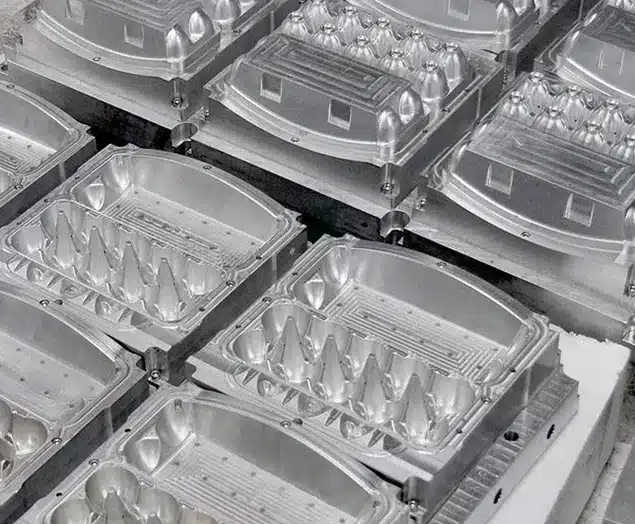
In wet-press pulp molding, “mold cleaning” is a critical step. It directly affects production speed, product quality, and total costs. Data shows that small to medium-sized factories spend about 30% of their downtime cleaning molds. Cleaning too often doesn’t just stop production—it also wears down the molds, shortening their lifespan and raising costs.
While many blame pulp formulas or pressure for frequent cleaning, they often miss the real cause: Surface Smoothness and Drilling Smoothness. If these are not up to standard, even the best pulp won’t stop fibers and glue from sticking.
1. The Core Concept: Sticking vs. Cleaning
Pulp molding relies on vacuum suction and high pressure. If a mold surface is rough or the drainage holes have burrs (sharp metal edges), fibers and starch glue will quickly get stuck. This blocks the holes, drops the vacuum pressure, and ruins the product.
- Good Smoothness: Fibers slide off easily. The mold stays clean longer.
- Poor Smoothness: Fibers and glue “hook” onto the metal. You have to stop the machine to wash it.
Key Fact: Proper smoothness can make your cleaning cycle 2 to 4 times longer.
2. Surface Smoothness: The 3 Levels of Performance
Surface smoothness is measured as Ra (Roughness Average). The lower the Ra number, the smoother the surface.
Level 1: Ra > 1.6um (Rough Surface)
Cleaning Cycle: Every 4-6 hours. Common in lower-quality molds. The surface has visible tool marks. Fibers and starch glue get trapped in these tiny grooves. You might need to clean the mold 2-3 times per shift using scrapers or wire brushes, which damages the mold.
Level 2: Ra 0.8-1.6um (Standard Fine Surface)
Cleaning Cycle: Every 8-16 hours. This is the “standard” for professional wet pressing. The surface feels smooth to the touch. With a basic diamond polish and hard anodizing (for aluminum), you only need to clean once per shift. This reduces downtime by over 60%.
Level 3: Ra <= 0.8um (Mirror Surface)
Cleaning Cycle: 16-48 hours. This is the high-end standard. The surface is so smooth it acts like a “non-stick pan.”
For luxury sustainable cosmetics packaging and electronics packaging, this level of smoothness can allow the mold to run for two full days without a deep clean.

Sustainable Cosmetics Packaging
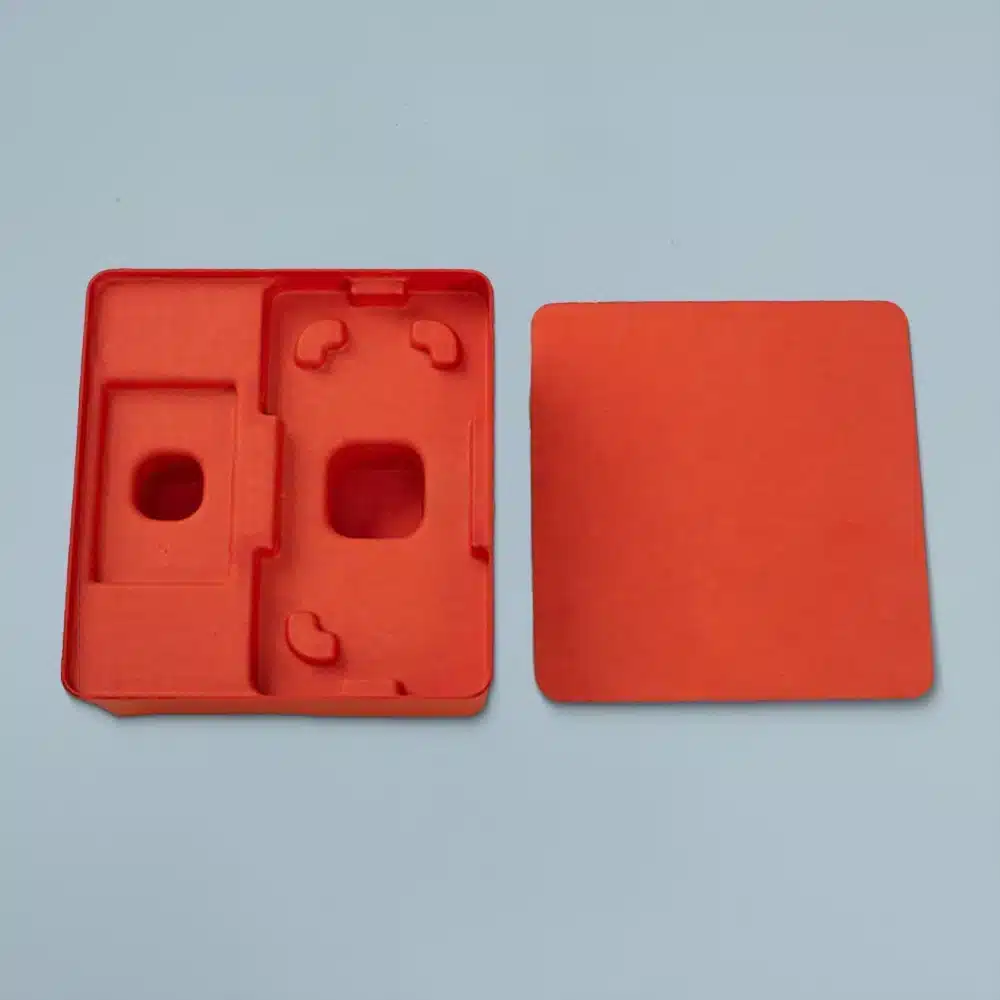
Sustainable Electronics Packaging
3. Drilling Smoothness: The “Death Point” for Molds
While the surface matters, 80% of cleaning issues come from blocked drainage holes. If the holes are rough inside, they act like a filter that catches fibers until the hole is completely plugged.
- Inside the Hole: If the inner wall is rough (Ra > 1.6um), fibers snag on the microscopic “stairs” inside.
- The “Drill and Ream” Method: Never just drill a hole. You must use a reamer to make the inner walls straight and slick.
- The Edge (Countersinking): Sharp edges at the hole’s opening act like tiny knives that catch passing fibers. Adding a small 0.2mm to 0.5mm chamfer allows fibers to pass through smoothly.
4. Step-by-Step Optimization Solutions
Plan A: For Small/Medium Factories (Cost-Effective)
Surface Ra 1.6um + Drill then ream + 0.3mm chamfer. Result: 8-12 hour cleaning cycle.
Plan B: For High-End Production (High Efficiency)
Surface Ra 0.8um + Electrochemical polishing for inner walls. Result: 16-24 hour cleaning cycle.
Conclusion
Optimizing your mold’s smoothness isn’t an “extra cost”—it is a smart investment. By moving from a rough surface to a polished Ra 0.8um finish and ensuring your holes are reamed and chamfered, you can double or triple your production time. In today’s market, the winner isn’t the one with the cheapest molds, but the one who can keep their machines running the longest without stopping to clean.