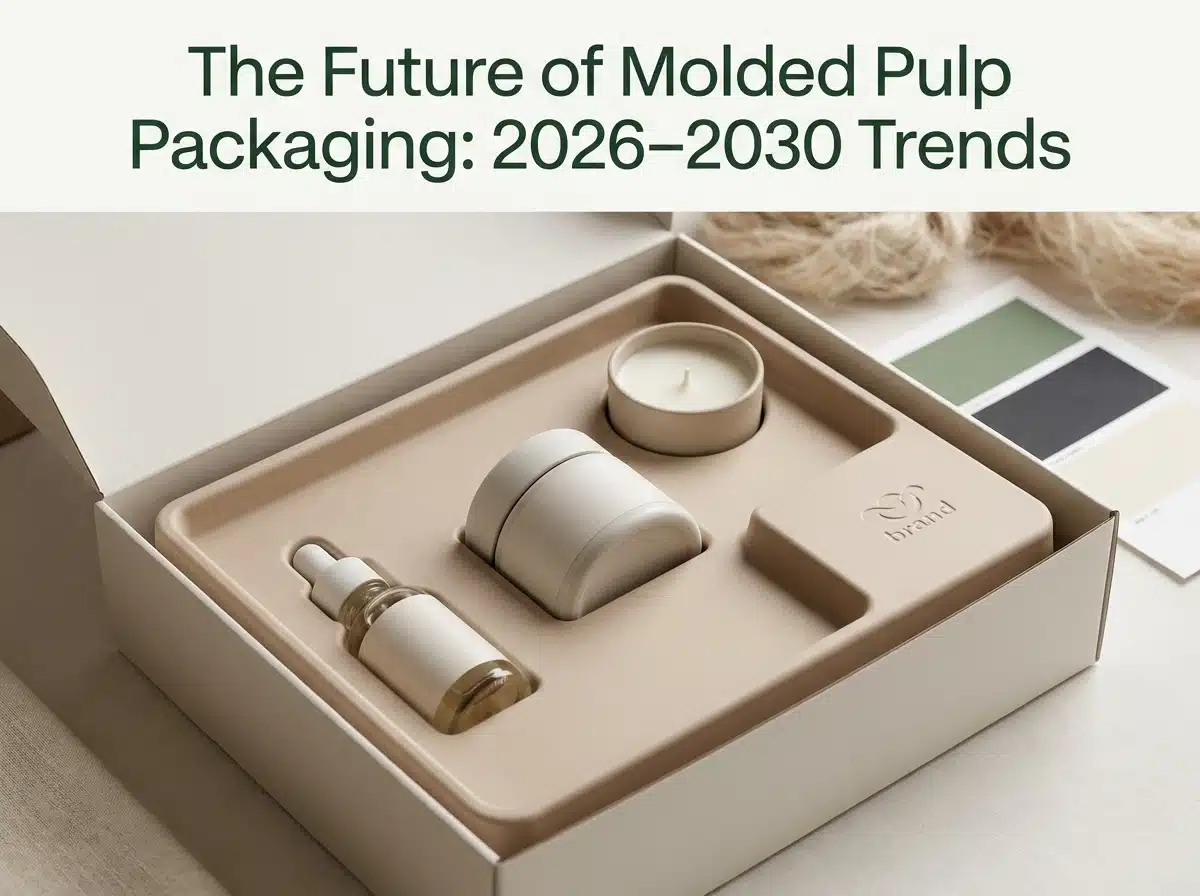
Molded pulp packaging is changing roles. It used to be treated mainly as a protective insert: useful, paper-based, and often hidden inside the box. Between 2026 and 2030, that view is becoming too narrow. For many brands, molded pulp packaging is moving closer to the brand experience itself.
From Protective Insert to Brand Detail
The old version of molded pulp was easy to understand. It held the product. It reduced movement. It replaced some foam or plastic in basic packaging. If it worked, most customers did not think about it.
That is no longer the whole story.
As brands reduce plastic, review mixed materials, and prepare for stricter packaging rules, the inside of the box is getting more attention. The insert is no longer just a hidden support. It affects how the product looks when the lid opens. It affects how customers read the brand’s sustainability claim. It affects whether the package feels carefully designed or simply assembled from standard parts.
The change is subtle but important: molded pulp is becoming part of the presentation. It still has to protect the product, but it also has to look intentional.
At GVPAK, we see this shift most clearly in beauty, fragrance, wellness, electronics accessories, candles, and gift set projects. The outer box still creates the first impression. The molded fiber insert now has to carry the second impression.
Trend 1: Cleaner Molded Fiber Surfaces
The first trend is simple: molded pulp is getting cleaner.
Brands that once rejected pulp because it looked too rough are now asking for smoother surfaces, sharper edges, better trimming, and more controlled color. That does not mean every insert has to look polished. Some brands still want a visible natural fiber texture. But the roughness has to feel deliberate, not accidental.
This matters for premium packaging because the insert is often the first thing the customer sees after opening the box. A clean molded fiber tray can make the product feel organized and calm. A poorly finished one can make even a strong outer box feel unfinished.
| Old expectation |
The insert only needs to hold the product. |
| New expectation |
The insert should protect the product and support the visual standard of the brand. |
| What to test |
Surface texture, edge finish, trimming accuracy, dust, rubbing, and product contact marks. |
Trend 2: Color Becomes Part of the Packaging System
Natural grey and kraft tones still have a place. They work well when the brand wants the insert to look raw, simple, and obviously fiber-based.
But many brands are now asking for more control. Black molded pulp for fragrance. White or cream inserts for skincare. Muted green, beige, or warm neutral tones for wellness and natural products. Color can help molded pulp move from “eco insert” to “designed interior.”
The risk is consistency. Molded fiber color needs to be reviewed carefully because raw material, drying, pressing, and batch control can affect the final look. A color that looks beautiful in one sample should still be checked before mass production.
Common molded pulp color directions for premium packaging
|
Natural beige
Good for skincare, wellness, candles, and natural product lines. |
|
Black molded fiber
Useful for fragrance, electronics accessories, and premium gift sets, but dust and rubbing need testing. |
|
White or cream
Clean and premium, especially for beauty packaging, but stains and marks can be more visible. |
|
Muted green
Works when the brand wants an eco signal without using loud sustainability graphics. |
Trend 3: Embossed Logos and Molded Brand Marks
Printing is not always the best way to brand an insert. More brands are using molded logos, recessed marks, embossed icons, and quiet structural details instead.
This can work especially well when the outer box is already carrying the main visual identity. A subtle brand mark inside the molded pulp tray can make the package feel complete without adding ink, label material, or another decorative layer.
The detail has to be realistic. Very fine lines may not mold cleanly. Tiny lettering may lose definition. A simple logo, icon, or shape usually works better than a complicated graphic.
| Branding method |
Best use |
Watch-out |
| Molded logo |
Premium inserts where the brand mark should feel built into the structure. |
Avoid fine text or complex marks. |
| Embossed icon |
Sustainability symbols, refill cues, product placement guides, or brand motifs. |
Depth should be tested so it looks intentional but does not weaken the tray. |
| Printed detail |
Short instructions or visible brand communication. |
Ink choice and surface texture affect clarity. |
Trend 4: Molded Pulp Moves Into Luxury and Premium Categories
The biggest change is not technical. It is perception.
A few years ago, many premium brands saw molded pulp as too basic. Now the conversation is different. The question is no longer whether molded pulp can appear inside premium packaging. The question is whether it can be designed well enough for the product category.
For fragrance, the challenge is bottle stability and surface finish. For skincare, it is fit, cleanliness, and product contact. For candles, it is weight and edge support. For electronics accessories, it is tolerance and scratch resistance. Each category has a different reason to test carefully.
Premium category fit: GVPAK practical view
| Beauty & skincare |
|
High |
| Fragrance |
|
Good |
| Candles |
|
High |
| Electronics accessories |
|
Mixed |
Trend 5: Regulation Pushes Brands Toward Simpler Material Logic
Between 2026 and 2030, molded pulp will be shaped not only by design preference but also by regulation and retailer expectations.
The EU PPWR direction, EPR policies, and buyer-level packaging reviews all point toward the same practical question: can the brand explain its packaging structure clearly?
A paper box with a plastic tray can still be justified in some cases. Moisture resistance, precision, product safety, or automated packing may require it. But when plastic is used only by habit, it becomes harder to defend. Molded pulp gives brands another route, especially when the product is dry and the insert can be designed to perform well.
2026–2030 design direction map
| 2026 |
Brands start reviewing plastic trays and foam inserts more seriously. |
| 2027 |
Molded pulp appears more often in premium beauty, fragrance, and wellness packaging samples. |
| 2028 |
Brands compare insert materials earlier, before outer box dimensions are locked. |
| 2029 |
Buyer and importer questions become more specific: material, separation, claims, and test results. |
| 2030 |
Fiber-based inserts become a stronger default option for brands that want lower-plastic, easier-to-explain packaging. |
Trend 6: The Insert and Outer Box Are Designed Together
This may become the most important design habit.
A molded pulp insert should not be treated as a part that is added after the box is finished. If the insert is designed too late, the package can feel forced: too much empty space, poor product removal, weak edge support, or a tray that does not match the visual tone of the box.
When the outer box and molded insert are designed together, the package feels more complete. The product sits better. The opening moment is cleaner. The brand message is easier to read. The material story also becomes less complicated.
| Late insert decision |
The box is fixed first. The insert has to fit whatever space is left. |
| Early system design |
The product, outer box, insert, opening method, and packing process are considered together. |
| Best result |
The insert protects the product, supports the brand feel, and does not look like a compromise. |
What Brands Should Test Before Scaling Molded Pulp
The trend is strong, but molded pulp still has to earn its place in each project. A good sample is not enough. The insert should be tested with the real product, the real box, and the expected shipping route.
GVPAK molded pulp testing checklist
01 Product fit: does the item sit securely without being hard to remove?
02 Surface contact: does the fiber rub, mark, or scratch the product?
03 Drop and compression: does the insert protect the product during shipping?
04 Dust and finish: does the surface match the brand standard after handling?
05 Assembly speed: can the packing team use the insert efficiently?
06 Claim accuracy: can the brand explain the material without vague eco language?
Final Thought: The Future of Molded Pulp Is More Precise
Molded pulp packaging is not becoming premium because brands simply changed the name. It is becoming premium because the design, tooling, surface, color, and product fit are becoming more precise.
From 2026 to 2030, the best molded pulp packaging will do more than replace plastic. It will help brands create a cleaner material story, a better unboxing moment, and a packaging system that feels easier to defend.
The brands that treat molded pulp as a cheap replacement may be disappointed. The brands that treat it as part of the packaging design system will get much better results.
For brands developing custom molded pulp packaging, GVPAK can help compare molded fiber inserts, paperboard structures, hybrid packaging, and premium finishing options before the product reaches production.