Sustainable Packaging Inserts · GVPAK Insight
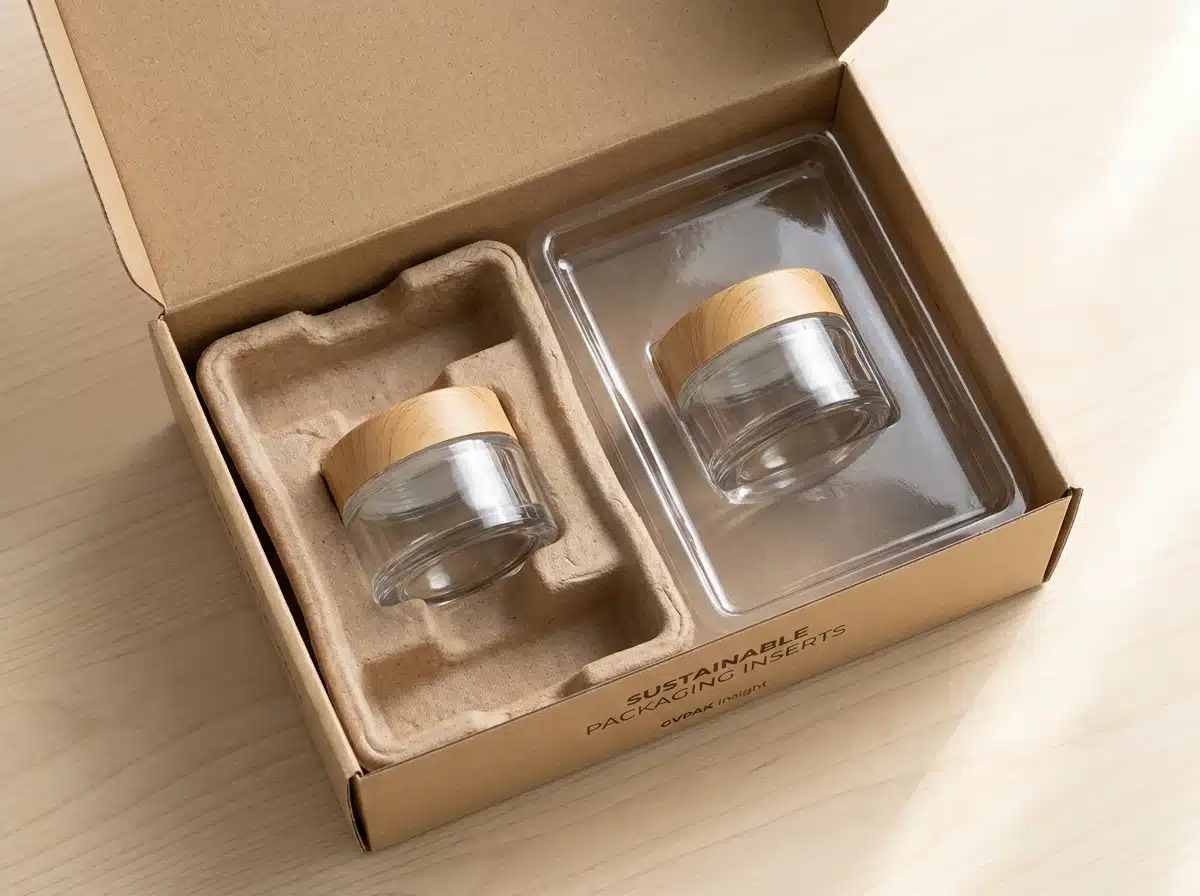
For many brands, the sustainability conversation starts with the outer box. But the insert often tells the real story. A product may arrive in a beautiful paper box, only for the customer to open it and find a glossy plastic tray inside. That small mismatch is becoming harder to ignore.
Why the Insert Choice Matters Now
A tray is easy to overlook. It sits inside the box. It does not usually carry the logo. It may not appear in the first product photo. For years, many brands treated it as a purely functional part of the package.
That is changing.
Customers are paying more attention to what happens after the lid opens. Retailers are asking more questions about material choices. Importers and compliance teams are becoming less patient with mixed-material packaging that is difficult to explain. A paper box with a plastic tray is not automatically wrong, but it is no longer a detail brands can ignore.
The insert has become part of the brand message. If the outer package says “sustainable” but the inside depends on unnecessary plastic, customers notice the gap.
At GVPAK, this conversation usually starts with a practical question: does the product really need plastic, or can a paper-based structure do the job well enough? The answer depends on the product, the shipping route, the finish standard, and the brand’s sustainability goals.
The Quick Answer: Paper Insert or Plastic Tray?
There is no universal winner. A paper insert is not automatically better. A plastic tray is not automatically bad. The better choice is the one that protects the product, fits the brand position, works in production, and makes sense after the customer opens the box.
Still, the direction is clear. For brands trying to reduce plastic, improve recyclability, and create a more consistent sustainability story, paper-based inserts are becoming more attractive. That includes folded paperboard, corrugated inserts, molded fiber inserts, and molded pulp packaging.
GVPAK editorial score: 1 = weak fit · 5 = strong fit for sustainable brand packaging
Brand sustainability story Paper inserts: 4.7 / 5
Premium unboxing fit Paper inserts: 4.4 / 5
Moisture and oil resistance Plastic trays: 4.5 / 5
Complex product cavity precision Plastic trays: 4.3 / 5
Lower-plastic packaging direction Paper inserts: 4.8 / 5
Paper Inserts vs Plastic Trays: Side-by-Side Comparison
The right comparison is not “paper good, plastic bad.” That is too simple. A better comparison looks at how each structure behaves in real packaging work.
| Decision Area |
Paper Inserts |
Plastic Trays |
| Sustainability story |
Usually easier to align with paper boxes, plastic reduction goals, and recyclable packaging claims. |
May create a visual mismatch when used inside paper-based sustainable packaging. |
| Product protection |
Works well for many cosmetics, candles, gifts, electronics accessories, wellness products, and lightweight items. |
Often strong for wet, oily, sharp, heavy, or highly precise product shapes. |
| Premium appearance |
Can feel warm, natural, soft, refined, or minimalist when the surface and color are controlled. |
Can look clean and precise, but may feel less premium if the plastic appears thin or glossy. |
| Material separation |
Often simpler when paired with paper boxes, especially if coatings and mixed materials are controlled. |
May require customers or recyclers to separate plastic from paper packaging. |
| Tooling and fit |
Molded pulp and molded fiber need careful tooling; folded paper inserts can be more flexible for early development. |
Thermoformed trays can achieve very precise shapes, but tooling decisions should be made after product dimensions are stable. |
| Brand perception |
Often reads as more responsible, especially for natural, clean beauty, wellness, fragrance, and eco-positioned products. |
Can still be acceptable when the product requires it, but the reason should be clear. |
In many projects, the choice is not purely technical. It is also emotional. A customer may not know the full material specification, but they understand the feeling of opening a paper box and seeing a plastic tray. Sometimes that feeling works. Sometimes it weakens the entire sustainability message.
Where Molded Pulp Packaging Fits
Molded pulp sits between a simple folded paper insert and a rigid plastic tray. That is why it has become so useful.
It can be shaped around the product, which gives it better presentation and protection than a flat paperboard divider. At the same time, it is paper-based, which makes it easier to align with sustainable packaging goals than many plastic trays.
This is especially relevant for luxury and premium products. A molded pulp insert can hold a perfume bottle, skincare jar, candle, accessory, electronics item, or gift set component in a way that looks organized rather than improvised.
The key is not simply replacing plastic with pulp. The insert has to be redesigned. Product contact points, wall thickness, surface texture, color, and removal experience all need to be considered again.
For GVPAK projects, molded pulp is often most effective when the brand wants three things at once: better product holding, less plastic, and a more consistent eco packaging story. It is not the answer for every product, but it is a serious option for many brands that previously defaulted to plastic.
Common paper-based insert options
▦
Folded paperboard
Good for simple partitions, light products, and lower tooling complexity.
◒
Molded pulp
Good for shaped cavities, plastic reduction, and premium paper-based inserts.
▤
Corrugated insert
Good for heavier products, shipping strength, and protective separation.
◇
Hybrid paper structure
Good when presentation, support, and cost control need to be balanced.
When Plastic Trays May Still Make Sense
It would be dishonest to say plastic trays never make sense. Sometimes they do.
If the product is wet, oily, very sharp, unusually heavy, or needs extremely tight tolerance, plastic may still perform better. If the product has a surface that can be scuffed by fiber contact, a paper-based insert may need coating, lining, or another protective solution. If the packing line is highly automated, a plastic tray may also fit existing equipment more easily.
The problem is not plastic itself. The problem is using plastic by default when a paper-based insert would work. That is where brands lose both sustainability value and design discipline.
For a sustainable brand, the question should be simple: if plastic is used, can the brand explain why? If the answer is yes, the choice may be defensible. If the answer is no, the insert should be reviewed.
What Regulations and Retail Buyers Are Changing
Packaging regulation is moving in a direction that favors clearer material logic. Europe’s PPWR is pushing packaging toward recyclability, waste reduction, and more circular design. In the United States, producer responsibility policies such as California SB 54 are also making packaging decisions less isolated from end-of-life responsibility.
For brands, this means the insert is no longer just an internal cost item. It may become part of the buyer conversation, the importer conversation, and the sustainability conversation.
A brand does not need to panic. It does need to start asking better questions earlier. What is the insert made from? Can it be separated easily? Is the tray necessary? Can molded pulp or folded paperboard provide enough protection? Are the sustainability claims specific enough?
The brands that prepare early will have more room to test materials calmly. The brands that wait may end up changing packaging under retailer pressure, which is usually more expensive.
Which Products Are Best Suited for Paper Inserts?
Paper inserts and molded pulp inserts work especially well when the product needs a clean presentation but does not require a moisture-proof plastic cavity.
| Product Category |
Paper Insert Fit |
Notes |
| Skincare jars and bottles |
High |
Molded pulp can hold round containers well, but surface scuffing should be tested. |
| Fragrance packaging |
Medium to high |
Good fit for premium presentation; glass bottle stability must be tested carefully. |
| Candles |
High |
Paper-based inserts can support both protection and natural brand positioning. |
| Electronics accessories |
Medium |
Works for many accessories; tight tolerances and anti-scratch needs should be reviewed. |
| Wet or oily products |
Low to medium |
Plastic or coated structures may still be required depending on leakage and product contact. |
Decision Checklist for Brands
Before choosing between paper inserts and plastic trays, brands should slow down and answer a few practical questions.
- What is the insert actually doing? Protection, presentation, separation, shock absorption, product positioning, or all of these?
- Does the product require moisture or oil resistance? If yes, paper-based options may need treatment or may not be suitable.
- Will the customer see the insert? If yes, the material should support the brand message.
- Can the insert be separated easily? Avoid creating a recycling problem inside a sustainable-looking box.
- Is the product shape final? Molded pulp and plastic tray tooling both work best when dimensions are stable.
- Has the insert been tested with the real product? Do not judge fit from drawings alone.
- Can the sustainability claim be explained clearly? “Eco-friendly” is vague. Material facts are stronger.
Final Thought: The Better Insert Is the One You Can Defend
Paper inserts and plastic trays both have a place in packaging. The mistake is choosing either one without asking what the product, brand, customer, and market actually need.
For many sustainable brands, paper-based inserts are becoming the stronger direction. They can reduce visible plastic, support a cleaner packaging story, and create a more consistent unboxing experience. Molded pulp, in particular, gives brands a way to combine shape, protection, and lower-plastic packaging in one structure.
Plastic trays still make sense in some cases. But when they are used, the reason should be clear. Better moisture protection. Higher precision. Product safety. Production needs. Not habit.
For brands reviewing custom sustainable packaging inserts, GVPAK can help compare paperboard, molded pulp, molded fiber, and plastic tray options so the final structure protects the product and supports the brand story.