Sustainable Luxury Packaging · GVPAK Insight
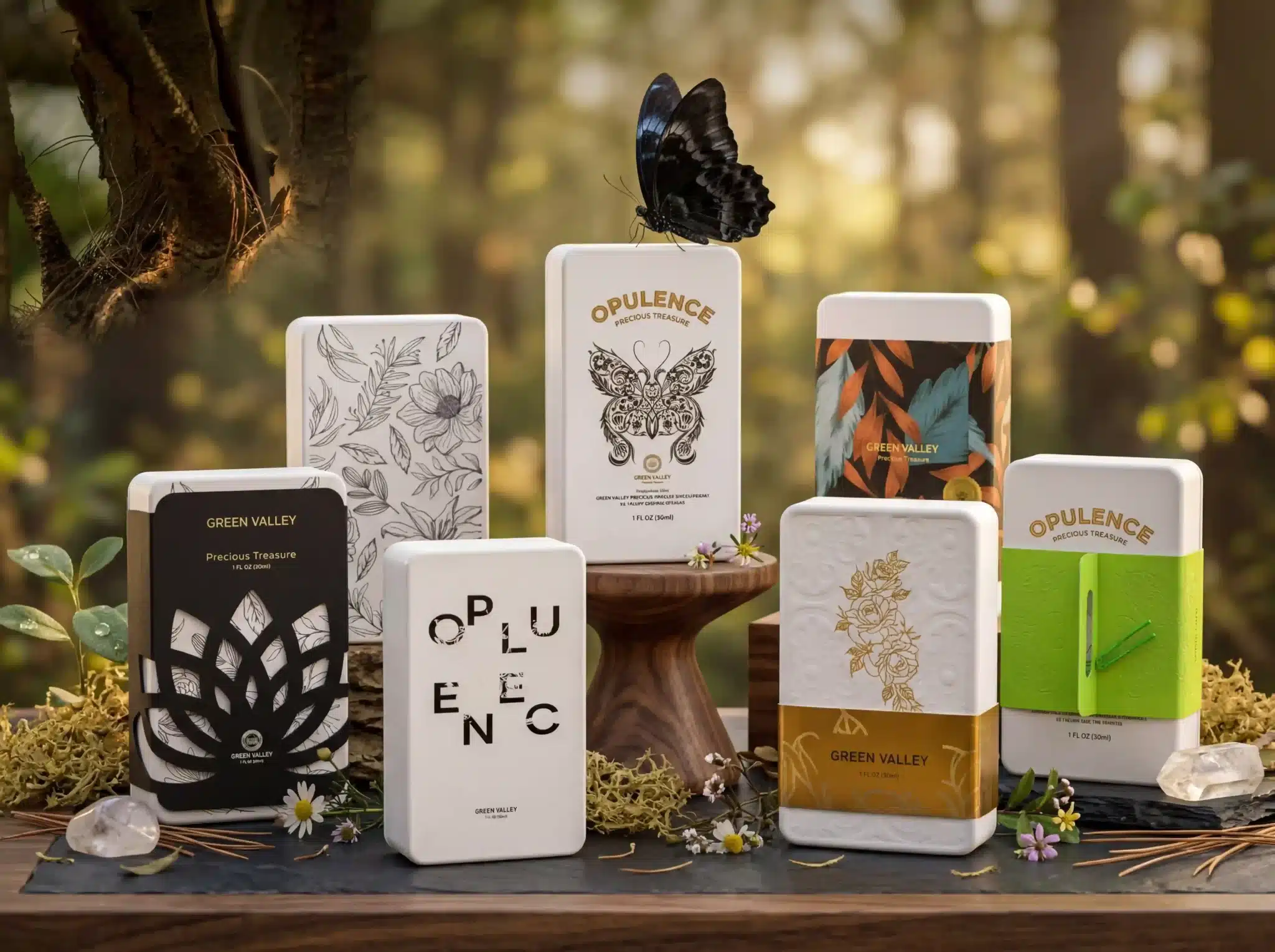
Molded pulp packaging used to be easy to recognize. Egg trays. Drink carriers. Industrial inserts. Useful, but not exactly luxurious. That has changed. Today, molded pulp packaging can be shaped, colored, embossed, and designed to sit inside premium packaging without making the product feel less refined.
What Is Molded Pulp Packaging?
Molded pulp packaging is a formed fiber packaging material. It is usually made from paper pulp, recycled paper, cardboard fiber, bagasse, bamboo fiber, or other plant-based fiber sources. The pulp is shaped in a mold, dried, trimmed, and finished into a protective structure.
The simplest version is familiar: egg cartons and takeaway cup holders. But the same basic idea can be developed into much more precise packaging components, including trays, inserts, cushions, bottle holders, cosmetic holders, gift box liners, and inner support structures for premium products.
For luxury brands, the important point is not only that molded pulp is paper-based. The important point is that it can be shaped around the product. A good molded pulp insert does not simply fill space. It holds the product, controls movement, improves presentation, and can reduce the need for plastic trays or foam.
The old assumption was that molded pulp belonged to low-cost protective packaging. That is no longer true. With better tooling, cleaner surfaces, tighter product fit, and more intentional color choices, molded pulp can work naturally inside a luxury packaging system.
At GVPAK, we usually look at molded pulp as part of the full packaging experience. The outer box creates the first impression. The molded pulp insert controls what happens after the box is opened.
How Molded Pulp Packaging Is Made
The process sounds simple. The final quality is not.
First, fiber is prepared into a pulp mixture. Then the pulp is formed on a mold, where the packaging shape is created. After forming, the wet piece is dried, pressed or refined depending on the quality level, trimmed to size, and checked for fit and surface appearance.
For basic protective packaging, the surface can stay rough. For premium packaging, that is rarely enough. Luxury brands usually need better edge control, cleaner texture, accurate cavities, stable color, and a more controlled finish.
Typical molded pulp packaging process
01
Fiber Preparation
Paper or plant fiber is mixed into pulp.
02
Mold Forming
The pulp is shaped around a custom mold.
03
Drying & Pressing
The formed piece is dried and refined for stability.
04
Trimming & QC
Edges, cavities, fit, and appearance are checked.
The mold is where much of the work begins. If the mold is not designed well, the insert may look uneven, grip the product too tightly, or leave too much movement inside the box. A few millimeters can change the unboxing experience.
For luxury products, the molded pulp part should be developed together with the outer packaging. If the insert is designed after the box is already fixed, the result often feels forced. If both are planned together, the final package feels cleaner and more intentional.
Why Luxury Brands Are Paying Attention
Luxury brands are interested in molded pulp for a practical reason: many traditional inserts are becoming harder to justify.
Foam can feel cheap or difficult to recycle. Plastic trays can weaken a paper-based sustainability story. Oversized paperboard inserts can use more material than necessary. A poorly fitted inner structure can make even an expensive rigid box feel unfinished.
Molded pulp packaging gives brands another option. It can hold the product securely, reduce movement, replace some plastic or foam inserts, and still support a premium presentation when the surface, color, and fit are chosen carefully.
This matters especially for cosmetics, fragrance, skincare, jewelry, electronics accessories, candles, wellness products, and gift sets. These products often need both protection and presentation. The insert cannot look like an afterthought.
| Packaging Need |
How Molded Pulp Helps |
What to Watch |
| Product protection |
Custom cavities can reduce movement and support fragile products. |
Test product fit, drop performance, and compression before mass production. |
| Premium presentation |
A shaped insert can make the product look organized and intentional. |
Surface texture and color must match the brand position. |
| Plastic reduction |
It can replace certain plastic trays, foam pads, or mixed-material holders. |
Not every product can use pulp without coating or extra protection. |
| Brand story |
Paper-based inserts can support a cleaner sustainability message. |
Claims should stay specific. Paper-based, recyclable, compostable, and recycled content are not the same thing. |
Design Options for Premium Packaging
Molded pulp is not one look. It can be rough, smooth, natural, colored, pressed, embossed, minimal, or highly shaped. The right version depends on the product and the brand.
For a natural skincare brand, a warm fiber texture may work well. For a fragrance set, a cleaner black or white molded insert may feel more premium. For a tech accessory, sharp product fit and a controlled surface may matter more than a visible recycled look.
Some brands want the molded pulp to be visible as part of the sustainability story. Others want it to sit quietly inside the box and let the outer packaging carry the luxury expression. Both approaches can work.
The mistake is treating molded pulp as a simple replacement part. A plastic tray and a molded fiber tray do not behave the same way. The structure, thickness, tolerance, surface, and product contact points all need to be designed again.
For GVPAK projects, we usually pay attention to four details: product fit, opening experience, visible texture, and how the insert works with the outer package. If those four details are handled well, molded pulp can feel like part of the design rather than a compromise.
When Molded Pulp May Not Be the Right Choice
Molded pulp is useful, but it is not magic.
It may not be the best choice for products that are very oily, wet, sharp, heavy, or sensitive to fiber dust unless the insert is specially treated or combined with another protective solution. It may also need careful testing for dark-colored products, delicate surfaces, glass bottles, and products with very tight cosmetic requirements.
Some brands also underestimate tooling. A custom molded pulp insert needs a mold. That means the product size, shape, and placement should be reasonably stable before moving forward. If the product is still changing, it may be better to wait before finalizing the molded pulp structure.
The best decision is not always “use molded pulp.” The best decision is to choose the inner packaging that protects the product, supports the brand, works in production, and makes sense for the target market.
A Practical Checklist Before Using Molded Pulp Packaging
Before choosing molded pulp for a luxury packaging project, it is worth checking a few things early.
- Is the product size final? Molded pulp needs a stable product shape and clear dimensions.
- What should the insert do? Protection, presentation, plastic reduction, sustainability story, or all of these?
- Does the surface match the brand? Rough natural pulp, smooth pressed pulp, black pulp, white pulp, and colored pulp create very different impressions.
- Will the product touch the pulp directly? Check scuffing, dust, moisture, oil, and surface sensitivity.
- Does it fit the outer package? The insert should be designed with the box, not after it.
- Has it been tested? Review drop performance, compression, product movement, opening feel, and packing efficiency.
- Are the claims accurate? Do not use vague sustainability language if the material details do not support it.
Final Thought: Molded Pulp Is Becoming More Premium Because It Is Becoming More Precise
Molded pulp packaging is not just the old egg-tray material with a new name.
For luxury brands, its value comes from precision. The ability to hold a product cleanly. The ability to replace unnecessary plastic in some cases. The ability to make the inside of the package look organized, calm, and more responsible without losing the premium feeling.
It still has limits. It still needs testing. It still needs good tooling and careful design. But when it is used in the right place, molded pulp can make a luxury packaging system feel more modern, not less luxurious.
For brands developing custom molded pulp packaging for luxury brands, GVPAK can help design the outer box, molded insert, material finish, and production details as one complete packaging system.