PPWR 2026: What Luxury Packaging Brands Should Change Now
September 30, 2026 · Marcus
The old sustainability question was, “Is this packaging eco-friendly?”
PPWR pushes brands toward a harder one: Can you prove what this packaging is made of, why each component is there, and what happens to it after use?
The EU Packaging and Packaging Waste Regulation, or PPWR
(Regulation (EU) 2025/40), began applying across the European Union on 12 August 2026. That date matters, but it can also create the wrong impression.
PPWR is not a single switch that turned every future requirement on overnight.
Some obligations are already highly practical now, while other major rules,
especially the detailed Design-for-Recycling criteria that will shape future
recyclability grades, are still being developed through delegated and implementing acts.
For packaging teams, that creates a useful middle ground.
Waiting until every technical detail is final is risky.
Pretending every future rule is already fixed is equally risky.
The better approach in 2026 is to make packaging easier to document, easier to simplify, and easier to adapt.
IMAGE PLACEHOLDER — replace 假链接
A luxury paper box is often a multi-material system, not just “paper packaging.”
PPWR Is Already Here — But the Important Word Is “Phased”
The European Commission confirmed that PPWR applies across the EU from
12 August 2026. The regulation is designed to reduce packaging waste,
improve circularity, harmonise rules across the Single Market and make more packaging recyclable.
One immediate example is the restriction on PFAS in food-contact packaging.
From 12 August 2026, food-contact packaging containing PFAS above the limits set by PPWR
can no longer be placed on the EU market.
At the same time, some of the most consequential requirements for packaging design
will mature later. The regulation points toward 2030 as a major turning point for
recyclability, recycled content and packaging minimisation, but several technical methods
still depend on secondary legislation.
This distinction matters because brands need to separate two questions:
What must we control now?
What should we design for now, even though the final technical method is still being completed?
That is a much more useful way to work with PPWR than treating it as either
“already fully final” or “something to worry about in 2030.”
PPWR Roadmap
Key regulatory milestones
Dates shown are regulatory milestones, not a single all-at-once deadline.
11 Feb 2025
Enters into force
Regulation (EU) 2025/40 becomes EU law.
12 Aug 2026
General application
PPWR starts applying across the EU.
2030
Recyclability checkpoint
Subject to Article 6 timing conditions, Grade C becomes the minimum threshold direction.
2038
Higher threshold
Direction tightens toward Grade A or B, subject to the applicable provisions and exceptions.
The Biggest Shift: From Sustainability Claims to Sustainability Proof
For years, packaging conversations have relied heavily on broad language:
“eco-friendly,” “green,” “sustainable,” “recyclable.”
PPWR makes that style of communication less useful on its own.
A stronger packaging conversation starts with evidence.
What is the packaging made from?
Which parts are fibre, plastic, metal or other materials?
Which coatings, inks and adhesives are used?
Can components be separated?
Is there supplier documentation?
Is there chemical compliance evidence?
Is the packaging version controlled?
In other words, the value is moving from “we chose a sustainable material”
toward “we can explain and document the entire packaging system.”
This is especially important for brands that source packaging internationally.
A packaging supplier that can provide structured material information,
supplier declarations and test evidence is becoming more valuable than one
that simply describes a box as environmentally friendly.
Why “Paper Packaging” Is Not Automatically a Simple PPWR Answer
Luxury packaging often looks simpler than it really is.
A rigid paper box may include:
printed or laminated wrapping paper;
greyboard or paperboard;
EVA or foam inserts;
molded fibre inserts;
magnets;
plastic windows;
ribbons or textiles;
metallic decorative parts;
hot-melt or other adhesives;
UV coatings, films, varnishes or special surface treatments.
To the consumer, it may still look like one premium paper box.
To a recycling system, it can be a much more complicated object.
This is why “paper” should be treated as a starting material decision,
not as the final answer to recyclability.
PPWR pushes packaging teams to think about the whole construction.
A useful design review therefore asks:
Can different materials be separated?
Does the adhesive make fibre recovery more difficult?
Is a plastic window really necessary?
Could a foam insert be replaced with molded fibre?
Can a magnetic closure be redesigned or reduced?
Does a coating interfere with recycling?
Does every decorative component justify the material complexity it adds?
These questions are not only about compliance.
They are increasingly becoming part of good packaging engineering.
IMAGE PLACEHOLDER — replace 假链接
A multi-material structure may create more recycling complexity.
IMAGE PLACEHOLDER — replace 假链接
A simplified structure can reduce material complexity without removing premium presentation.
Luxury Packaging Will Need to Earn Every Layer
PPWR’s packaging-minimisation direction is particularly important for premium packaging.
Under Article 10, by 2030 manufacturers and importers must ensure that packaging weight and volume
are reduced to the minimum necessary for functionality.
The regulation also targets packaging features whose purpose is only to increase perceived product volume,
including examples such as double walls, false bottoms and unnecessary layers.
European Commission guidance also makes an important point:
marketing and consumer acceptance should not, by themselves,
justify extra packaging weight and volume.
That does not mean luxury packaging has to become plain,
thin or visually generic.
It means premium value has to come from smarter places.
Instead of adding material simply to make a pack feel substantial,
brands can create value through:
structural geometry;
texture and tactile finishing;
precision opening sequences;
molded detail;
print quality;
efficient protection;
better use of negative space;
fewer but more intentional components.
That is a more interesting design challenge than simply making packaging smaller.
It asks designers to separate perceived value
from material quantity.
EU packaging-waste reduction targets
Minimum reduction in packaging waste generated per capita vs 2018
PPWR Article 43
2030
−5%
Minimum reduction per capita from the 2018 baseline.
2035
−10%
The required reduction doubles versus the 2030 target.
2040
−15%
The long-term minimum reduction target versus 2018.
Why it matters for brands: PPWR is not only about whether a material can be recycled. It also creates a policy direction toward using less packaging overall, which makes unnecessary layers, oversized structures and avoidable components increasingly difficult to justify. Official source: Regulation (EU) 2025/40, Article 43.
PFAS Is a 2026 Issue, Not a 2030 Issue
For food-contact packaging, one of the most immediate PPWR topics is PFAS.
The European Commission states that food-contact packaging containing PFAS above the PPWR limits
can no longer be placed on the EU market from 12 August 2026.
That matters for packaging used around products such as:
chocolate;
confectionery;
dates and premium foods;
bakery products;
grease-sensitive foods;
other applications using water- or oil-resistant barriers.
If a paper, molded fibre or coating is designed to repel grease or moisture,
the right question is not simply whether the base material is fibre.
Brands should know what treatment is being used and what evidence the supplier can provide.
In practice, material approval for food-contact packaging should increasingly include:
supplier declarations;
PFAS-related statements or test evidence where relevant;
coating information;
ink and adhesive information;
change-control procedures when a formulation changes.
That turns chemical compliance into part of normal packaging development
rather than a last-minute documentation exercise.
What the 2030 Recyclability Grades Actually Mean
PPWR establishes recyclability performance grades A, B and C.
Annex II sets the thresholds at:
Legal recyclability performance thresholds
PPWR Annex II
Threshold, not a product score
Grade A ≥ 95%
Grade B ≥ 80%
Grade C ≥ 70%
Source: Annex II of Regulation (EU) 2025/40. These percentages are the legal performance-grade thresholds. They should not be read as a measured recyclability score for a specific package until the applicable Design-for-Recycling methodology is used.
From 2030, subject to the timing conditions in Article 6,
packaging that does not reach at least Grade C will not be allowed on the market.
From 2038, the regulation tightens that direction further by requiring Grade A or B,
subject to the applicable provisions and exceptions.
But there is an important caution here.
The percentage thresholds are already in the regulation,
while the detailed category-specific Design-for-Recycling criteria
still depend on delegated acts.
The Joint Research Centre is currently developing the technical framework
that will support this work with the Commission and European standardisation bodies.
That means a packaging supplier should be careful with statements such as
“this box is officially PPWR Grade A”
unless the claim is genuinely supported by the applicable final methodology.
A more responsible statement in 2026 is: this packaging has been designed to reduce material complexity and to prepare for future PPWR recyclability criteria.
There is a commercial advantage in being precise.
Overclaiming a future legal grade may sound confident,
but explaining what is known, what is still developing and what design decisions have already been made
is more useful to serious brands.
Where Molded Fibre Fits Into PPWR-Ready Luxury Packaging
Molded fibre is often discussed as a replacement for plastic or foam inserts.
That can be a meaningful design direction, but it should not be reduced to
“fibre equals compliant.”
Its real advantage is structural.
A well-designed molded fibre insert can combine:
product positioning;
shock protection;
surface geometry;
premium visual detail;
reduced dependence on separate foam or plastic parts.
In the right project, one molded component can replace several separate pieces.
That can reduce material complexity and make disassembly easier.
But the details still matter.
Coatings, wet-strength additives, inks, adhesives and attached decorative components
can affect the final recycling pathway.
The goal should therefore be simplification with evidence,
not simply substitution by material name.
IMAGE PLACEHOLDER — replace 假链接
Molded fibre can combine protection and presentation while reducing the number of separate components.
Minimum recycled content in plastic packaging
Post-consumer recycled plastic required by packaging category
PPWR Article 7
Packaging category
2030*
2040
Contact-sensitive packaging, mainly PET Excluding single-use beverage bottles
* For 2030, Article 7 uses the later of 1 January 2030 or three years after the relevant implementing act enters into force. The percentages are calculated as an average per manufacturing plant and year.
Why this matters in a luxury-packaging article: these targets do not apply to fibre as recycled-plastic quotas. They are useful because they show the regulatory pressure on plastic components. Replacing an unnecessary plastic insert, window or structural part can simplify both material sourcing and future compliance work. Official source: Regulation (EU) 2025/40, Article 7.
Six Practical Things Packaging Brands Can Do Now
Brands do not need to wait for every delegated act before improving PPWR readiness.
There is already useful work that can be done today.
01 Build a material map
Record the major components, coatings, adhesives, plastics, metals, decorative parts and food-contact layers for each packaging SKU.
02 Add version control
Make it clear which packaging version uses which board, coating, adhesive, insert and other material set.
03 Ask suppliers for evidence earlier
Collect material composition, chemical declarations, relevant test reports and supplier statements during sourcing—not months later.
04 Review unnecessary complexity
Challenge foam, magnets, plastic windows, ribbons, laminated layers and difficult-to-separate decoration. Keep only what earns its place.
05 Separate verified claims from assumptions
Keep tested material statements separate from future recyclability-grade predictions in technical and marketing documents.
06 Build a reusable compliance pack
Package SKU/version, BOM, supplier declarations, PFAS or heavy-metal evidence where relevant, test reports, change history, recyclability assessments and the applicable Declaration of Conformity.
What This Means for Luxury Packaging Procurement
PPWR is likely to change what a “good packaging supplier” looks like.
Price, lead time, print quality and finishing will still matter.
But European brands will increasingly need suppliers that can also answer technical questions clearly:
What exactly is this packaging made from?
Which parts can be removed or simplified?
What evidence exists for coatings and chemicals?
Which design features may create recycling problems?
What would a lower-complexity alternative look like?
Can the documentation be updated when the specification changes?
This is where packaging development becomes more collaborative.
The supplier is no longer only manufacturing a finished box.
It is helping the brand manage a material system.
The Most Useful PPWR Mindset in 2026
PPWR will continue to develop through technical standards,
delegated acts and implementing acts.
That makes it tempting either to wait or to overstate certainty.
Neither is necessary.
The strongest position today is to build packaging that is proof-ready:
the materials are known, the components are intentional,
the documentation is organised,
the chemistry is checked where relevant,
and the structure can be adjusted as the final technical criteria mature.
For luxury packaging, that does not mean giving up premium presentation.
It means becoming more deliberate about how premium value is created.
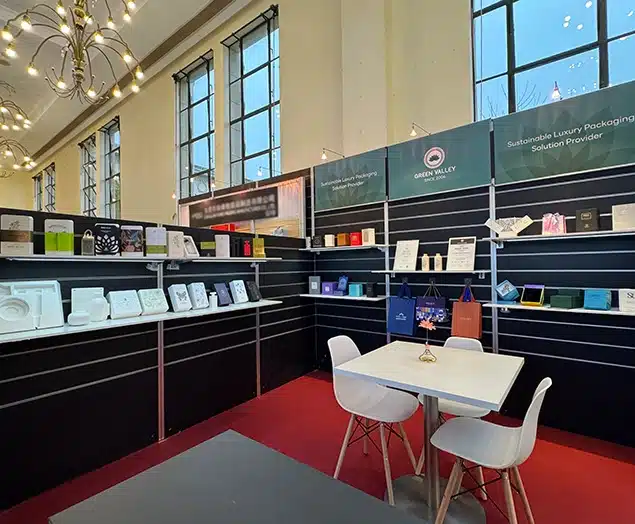
At GREEN VALLEY Packaging, we work with premium paper packaging and molded fibre structures
for categories including fragrance, cosmetics, confectionery, jewellery and other high-end products.
Our focus is increasingly on combining presentation, protection and material simplification
rather than treating sustainability as a separate layer added at the end.
If you are reviewing a packaging project for the EU market,
a useful first step is to break the pack down component by component
and identify where material complexity can be reduced without damaging the brand experience.
This article is intended as practical industry information and does not constitute legal advice.
PPWR implementation continues to develop through secondary legislation and technical standards,
so packaging decisions should be checked against the latest applicable requirements.
Dedicated to providing customers with one-stop solutions, from creative design to meticulous production and secure delivery, ensuring perfection at every step.