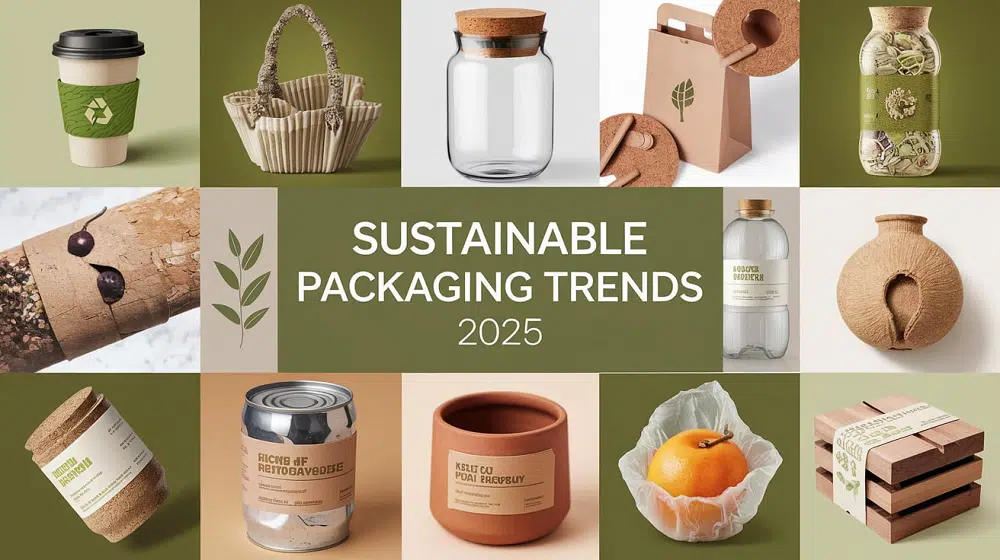
Sustainable packaging is no longer just a green-looking finish. In 2026, the best packaging will be judged by something much more practical: whether it protects the product, reduces unnecessary material, explains disposal clearly, and still feels like a real brand experience.
Why 2026 Eco Packaging Feels Different
For a long time, sustainable packaging was treated almost like a visual style. Use kraft paper, add a leaf icon, choose a soft green label, and the package immediately looked responsible.
That approach is starting to feel thin. Buyers, retailers, and consumers are asking better questions now. Is the packaging recyclable in normal local systems? Does it reduce plastic, or just hide it? Can it protect the product during shipping? Is the sustainability claim specific enough to be trusted?
This is where molded pulp packaging becomes especially relevant. It is not just a “natural-looking” material. When designed well, it can replace foam inserts, plastic trays, and overbuilt inner packaging while still giving the product a protective and premium presentation.
The winning eco packaging in 2026 will not be the one that looks the most rustic — it will be the one that removes friction for the brand, the factory, the warehouse, the retailer, and the customer trying to dispose of it correctly.
At GVPAK, we see this shift every day in packaging conversations. Brands still care about appearance, of course. But the stronger questions are now about structure, tolerance, material choice, shipping safety, and whether the final packaging story can be explained without overpromising.
GVPAK Trend Readiness Chart for 2026
The chart below is an editorial scoring model from GVPAK. It is not a laboratory rating. It simply ranks each trend by how ready it feels for real commercial packaging projects in 2026, based on practicality, brand value, material availability, and customer understanding.
Score: 1 = early-stage or niche use · 5 = highly practical for many brands
Mono-Material Minimalism 4.7 / 5
Molded Pulp & Fiber Forms 4.5 / 5
Refill & Reuse Systems 4.1 / 5
Smart QR Transparency 4.0 / 5
Low-Ink Natural Aesthetics 3.9 / 5
Mushroom & Seaweed Materials 3.3 / 5
The 6 Biggest Eco Packaging Design Trends in 2026
1. Mono-Material Minimalism
Mono-material packaging is becoming more attractive because it makes recycling easier to understand. Instead of mixing layers, coatings, labels, foils, and windows, brands are simplifying the material structure.
The design language is also getting quieter: fewer inks, fewer decorative finishes, more white space, and more confidence in shape and texture. In premium packaging, this can feel more modern than a heavily printed box.
GVPAK perspective: minimalism only works when the structure is strong. A simple box with weak board, poor folding, or loose inserts will not feel sustainable. It will just feel unfinished.
2. Mushroom & Seaweed Materials
Mycelium, seaweed films, and other bio-based materials are getting attention because they feel fresh and visually different from traditional plastic. They also give designers a more organic material story to work with.
Still, these materials should be approached with realistic expectations. Moisture resistance, shelf life, smell, surface finish, minimum order quantity, and production stability all matter.
GVPAK perspective: I like these materials most when they solve a specific problem. If the material is chosen only because it sounds futuristic, the packaging may become expensive without becoming better.
3. Refill & Reuse Systems
Refill pouches, reusable jars, returnable boxes, and concentrated formats are moving from niche beauty brands into more mainstream categories. The idea is simple: keep the durable part, replace only what is necessary.
The difficult part is behavior. Customers may like the concept, but they will only repeat it if the refill process is easy, clean, and clearly cheaper or more convenient than buying a new full package.
GVPAK perspective: refill packaging is not just a package. It is a small operating system. The primary pack, refill pack, shipping pack, shelf display, and customer instructions all need to work together.
4. Smart QR Transparency
QR codes are becoming more useful as packaging “passports.” A good QR page can explain material composition, recycling steps, sourcing information, carbon notes, certifications, and even batch-level traceability.
This matters because customers are tired of vague sustainability claims. A scannable package gives the brand a place to explain details without overcrowding the box.
GVPAK perspective: a QR code should never lead to a generic homepage. It should answer the exact questions the packaging creates: What is this made from? How should I recycle it? Why should I believe the claim?
5. Plantable & Compost-Ready Packaging
Seed paper, compostable wraps, fiber-based labels, and compost-ready structures can turn disposal into a more positive brand moment. This works especially well for gifts, beauty, wellness, lifestyle products, and limited-edition campaigns.
But the language has to be careful. “Compostable” does not always mean home compostable. “Biodegradable” does not always mean it disappears quickly or responsibly in real-world conditions.
GVPAK perspective: the instruction matters as much as the material. If customers do not know what to do with the package, the sustainability benefit becomes theoretical.
6. Low-Ink Natural Aesthetics
Low-ink packaging is becoming a premium look: kraft surfaces, restrained typography, blind embossing, simple labels, water-based inks, and natural color palettes.
The strongest versions do not feel cheap. They feel intentional. The package says, “We made fewer design moves because the material and structure are good enough to stand on their own.”
GVPAK perspective: low-ink design puts pressure on manufacturing quality. When there is less printing to distract the eye, every crease, edge, texture, and fit becomes more visible.
Why Molded Pulp Packaging Deserves a Bigger Role
Among these trends, molded pulp packaging deserves special attention because it is both structural and visual. It can protect products, organize components, reduce plastic inserts, and give the unboxing experience a softer, more natural feeling.
Smithers reported that the global moulded pulp packaging market is valued at about $4.7 billion in 2026 and projected to reach about $5.5 billion by 2030. Different research companies use different definitions and market scopes, so the numbers vary. But the direction is clear: fiber-based protective packaging is becoming a serious commercial category, not just a sustainability experiment.
$4.7B
Estimated global moulded pulp packaging market value in 2026.
$5.5B
Projected market value by 2030, according to Smithers.
2030
A key year for stronger recyclability and packaging waste requirements in many markets.
For GVPAK, the opportunity is not to present molded pulp packaging as a simple plastic replacement. That is too narrow. The better opportunity is to design it as part of a complete packaging experience: outer box, molded tray, surface texture, product fit, disposal instruction, and brand story.
| Packaging Need |
How Molded Pulp Packaging Helps |
Design Watch-Out |
| Product protection |
Custom cavities, ribs, and cushioning geometry can reduce movement during shipping. |
Always test drop, compression, vibration, and product fit before scaling. |
| Premium unboxing |
A molded fiber tray can make the product feel organized, calm, and carefully placed. |
Surface texture must match the brand. Rough pulp is not right for every product. |
| Plastic reduction |
It can replace certain plastic trays, foam inserts, and overbuilt inner structures. |
Moisture, grease, and barrier requirements may still need coating or hybrid design. |
| Brand storytelling |
Fiber texture, embossing, and natural color can communicate responsibility without shouting. |
Claims should be specific. Recyclable, compostable, recycled content, and bio-based are not the same thing. |
A Practical Checklist Before Choosing Eco Packaging
Before choosing a material or design direction, I would suggest asking a few grounded questions. They are not as exciting as a trend board, but they often prevent costly mistakes.
- What problem are we solving? Plastic reduction, shipping damage, shelf presentation, refill adoption, compliance, or brand perception?
- Can the customer dispose of it correctly? If the disposal path is confusing, the sustainability story weakens immediately.
- Does the design work at production scale? Tooling, drying time, tolerance, surface finish, and packing speed all matter.
- Are the claims specific and verifiable? Avoid vague phrases such as “earth friendly” unless the material facts support them.
- Does the packaging still feel like the brand? Sustainable packaging should not erase brand identity. It should express it with more discipline.
Final Thought: The Future Is Not Just Greener. It Is More Honest.
The most important eco packaging design trend in 2026 may not be one material or one visual style. It may be honesty.
Brands are being pushed to create packaging that is easier to recycle, easier to reuse, easier to explain, and harder to fake. That is why molded pulp packaging, mono-material systems, QR transparency, refill formats, and low-ink design belong in the same conversation. They all move packaging away from decorative sustainability and toward practical responsibility.
If your brand is planning a packaging update in 2026, do not choose the trend that photographs best. Choose the system that your product, supply chain, customer, and sustainability claims can actually support.