Does Plastic Recycling Release Microplastics? What Consumers and Buyers Should Know
November 13, 2026 · Fiona
Yes—conventional mechanical recycling can generate and release microplastics. The risk is concentrated in the physical stages that turn used plastic into flakes or pellets: shredding, grinding, washing, drying and conveying. But “recycling releases microplastics” is not a single number that applies to every plant or every tonne of recyclate. Emissions depend on feedstock, equipment enclosure, ventilation, water treatment, filtration, housekeeping and how the measurement is done. For consumers, the practical point is that recycling is not a zero-pollution activity. For buyers, the practical point is to ask for facility-level evidence instead of treating “recycled” as a complete environmental claim.
Recycling can release microplastics—scale and controls matter
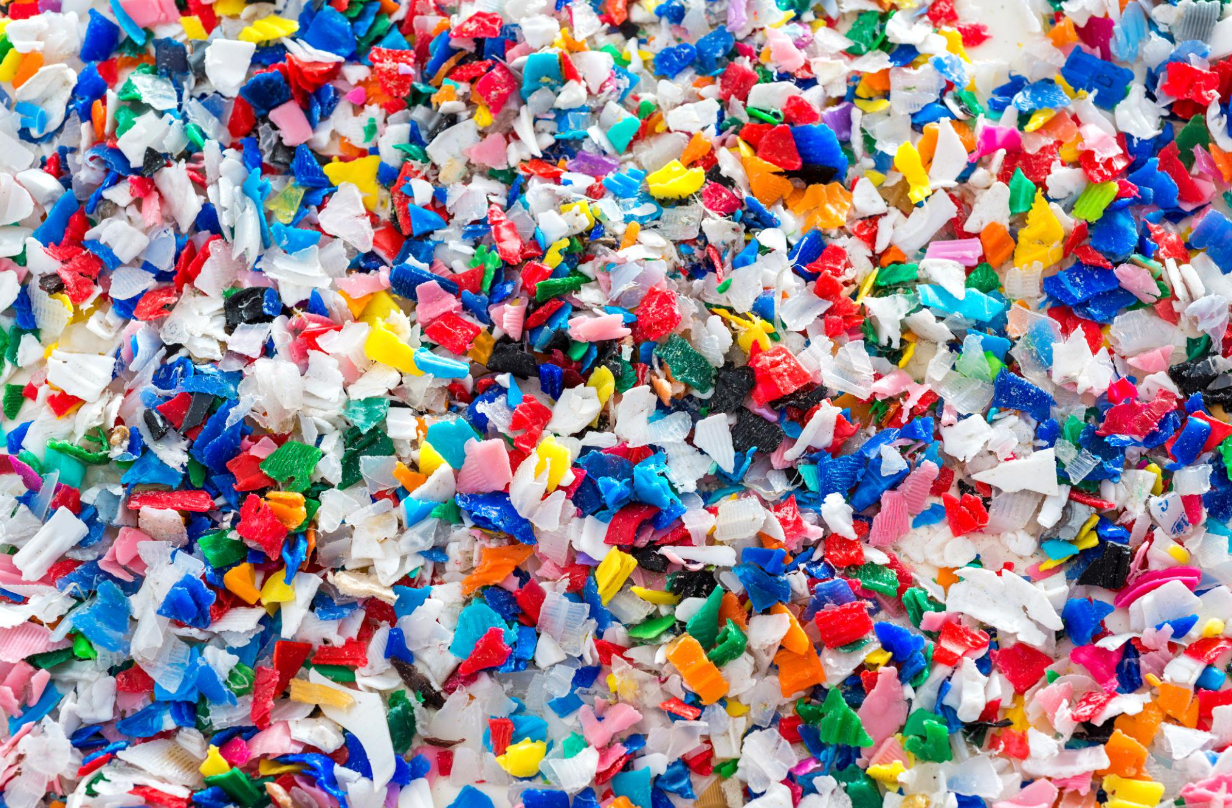
Mechanical recycling is an industrial process built around cutting, washing and re-forming plastic. Those steps can create fine plastic particles, and some of those particles can leave the site in wastewater, air or residual material. A peer-reviewed study of a UK mixed-plastics recycling facility—original paper on ScienceDirect, reported by Inside Climate News in May 2023 (from Data)—estimated that 6–13% of the plastic processed at that plant could be released into water or air as microplastics. The same UK study estimated annual releases of up to about 3 million pounds with filtration and up to 6.5 million pounds without it. Even with filters, wastewater was estimated to contain as many as 75 billion microplastic particles per cubic metre.
Those figures are facility-specific, not a global average. They matter because they show two things at once: the release mechanism is real, and filtration changes the scale. That study measured particles down to 1.6 microns; because smaller particles exist, the authors cautioned that their numbers may understate the problem. Buyers should therefore treat a single study as a warning signal, not as a universal emissions factor for all recyclate.
What counts as microplastic and nanoplastic
Microplastics are commonly defined as plastic fragments from 1 nanometre to 5 millimetres wide (UNEP overview of microplastics). Most are secondary microplastics, formed when larger products break down. Most microplastics come from the slow disintegration of larger plastic products—packaging, clothes, tyres and paint—rather than from intentional microbeads. Industrial shredding compresses that slow breakdown into seconds.
Nanoplastics are smaller still—generally below one micrometre—and are harder to measure and capture. The smaller the particle, the more relevant inhalation, ingestion and environmental dispersion become. This is why a recycling plant cannot be judged only by how much material it recovers. It also has to be judged by how well it contains the fines it creates.
Where releases occur: water, air, and residual streams
Water is the most obvious pathway. Washing and wet separation can transfer plastic fines into process water. Wastewater treatment may capture a share of those particles, but captured material does not disappear; it can end up in sludge. If that sludge is spread on land, the pathway shifts from water to soil. Air is the second pathway. Dry shredding, conveying, screening and cleaning can release plastic dust and fibres, which may remain suspended indoors, escape through ventilation or settle as dust. Workers can inhale particles close to the equipment. A third pathway is residual material: labels, caps, mixed laminates and fine scraps that are not cleanly separated can carry plastic fragments into downstream streams.
Filtration reduces but does not eliminate releases
Filtration is important, but it is not a clean-up switch. At the UK plant described above, filtration reduced the estimated annual release from up to 6.5 million pounds to up to 3 million pounds—roughly halving the estimate, not eliminating it. Filters also have a size limit. Particles below the measurement or capture threshold can pass through, and the study’s 1.6-micron cutoff means the true particle count may be higher. Captured particles must then be managed in sludge or filter waste. A plant that filters water but mishandles sludge has not solved the problem; it has moved it.
Why recycling can create microplastics even when it recovers material
Recycling is a material-recovery process, not a pollution-control process. A plant can be good at recovering plastic and still be poor at containing fines. Cutting increases surface area. Repeated contact between plastic, machinery and other waste creates small fragments. Washing then carries those fragments into process water. Collection targets measure tonnes collected, not particles released. That gap is the reason “recycled content” and “low microplastic release” are different claims.
Mechanical recycling’s particle-generation points
Mechanical recycling usually involves collection and sorting, removal of unsuitable items, shredding or granulation, washing, separation and drying, then melting and pelletising. Shredding and granulation are the most direct particle-generation points because they cut and abrade plastic deliberately. A 2023 simulated-process assessment identified size reduction as the predominant source of microplastic formation. In 2024, shredding was found to release airborne microplastics and nanoplastics, with higher particle emissions from waste plastics than from equivalent new plastics—possibly because labels, adhesives and additives make waste streams more friable.
Sorting can also crack brittle plastics. Washing transfers fines into water. Drying and conveying can put dust into the air. Pelletising adds heat and friction. These are not reasons to abandon recycling; they are reasons to design and regulate recycling plants as potential generators of fine plastic particles.
Chemical or “advanced” recycling is not automatically a microplastic-free alternative
“Advanced recycling” is an umbrella term. It can refer to pyrolysis or processes that heat plastic waste, to solvent-based processes, or to operations that resemble incineration more than material recycling. Advocacy groups have raised concerns about air pollution, contaminated oil, toxic ash and technical or economic failures at some facilities (an advocacy brief on plastics recycling). Those concerns should be verified facility by facility, not accepted as a blanket verdict on every project.
The microplastics question does not disappear automatically. Chemical recycling may also require pre-treatment—shredding, drying, feeding and handling—so similar containment questions can arise before the chemical process begins. A technology that turns plastic into fuel or feedstock may address mixed waste, but it is not a proven zero-microplastic route unless the front end is controlled and emissions are monitored.
Quality degradation and market limits shape the comparison
Plastic is not one material. Thousands of polymer and additive combinations complicate sorting and reprocessing. Mechanical recycling often degrades quality, and many plastics can be recycled only once or twice before the material is no longer suitable for demanding uses. Virgin plastic can also be cheaper than recyclate. In Canada, of more than five million tonnes of plastic waste thrown away in 2022, only 6.5% was recycled into new products (from Data). That figure does not measure microplastic release, but it shows why recycled-content claims need context: collection and reprocessing rates are not the same as pollution performance.
Contamination concerns: recycled plastic and food contact
Microplastics are one issue. Chemical contamination is another. They can travel together, but they are not the same risk. Recycled plastic can carry chemicals that were present in the original material, contaminants absorbed from the waste stream, and new compounds formed during heating or processing. That does not prove every recycled package is unsafe. It does mean that food-contact and high-exposure applications need stronger traceability than, say, a park bench or a drainage pipe.
What the evidence says—and what it does not
A study led by the University of Gothenburg analysed hundreds of plastic pellets from recycling facilities in Africa, South America, Asia and Eastern Europe. The pellets contained pesticides, medicines, industrial chemicals and plastic additives. A separate comprehensive study of food-contact plastics warned that recycled and reused materials can be vectors for hazardous chemicals, including endocrine disrupters and carcinogens, and that chemicals can accumulate during recycling and migrate into food.
These findings are serious, but detection is not the same as proven human harm. Evidence on adverse human health effects remains limited, and more research is needed; that does not mean exposure is safe. For buyers, the implication is not “avoid all recyclate.” It is “match the recyclate to the application and demand evidence.” A recycled content claim says nothing about which chemicals were present, what was removed, or whether migration testing was done for the intended use.
Procurement red flags for food-contact and consumer products
Watch for unknown feedstock, non-food-grade input, unclear additive history, weak chain of custody, and recycled content used in hot, fatty or high-temperature food-contact applications without migration data. Ask whether the decontamination step has been validated for the specific feedstock and contaminant profile. Ask for food-contact compliance for the intended market, batch-level traceability, and test data rather than a general “recycled” label.
A supplier that cannot explain where the plastic came from, what it previously contained, and how the recycled material was cleaned should not be treated as a food-grade source. The same logic applies to consumer products that contact skin, mouth or food. “Recycled” is a sourcing statement, not a safety certification.
Once you have screened out the obvious red flags, the next step is to compare material options on a like-for-like basis—and to write those expectations into contracts.
Comparing recycled, virgin, and alternative materials
A single label such as “recycled” or “biobased” cannot tell you which option carries the lowest overall risk. Recycled content can reduce demand for virgin fossil feedstock and keep material in use, but it may also carry chemical contaminants and processing emissions. Virgin plastic avoids some contamination concerns but starts with fossil extraction and energy-intensive production. Alternative materials—including biobased and compostable options—may avoid conventional plastic altogether, but they need their own chemical-safety and end-of-life evidence. None of these is automatically “safe” or “circular.”
Microplastics are now found in water, soil and air. UNEP, citing an OECD estimate, reports that 2.7 million tonnes entered the environment in 2020—a figure expected to double by 2040 (UNEP overview of microplastics). That backdrop matters because it shows the scale of the problem is not limited to one facility or one material choice.
The comparison should therefore weigh function, contamination risk, processing emissions and disposal. For a food-contact application, ask whether the material has been tested for migration under the intended use conditions. For a durable product, ask whether it can be repaired or recycled again. For a single-use item, ask whether reuse or a different delivery system avoids the material altogether.
As plastics researcher Erena Brown put it after studying a UK recycling plant, “With plastic recycling, we have designed and initiated it in order to start protecting our environment. I think this study has shown that we have ended up creating a different if potentially slightly worse problem.” That does not mean recycling is worthless; it means recycling must be designed and regulated with pollution controls, not just collection targets.
Contract and specification language to consider
Vague sustainability claims are difficult to enforce. Contracts and specifications can require evidence. Consider asking for a microplastic-control plan that covers shredding, washing, wastewater treatment, air filtration, dust capture and sludge management. Require monitoring data for wastewater and air emissions, not just a statement that filters are installed. Where food contact is intended, specify certified food-contact grades and migration testing for the actual feedstock and use conditions. Include audit rights so you can verify the controls on site. Define what “recycled” means in the contract—post-consumer, post-industrial, or something else—and what “alternative” means. Avoid terms like “eco-friendly” or “plastic-free” unless they are defined and substantiated.
The bigger picture: recycling is not the whole solution
Microplastic releases from recycling are one part of a larger problem. Plastic production is growing, recycling rates remain low, and the material itself is difficult to circulate without contamination. Recycling can be useful, but it cannot by itself make conventional plastic circular or pollution-free.
Circular economy claims need a pollution-control lens
Material circularity and emission control are different goals. A high recycling rate does not prove that a facility has low microplastic discharge or that the recycled material is chemically safe. A company can meet a recycled-content target while still releasing microplastics through shredding and washing. Buyers should ask for both: circularity metrics and pollution-control evidence. The two are not interchangeable.
Environmental justice and community impacts
Recycling facilities are industrial sites. They can pose air, water, fire and explosion risks, and siting decisions can place those burdens on nearby communities. International waste trade adds another layer: plastic waste is shipped across borders, and the Basel Convention regulates some of that trade, though not every country has ratified it. For procurement teams, supplier due diligence should include the local community impact of the facility, not just the recycled content of the product.
Conclusion: a cautious answer for buyers and consumers
Plastic recycling can release microplastics into water and air, even with filtration, and recycled plastic can carry chemical contaminants that matter for food contact and consumer products. The evidence on human health effects is still developing, but uncertainty is not a reason to ignore the issue. For consumers, the practical priorities are to reduce unnecessary plastic, avoid hot food in plastic where possible, and support better collection and reuse systems. For buyers, the priority is to treat recycled content as a sourcing claim—not a safety certification—and to demand process controls, traceability and end-use testing. Recycling has a role, but it is not a complete solution to plastic pollution.
Dedicated to providing customers with one-stop solutions, from creative design to meticulous production and secure delivery, ensuring perfection at every step.