What Are Molded Pulp Bottles? Ultimate Guide to Sustainable Packaging 2025
December 9, 2025 · Marcus
Key Takeaways
Molded pulp bottles use renewable plant fibers like bagasse and bamboo instead of petroleum-based plastics
Manufacturing these bottles can cut carbon emissions by up to 75% compared to virgin plastic production
These containers break down naturally without leaving microplastics behind
Major brands in food, beverages, and pharmaceuticals already use this packaging
Modern barrier coatings now protect liquids and sensitive products effectively
Plastic pollution demands action now. Businesses and consumers want better options, and molded pulp bottles deliver.
These aren’t just green alternatives. They’re high-performance packaging that works.
Here’s what makes these bottles the future of responsible packaging.
What Are Molded Pulp Bottles? The Sustainable Alternative to Plastic
Molded pulp bottles are rigid containers made from plant fibers. Unlike simple paper cartons, they offer structural strength traditionally found in plastic—without the environmental cost.
Their environmental benefits are clear:
Biodegradable: Breaks down naturally without microplastics
Compostable: Returns nutrients to soil
Recyclable: Works with existing paper recycling systems
Research shows molded fiber packaging cuts environmental impact significantly versus virgin plastic production, according to a 2024 Packaging Innovation Trends Report.
Why Choose Molded Pulp Over Plastic?
Benefits extend beyond environmental impact:
Lower Carbon Footprint: Manufacturing uses significantly less energy than virgin plastic production. Research from the Environmental Paper Network’s Paper Calculator shows potential carbon reductions of up to 75%. Results vary by product, energy mix, and analysis boundaries, making product-specific assessments important.
Resource Conservation: Uses renewable plant materials and agricultural waste instead of petroleum.
Non-Toxic: Contains no BPA, phthalates, or harmful chemicals found in many plastics.
Consumer Appeal: McKinsey research finds two-thirds of consumers value sustainable materials when purchasing. Packaging matters—it’s highly visible and influences buying decisions.
Design Versatility: Creates unique textures and shapes that plastic cannot replicate, elevating brand aesthetics.
For brands committed to environmental responsibility, these containers deliver superior performance. Companies like GVPAK create innovative packaging solutions from concept to production.
The Manufacturing Process: From Fiber to Finished Bottle
Creating molded pulp bottles transforms renewable plant materials into durable packaging through four stages.
Step 1: Pulping – Creating the Foundation
Manufacturing starts with carefully selected plant fibers:
Bagasse: Sugarcane waste fiber that transforms agricultural byproducts into valuable packaging
Bamboo: Fast-growing resource that needs no pesticides or fertilizers
Wheat Straw: Agricultural residue that would otherwise be burned or discarded
Raw materials enter large pulpers where water and mechanical action break them into uniform slurry. Manufacturers control fiber length and consistency to ensure optimal strength and surface quality.
Step 2: Molding – Shaping the Structure
The pulp slurry flows into specialized mesh screen molds designed for precise bottle shapes. Vacuum pressure draws water through fine screens, depositing interwoven fibers onto the mold surface.
Two-part molds create complete bottle structures with seamless construction. This process ensures consistent wall thickness throughout. At this stage, wet molded bottles have basic shape but need further processing.
Step 3: Thermoforming – Refining and Branding
Controlled heat and pressure refine the bottle’s final shape, smooth the surface, and increase density for strength. This transforms soft, wet-molded forms into rigid containers.
Brand identity gets incorporated directly through embossed logos, patterns, and text. This creates permanent, tactile branding elements—no additional printing needed. The embossing adds premium quality that distinguishes products on shelves while maintaining complete sustainability.
Precise temperature and pressure control ensures bottles emerge with uniform density and crisp branding details. Heat treatment drives out residual moisture, preparing bottles for final coating.
Step 4: Coating – Protection and Performance
Advanced barrier coatings provide essential protection while maintaining environmental benefits. These specialized coatings create barriers against moisture, oxygen, oils, or other elements depending on product needs.
Modern coating technologies offer multiple options:
Water-based barriers: Moisture resistance for dry or semi-dry products
Bio-based polymer coatings: Enhanced protection for liquids and oils while remaining biodegradable
Wax coatings: Natural, compostable options for food-grade applications
Multi-layer systems: Combining technologies for maximum protection
These coatings maintain the bottles’ recyclable or compostable properties, ensuring true end-to-end sustainability. After coating, bottles undergo final quality inspection and trimming before packaging and shipment.
The entire process prioritizes efficiency and renewable energy use, reinforcing genuine commitment to responsible production.
Current Limitations to Consider
Some applications still present challenges. Products with high acidity, alcohol content, or oil levels require specially engineered barrier solutions.
High-humidity storage may need additional protective measures or modified designs.
Ongoing research addresses these limitations. Understanding specific product requirements helps determine whether current solutions fit immediately or need custom engineering.
Real-World Applications: Brands Leading the Change
Molded pulp and fiber-based packaging already make waves across multiple industries. Forward-thinking brands recognize them as powerful market differentiators, not just environmental alternatives.
Food Industry Innovation
Kraft Heinz partnered with Pulpex to test paper-based bottles for viscous food products. Made from 100% sustainably sourced wood pulp with proprietary food-grade barrier coatings developed with BASF, the prototype demonstrates commitment to making all packaging recyclable, reusable, or compostable by 2025.
CEO Miguel Patricio emphasized that “packaging waste is an industry-wide challenge that we must all do our part to address.”
Beverage and Spirits Sector Breakthroughs
The Bottle Collective successfully trialled a paper-based bottle at Time Out Festival. This pilot showed even cream-based alcoholic beverages can be packaged in fiber materials. The bottle was designed for recycling in standard paper streams, eliminating consumer separation of plastic liners.
The Bottle Collective, comprising industry leaders, is now testing Dry Molded Fiber bottle caps and closures according to joint development efforts. This enables over 95% fiber-based content in complete packaging systems. PulPac and PA Consulting aim to bring these bottles to market at scale by 2025.
France Depaix, Global Head of Design at Sanofi Consumer Healthcare, stated: “We’re acutely aware of our responsibility to contribute towards a healthier society and planet. Initiatives like the Bottle Collective provide a real opportunity to work together across industries and forge unique partnerships which have the potential to accelerate innovations in packaging and help tackle global plastic waste.”
Alex James Orchard, Head of R&D Packaging at Haleon, added: “We’re aiming to create a future for consumer health product packaging which is more sustainable and more inclusive. By partnering in new ways, we will enable Haleon and the wider industry to accelerate adoption of new packaging solutions that are responsibly designed and fit-for-purpose.”
Award-Winning Design Excellence
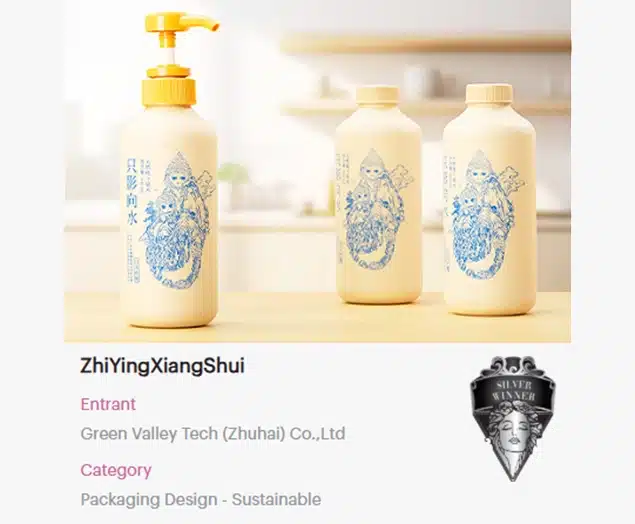
GVPAK’s Zhi Ying Xiang Shui paper bottle received the 2025 Pentawards Bronze Award for Sustainable Design. This recognition validates that exceptional design and sustainability work together in shaping packaging’s future.
Crafted from 100% biodegradable and recyclable molded pulp, the bottle features the white-headed langur—a critically endangered primate—embodying the message “Protect Water as You Protect Life.” The design transforms packaging into powerful storytelling that bridges biodiversity conservation with freshwater protection.
What makes this bottle revolutionary is its versatility. The leak-proof construction accommodates beverages, personal care products, and home essentials. After initial use, it can be repurposed—simply replace the cap to transform it into a hand soap or dish detergent container.
Produced with significantly lower energy and water consumption compared to plastic manufacturing, the bottle biodegrades completely within months, leaving zero microplastics.
These examples show brands moving away from plastic. Molded pulp bottle solutions deliver the performance needed for food, beverages, and health supplements. Explore how we’ve helped brands transform their packaging.
Is Molded Pulp Right for Your Product? Quick Assessment
The molded pulp revolution is just beginning. As technology advances and consumer demand intensifies, broader integration across sectors becomes increasingly viable.
Enhanced Barrier Technology
Research teams worldwide develop new coatings and linings for wider product ranges—including beverages, pharmaceuticals, and aggressive chemicals. Innovations in bio-based polymer science and nanomaterial coatings push the boundaries of what fiber-based packaging can safely contain.
Recent breakthroughs show fully biodegradable bottles for spirits and other beverages are near-term realities. Industry consortiums prove even highly sensitive liquid products can be packaged sustainably without compromising quality or shelf life.
Manufacturing Scale-Up and Cost Reduction
As production processes become more efficient and demand grows, economies of scale improve cost-effectiveness. Advanced automation, optimized energy systems, and streamlined supply chains make molded pulp increasingly competitive with traditional plastic packaging.
This improved accessibility empowers businesses of all sizes to embrace responsible packaging without prohibitive costs. What was once exclusive to premium brands becomes viable for mid-market and value-segment products.
Emerging Applications Across Industries
Industry analysts anticipate significant expansion into new categories:
Beverages: Water, juice, and carbonated drinks become increasingly viable as barrier technology advances. Multiple pilot programs with major beverage companies test commercial viability at scale.
Pharmaceuticals: Secure, environmentally responsible medication packaging that maintains product integrity while reducing plastic waste. Regulatory approval pathways are being established in multiple markets.
Industrial Applications: Certain chemicals, lubricants, and industrial components may soon be packaged in specialized molded pulp containers where durability and environmental responsibility align with performance requirements.
Personal Care: A broader range of shampoos, conditioners, lotions, and other products beyond premium segments will make responsible packaging accessible to mass markets.
Design Evolution and Customization
Future developments will bring more intricate shapes, sophisticated embossing capabilities, and integrated functional features that enhance both aesthetics and utility. Advanced molding technologies enable complex geometries previously impossible with fiber materials.
The inherently tactile nature of molded pulp creates unique sensory experiences that plastic cannot replicate, forging stronger emotional connections between consumers and products. This haptic quality adds perceived value beyond environmental benefits.
Partner with GVPAK: Your Sustainable Packaging Solution
The packaging revolution is here, built on sustainability, innovation, and responsibility.
Molded pulp bottles offer compelling solutions to global plastic challenges—high-performance, aesthetically pleasing, and truly environmentally responsible.
At GVPAK, we’re passionate about driving this change, empowering businesses to make tangible differences.
Why Choose GVPAK?
By partnering with us, you gain:
Expertise: 19 years of experience in responsible packaging design and manufacturing
Advanced Technology: State-of-the-art molded pulp production facilities with thermoforming and embossing capabilities
Quality Commitment: Comprehensive quality control ensuring flawless products
Customization: Tailored solutions from concept design to final delivery
Choosing molded pulp means investing in a greener future, enhancing brand reputation, and meeting growing consumer demand for environmental responsibility.
We offer seamless transitions to responsible packaging through expert guidance and proven processes.
Explore our full range of paper bottle solutions and discover how we’ve helped brands across cosmetics, food, and consumer goods industries transform their packaging strategies.
🌱 Frequently Asked Questions
Everything you need to know about molded pulp bottles
Molded pulp bottles are sustainable, biodegradable containers made from renewable plant fibers (like bamboo, bagasse, or recycled paper). Manufacturing involves pulping fibers, molding them into bottle shapes using precision molds, drying to solidify structure, and applying food-safe coatings for liquid resistance.
Yes. They’re carbon-negative (absorb CO2 during growth), compostable within 90 days, made from renewable/recycled materials, and reduce carbon emissions by ~75% versus plastic. Studies confirm they biodegrade completely without microplastics.
Absolutely. Advanced barrier coatings (plant-based or biodegradable polymers) create waterproof interiors meeting FDA and EU food-contact standards. Brands successfully use them for beverages, cosmetics, and health products.
Major brands like Kraft Heinz (testing for ketchup), Diageo’s Baileys (cream liqueur trials), and Sanofi and Haleon (health products) pioneer molded pulp applications.
Award-winning innovators like GVPAK use this packaging to cut plastic use and differentiate on retail shelves.
Currently 10-30% more expensive than conventional plastic, but economies of scale are narrowing the gap. Many brands justify the premium through enhanced brand value, regulatory compliance, and consumer willingness to pay more for eco-friendly options.
Nearly limitless. Brands can specify sizes (50ml-1L+), shapes (cylindrical, contoured, ergonomic), colors (natural earth tones or custom dyes), embossing/debossing for logos, and surface finishes (matte, textured). Lead times typically range 4-8 weeks for custom molds.
Dedicated to providing customers with one-stop solutions, from creative design to meticulous production and secure delivery, ensuring perfection at every step.