1. Industry context: the beauty sector’s shift away from plastic
The global zero-carbon and circular economy movement is putting unprecedented pressure on the beauty and personal care supply chain. The cosmetics industry produces over 120 billion packaging units annually, and the vast majority are made from mixed or single-use plastics that are difficult to recycle, creating a significant burden on global waste management systems. As younger consumers, particularly millennials and Gen Z, grow increasingly conscious of environmental responsibility, and as regulations around single-use plastics tighten across major economies, beauty brands are undergoing a profound transformation.
Europe’s Packaging and Packaging Waste Regulation (PPWR), for example, is pushing for packaging materials that are 100% PFAS-free, contain less than 100ppm of heavy metals, and have a clear path to recycling or composting. In response to this regulatory and market pressure, major beauty groups including L’Oreal, Estee Lauder, and Unilever have committed to cutting virgin plastic use by 50% by 2025.
Within this shift, molded pulp (also called molded fiber) has evolved from a low-cost protective filler into a carrier for high-end brand experience. Traditionally made from recycled paper, bamboo fiber, bagasse, or wood fiber through wet or dry pressing, molded pulp has typically served as protective trays for electronics or secondary packaging for eggs. Recent industry developments show molded pulp crossing a major technical threshold: direct contact with skincare formulas like creams and lotions, now entering the core of “primary packaging” and refill systems for premium skincare.
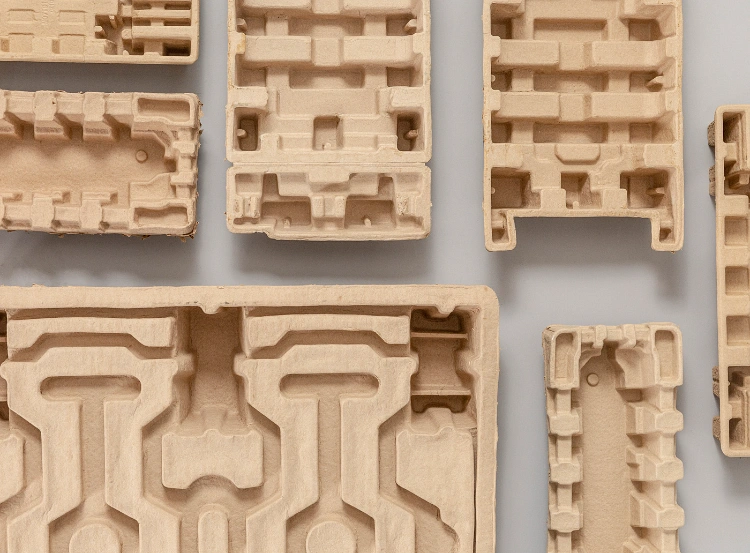
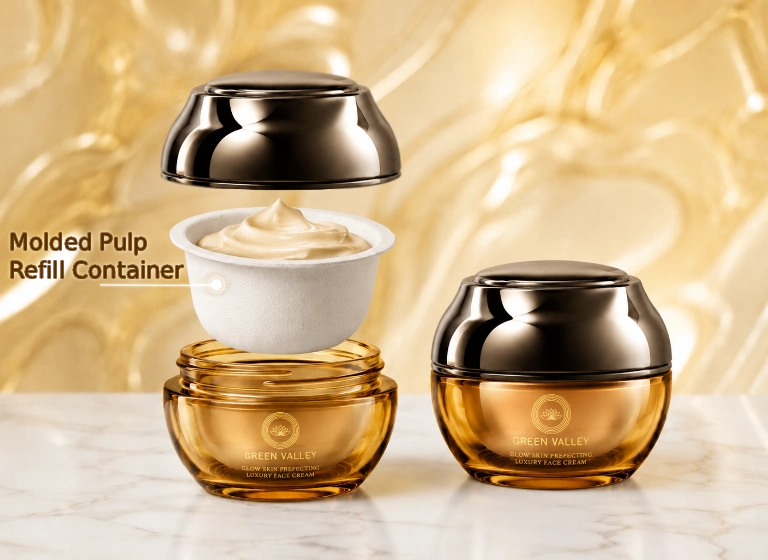
This shift from secondary packaging to primary refill packaging represents a real leap in functionality. While traditional pulp liners only need to provide physical cushioning, a molded pulp cream refill must achieve full compatibility with the product, strong sealing performance, resistance to oil penetration, and a look and feel that matches luxury brand standards. This shift not only reduces the overall carbon footprint and shipping weight of packaging, but also enables a new business model built around modular design: a permanent premium outer jar paired with a biodegradable consumable insert, creating a refill-and-repurchase ecosystem for brands.
120B+
packaging units produced annually by the cosmetics industry |
50%
virgin plastic reduction target set by major beauty groups by 2025 |
98%
plastic reduction achieved by leading molded pulp refill systems |
2. Core technical challenges: material science and process innovation for cream inserts
Converting highly porous, hydrophilic, and oleophilic plant fiber, prone to deformation under temperature and humidity changes, into a sealed container capable of safely housing high-activity, high-moisture, high-oil cream formulas over extended periods represents one of the toughest material science challenges in packaging today. Material suppliers and beauty brands have built considerable technical barriers to entry through cross-industry collaboration.
Cream formulas are typically complex emulsion systems (oil-in-water or water-in-oil) containing highly oxidizable active ingredients and volatile oils. Any small failure in the barrier layer can cause spoilage, moisture loss, or structural collapse of the packaging.
2.1 Barrier layer technology: from ultra-thin polymer film to fully organic coatings
Untreated molded pulp rapidly absorbs liquid through capillary action when it comes into contact with cream formulas, so building an absolute water, oxygen, and oil barrier is the central technical challenge for molded pulp refills. Current industry breakthroughs follow two main paths.
The first is ultra-thin polymer film lining. This approach uses a heat-pressed layer of polyethylene (PE), polypropylene (PP), or PET film on the inner wall of the pulp container to create a reliable physical barrier. This film is engineered to an extreme degree, typically kept to just 3-5% of the total packaging weight. This small proportion ensures the film delivers leak and oil resistance comparable to a full plastic container, while still allowing the container to be reprocessed in standard paper recycling streams in most countries at end of life, achieving an actual plastic reduction rate of up to 98%.
The second, more advanced path is organic or plant-based coating technology, which aims to eliminate dependence on fossil-based polymers entirely. Companies use natural polymers, such as modified starch-based materials, alginates, specific plant resins, or fermentation byproducts, to spray or impregnate the surface of the pulp, forming a durable oil and water resistant barrier. The difficulty lies in ensuring this organic coating withstands continuous exposure to highly polar oils and surfactants over a 36-month shelf life without dissolving or flaking. Packaging that successfully applies this technology can achieve strict home-compostable certification, delivering true zero microplastic residue. This is precisely the barrier challenge that bagasse-based paper jars and bottles for sustainable makeup packaging are built to solve, with bio-based coatings engineered for leak prevention and a multi-year shelf life under everyday bathroom conditions.
2.2 Precision tolerance and airtightness control
Premium creams, particularly anti-aging formulas, often contain highly oxidation-prone, rare active ingredients, which demands strict airtightness both within the refill container itself and between the refill and the outer cap. Molded pulp production involves moisture removal and drying, and the resulting shrinkage rate makes dimensional tolerance notoriously difficult to control, historically considered incapable of matching the micron-level fit precision of injection-molded plastic.
To overcome this, top-tier packaging manufacturers have introduced custom high-pressure molding techniques and precision dry pressing, applying extreme temperature and pressure to push wall density, hardness, and smoothness to their limits. Real-world development cases often involve extended validation cycles. To ensure the sealing performance of Guerlain’s cream refill would not compromise, the joint development team had to build entirely new performance evaluation standards specific to pulp containers, a process that took three years, involved producing over 9,500 test samples, and required more than 80 rigorous airtightness tests.
2.3 Luxury aesthetics and sensory design
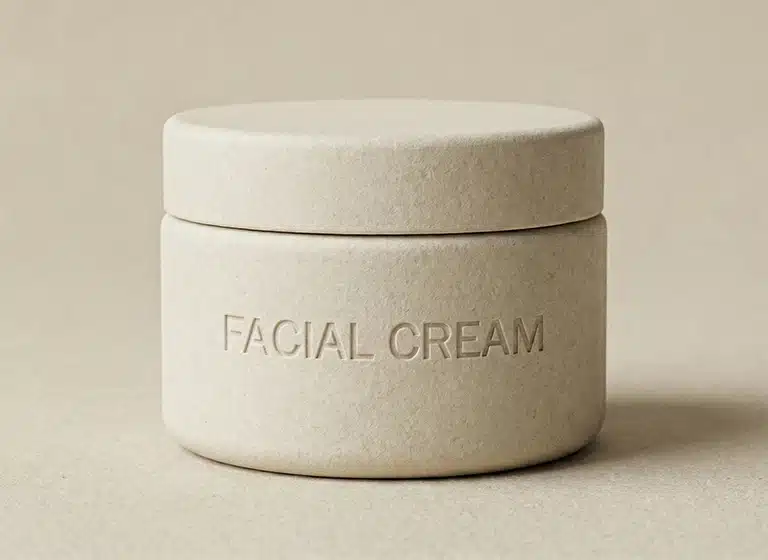
In premium skincare, eco-friendly material choices cannot come at the expense of a luxury feel. The rough surfaces, uneven edges, and shedding issues of early molded pulp were the biggest barriers to entry into high-end cream packaging. With advances in surface treatment, modern molded pulp now achieves a denser, smoother surface, sharper edge cuts, and color control that meets top beauty brand standards.
In terms of color, molded pulp has moved well beyond traditional kraft brown or recycled gray cardboard tones. Without compromising biodegradability, eco-friendly water-based dyes now allow for rich emotional expression through color. Pure white or ivory fiber inserts, prized for their clean, premium feel, have become a favorite for high-end creams and serum packaging, though this requires more advanced anti-staining surface treatment. Natural beige tones are widely used to convey the natural, gentle qualities of a formula, while muted greens or deep blacks are precisely calibrated to match specific active ingredients in a product line, such as algae complexes or deep-sea extracts, subtly signaling sustainability without relying on overt eco-messaging.
At the same time, manufacturers must apply rigorous anti-dust and anti-rubbing treatments to prevent fine fibers from shedding into the cream during use, a non-negotiable baseline for maintaining a luxury user experience.
2.4 Comparing major primary packaging materials and barrier technologies
| Technology path |
Barrier mechanism |
Representative companies/solutions |
Sustainability and recyclability |
Strengths and weaknesses |
| Ultra-thin polymer-lined pulp |
Bamboo/bagasse pulp lined with thin (3-5%) PE/PP/PET film |
Guerlain / Morrama (Maya system) |
Recyclable in standard paper streams, up to 98% plastic reduction |
Reliable barrier performance and full compatibility with water/oil-based creams; still contains trace fossil-based polymer |
| Bio-coated molded pulp |
Natural organic polymers (e.g. PAPACKS coating) for water/oil resistance |
Papacks (Refill CAPS) / AJG Packaging |
100% fossil-plastic-free, often home-compostable certified |
Fully aligned with zero-plastic and biodegradable goals; long-term stability against polar solvents still being validated |
| Bio-compound injection molding |
Wood fiber particles bonded with plant-based polymers (e.g. PLA) |
Sulapac (used by Chanel N°1) |
Industrially compostable, no long-term microplastics |
High dimensional precision, excellent finish and airtightness; technically a bioplastic process, with higher material/tooling costs |
| Mycelium and biomass composites |
Mushroom mycelium binds sawdust, flax, hemp shells, grown into shape |
Haeckels (Vivomer / biocontributing packaging) |
100% compostable, some embed seeds for direct planting |
Disruptive zero/negative-carbon concept with strong brand storytelling; limited to secondary or solid packaging, weak liquid barrier |
3. Leading global and independent beauty brands: applications in the market
To directly answer the question of which well-known cream brands have adopted molded pulp refill designs, the industry now offers a wide range of confirmed examples, spanning century-old luxury houses to emerging clean beauty labels.
3.1 Guerlain: the gold standard for technical execution
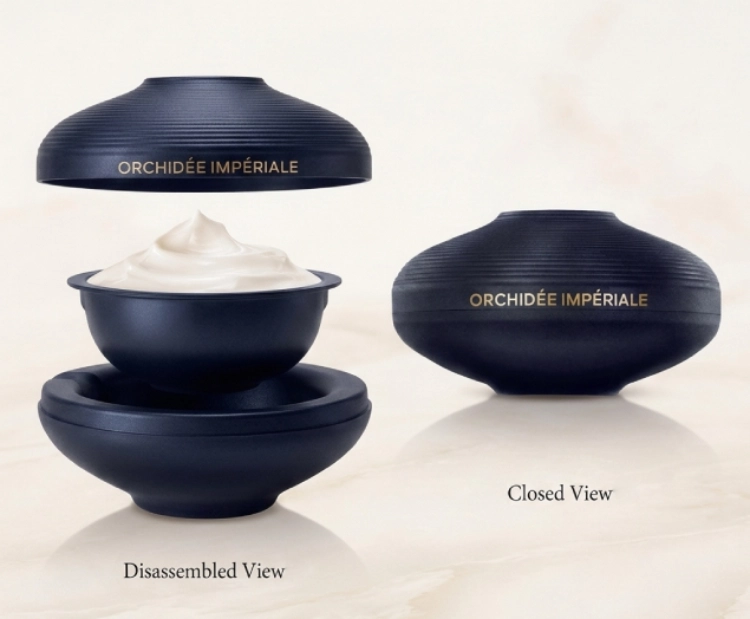
Within ultra-premium skincare, LVMH-owned Guerlain’s Orchidee Imperiale The New Longevity Cream stands as a landmark achievement in molded pulp refill design, placing the material at the center of its flagship skincare line.
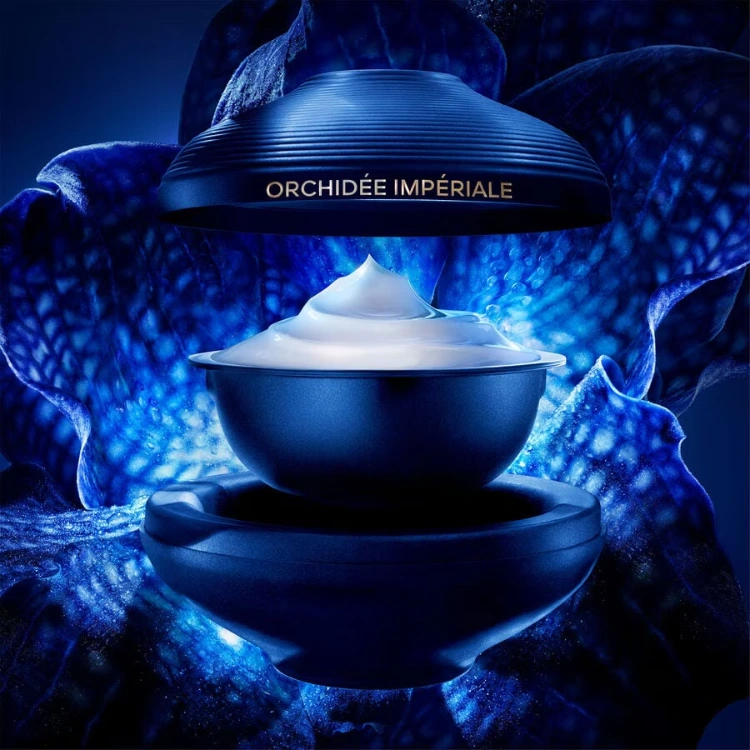
The refill system was co-developed with leading US packaging manufacturer Knoll Packaging. The two teams spent over three years designing and validating a pulp-molded solution capable of protecting Guerlain’s rare, high-value Orchidee Imperiale formula. The final container uses Knoll Ecoform material, made from 90% natural plant cellulose sourced from FSC-certified fast-growing wood fiber and bagasse, a byproduct of sugar production. To contain a luxury cream within highly porous pulp, the refill’s inner wall is lined with an ultra-thin polymer film for necessary barrier protection.
The environmental and business impact is substantial. This pulp refill system weighs ten times less than a traditional plastic or glass refill, dramatically cutting shipping-related carbon emissions and reverse logistics costs. From first purchase through use, the product’s full lifecycle environmental impact is reduced by at least 30%. The design is intuitive, snapping in and out without tools, fully compatible with Guerlain’s existing outer jar system, maintaining the tactile experience expected of a luxury product without compromise.
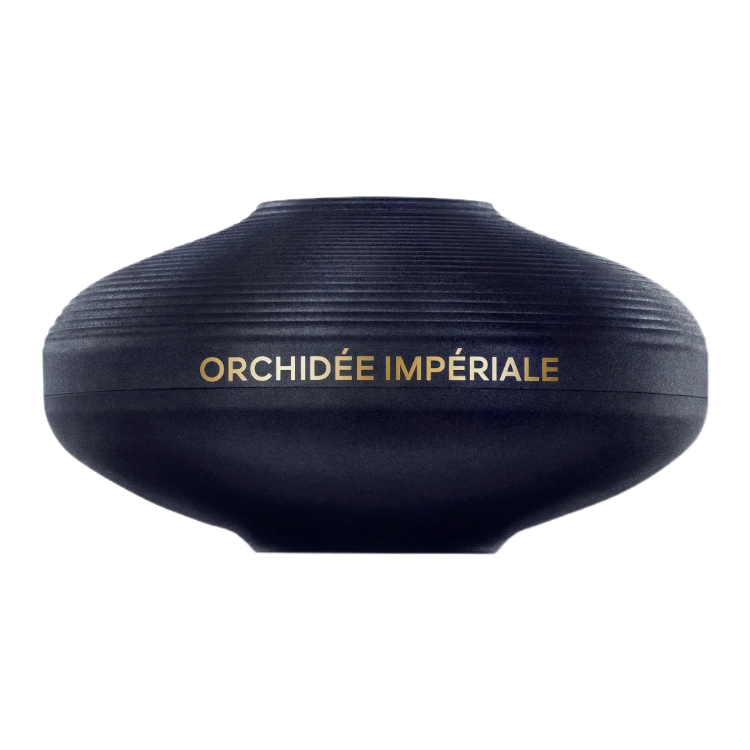
This achievement, which combines material science and structural engineering, has been jointly patented (patent number FR 24 04336) and won Best Refill at the Formes de Luxe Awards in Monaco, the most prestigious recognition in luxury packaging, firmly establishing molded pulp as the industry gold standard for high-performance primary skincare packaging.
3.2 Morrama: a 98% plastic reduction with the Maya system
London-based design studio Morrama, working with Chinese manufacturer PPK, developed the Maya system, a refillable beauty packaging platform covering creams, lipsticks, and compact powders, widely seen as a benchmark case for radical plastic reduction.
The Maya system’s core idea is to eliminate complex injection-molded mechanical structures. Its cream jar refill pods are made entirely from molded fiber based on bamboo and bagasse. To address leakage concerns with high-moisture formulas like creams and body lotions, these pulp inserts are lined with an ultra-thin PE/PP/PET film accounting for just 3-5% of total weight. This small fossil-based proportion is a deliberate engineering trade-off, ensuring reliable water and oil barrier performance while keeping the packaging compatible with standard paper waste streams, achieving a 98% plastic reduction compared to other leading refillable beauty brands.
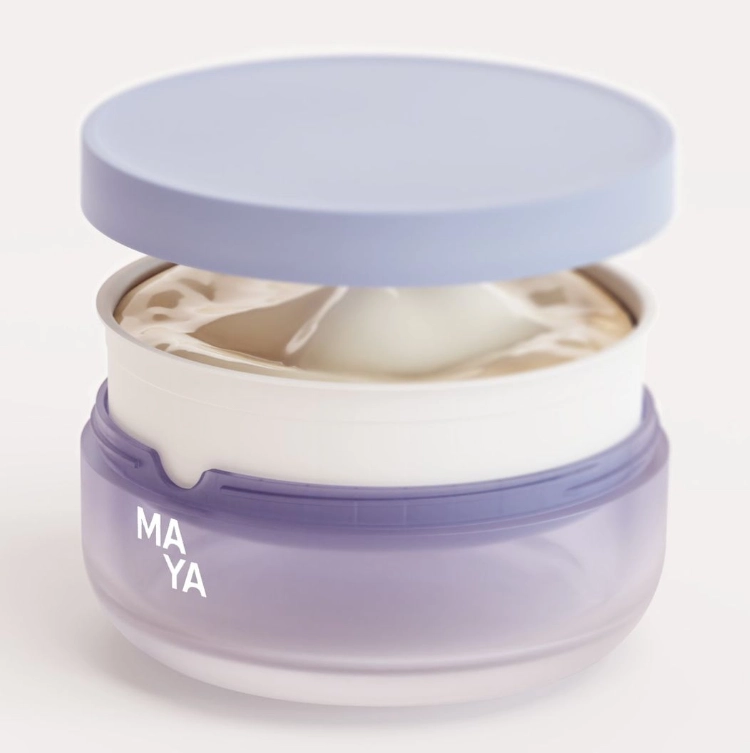
Maya offers three standard sizes for skincare: 15ml (for premium eye creams), 50ml (for everyday moisturizers), and 200ml (for larger body cream formats). Morrama’s design philosophy is notable: making packaging “refillable” by adding bulky materials is itself wasteful. Instead, a minimal pulp cup base that slots into a permanent outer jar achieves real material savings without compromising brand experience.
3.3 Daisyface and Haeckels: rethinking structure and “biocontributing” design
In the clean beauty space, independent brands are often pushing structural innovation further than larger players.
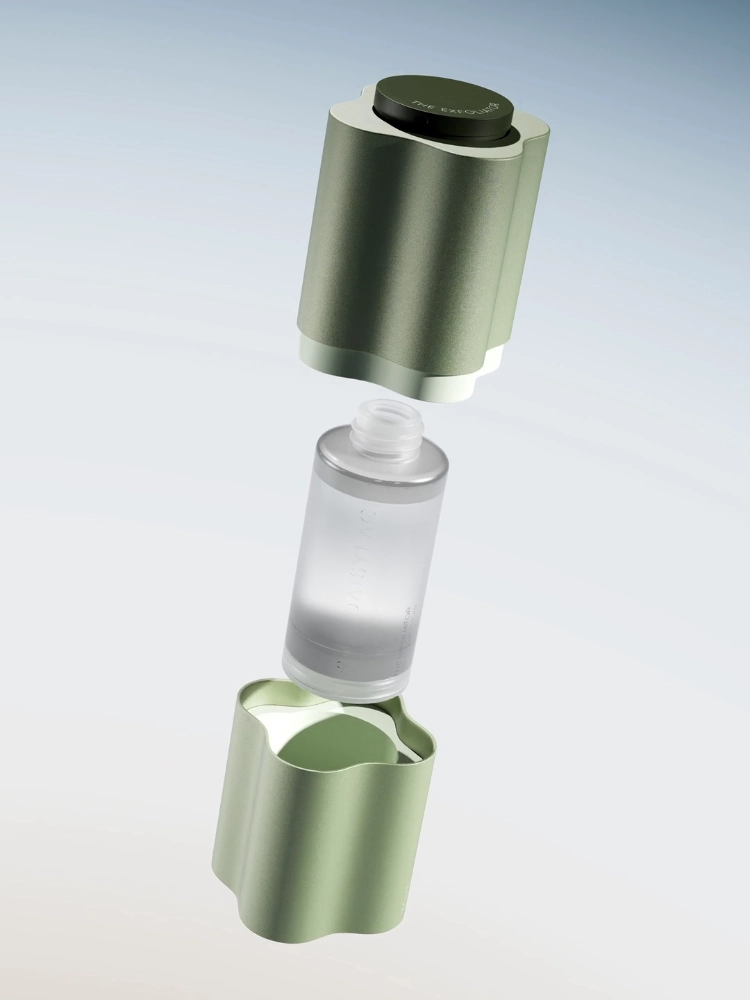
Daisyface, designed by Blond, offers a clever rethink of cream refill systems. Drawing inspiration from the shape of a daisy flower head, the design uses a sage-green aluminum outer jar paired with an eco-friendly refill system. Its most notable innovation: the airless pump head, usually made from multiple hard-to-recycle plastic components, is integrated into the permanent outer container rather than attached to the disposable refill. This inversion dramatically simplifies the refill structure into a simple eco-friendly insert, reducing material waste and recycling complexity with each refill. The outer packaging also replaces traditional cardboard boxes with molded pulp trays, further reducing the brand’s footprint.
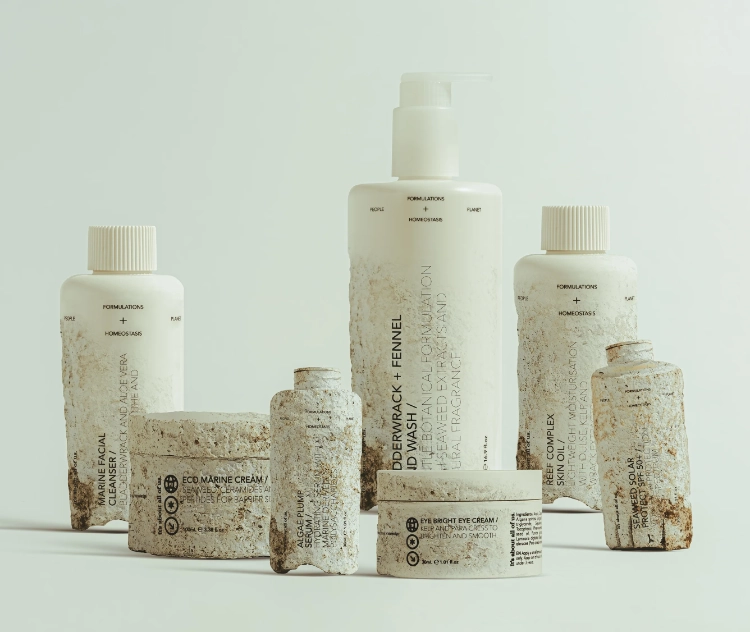
Haeckels, based in Margate, UK, has taken biomaterials to an extreme with what its founder Dom Bridges calls “biocontributing” packaging. Rather than paper, the outer shell of its creams and serums uses mycelium (mushroom root structure) as a natural adhesive, binding sawdust, flax, and hemp shells, grown into shape within molds. This packaging is extremely lightweight, impact-resistant, and fire-resistant. The outer layer is wrapped in recycled pulp embedded with native British wildflower seeds. After use, consumers can bury the entire package in soil; the mycelium breaks down quickly (in as little as six weeks), releasing nutrients that help the seeds grow, turning the packaging into a “seed bomb” that supports local bee populations. This “less harm” to “positive contribution” approach elevates packaging sustainability to a philosophical level. Haeckels has also recently tested Vivomer, a microbially fermented, naturally biodegradable material, in containers that come into direct contact with product.
3.4 Broader industry momentum: Chanel, Beiersdorf, Amorepacific
Beyond direct molded pulp inserts, many leading international brands are driving the same shift through alternative materials and molding technologies:
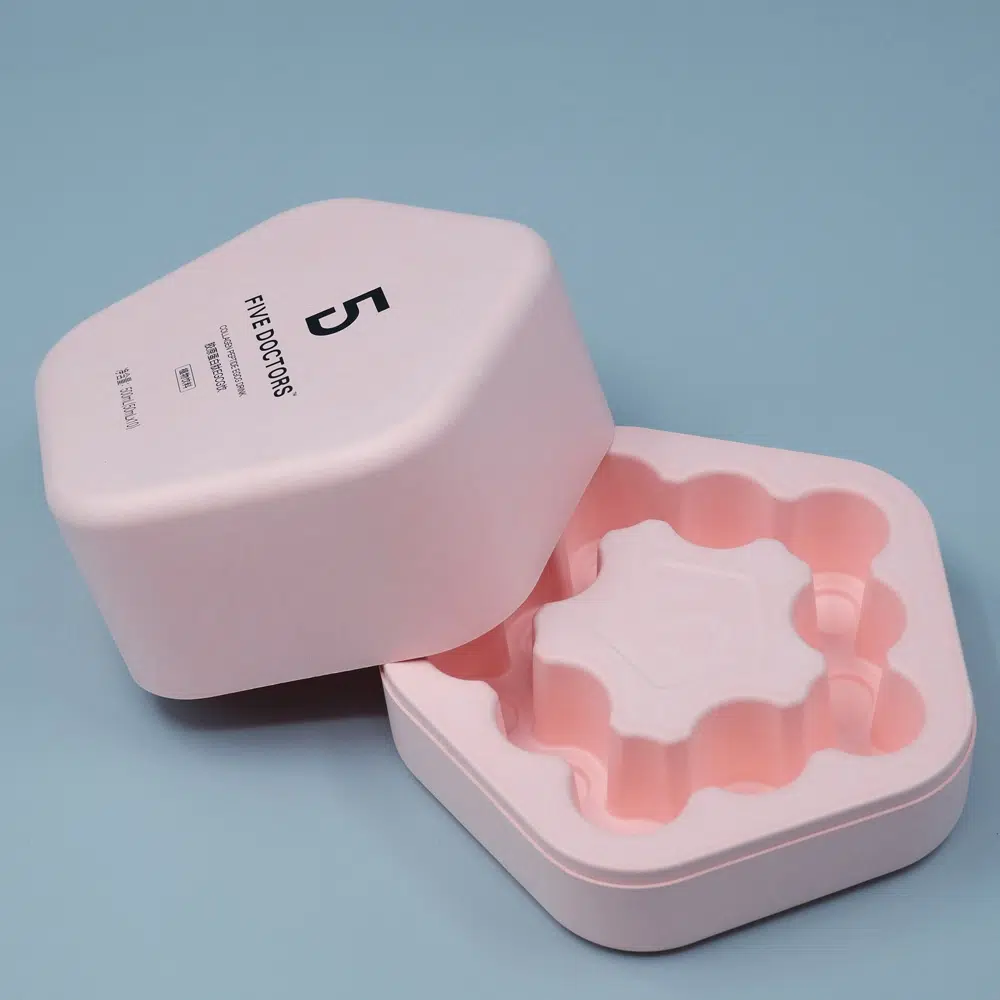
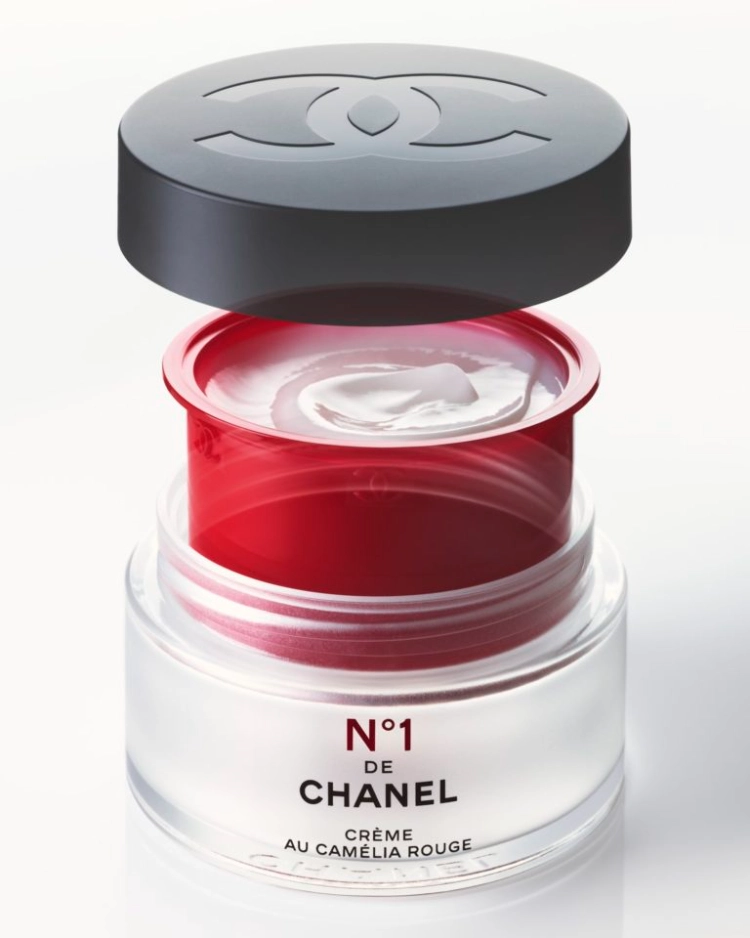
Chanel has used bio-compound resin from Finnish startup Sulapac for the cap of N°1 de Chanel, its flagship red camellia cream. This material, made from wood fiber particles bound with plant-based binders, retains a natural wood-like texture and fully biodegrades without leaving microplastics behind. For the 100th anniversary of N°5, Chanel also moved away from traditional luxury cardboard boxes in favor of a minimalist white clamshell made entirely from Knoll Ecoform molded pulp, in partnership with Knoll Packaging, signaling that top luxury brands are actively embracing the natural texture of raw pulp.
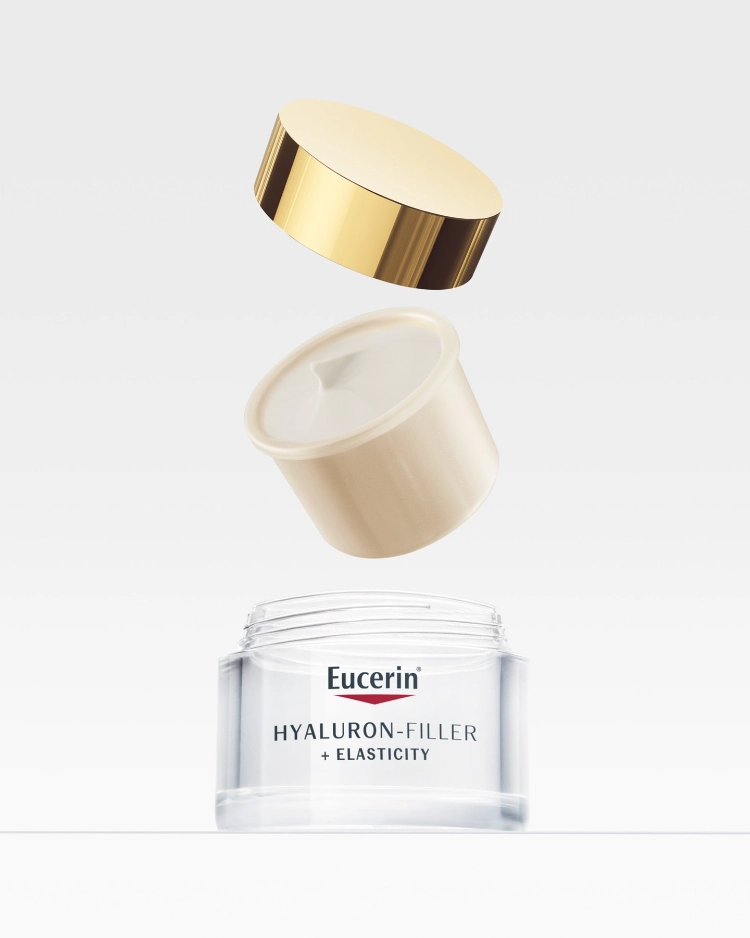
Beiersdorf’s Eucerin brand introduced a streamlined refill system for its bestselling Hyaluron-Filler day and night creams. By keeping the original outer jar and lid, consumers only need to purchase an 8-gram refill insert, compared to 89 grams of plastic in the original full packaging, achieving roughly 90% direct plastic savings and an estimated 24-ton annual plastic reduction for the brand, with the outer carton made from up to 92% recycled paper.
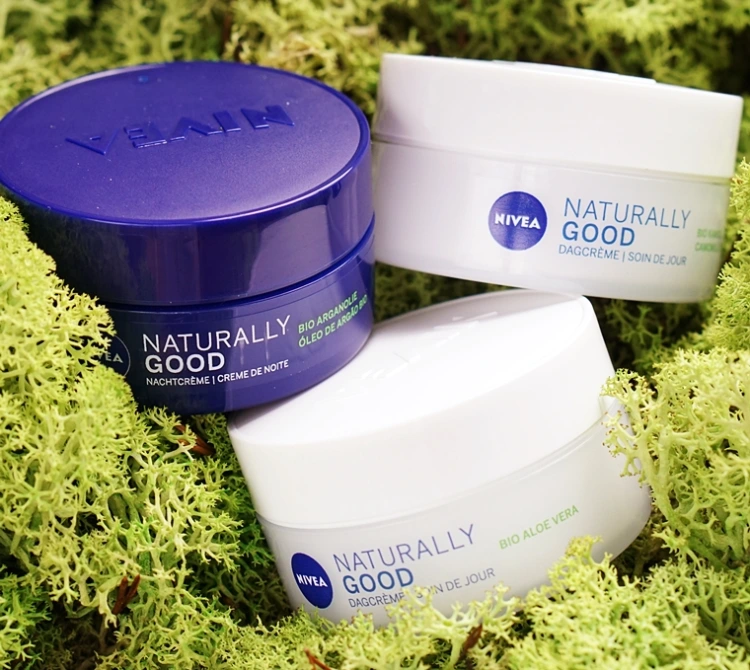
Beiersdorf’s Nivea Naturally Good cream line uses certified renewable polypropylene from SABIC, derived from tall oil waste, a byproduct of the paper industry, closing the loop on second-generation renewable feedstock.
Shiseido’s Ule, a vertical-farming, plant-extract focused clean beauty brand incubated in France, built sustainability into its DNA from the start. Ule’s refills are made from 100% recyclable materials, significantly reducing plastic and aluminum use. Shiseido has also pioneered LiquiForm technology, a one-step process combining bottle blow-molding and liquid filling, cutting production-stage carbon emissions by 70%.
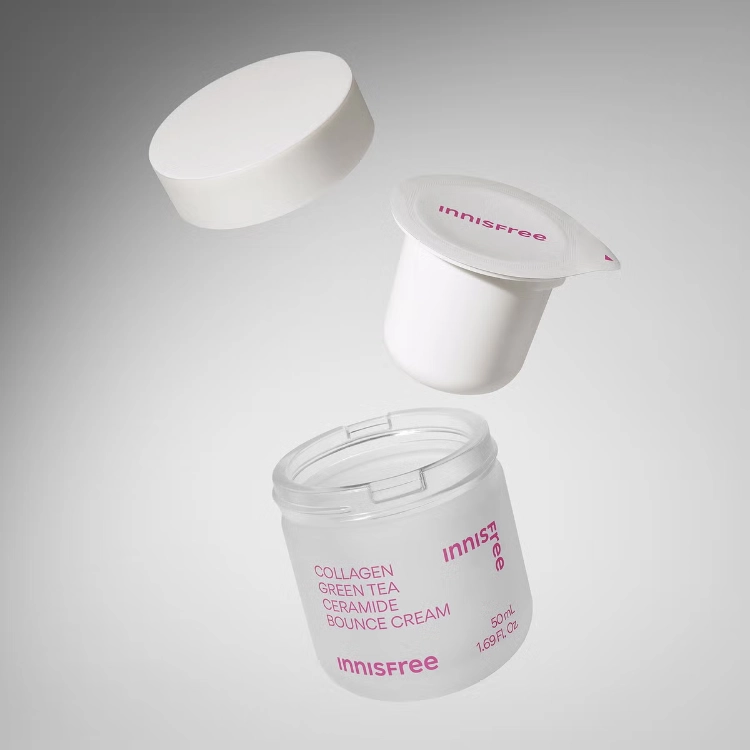
Amorepacific has rolled out several refill initiatives in the Korean beauty market. Its Innisfree collagen peptide firming cream uses a refill insert containing up to 97% post-consumer recycled plastic, paired with a reusable glass outer jar. More notably, Amorepacific opened a physical refill station in Gwanggyo, Korea, encouraging consumers to refill products using dispensing containers made from coconut shell and fiber materials, significantly raising public awareness of molded, reusable containers.
4. Supply chain shift: leading packaging manufacturers driving the technology
The push to eliminate plastic from cream refills fundamentally depends on upstream breakthroughs in barrier coating materials and high-pressure molding processes. A small group of manufacturers with core patents and advanced engineering capability are reshaping the global beauty supply chain.
4.1 Knoll Packaging: Ecoform technology and complex structural engineering
Knoll Packaging holds a dominant position in premium cosmetics packaging through its Knoll Ecoform molded pulp technology. The patented formula typically combines 60% FSC-certified fast-growing bamboo fiber with 40% bagasse byproduct and water, achieving a 100% plant-based composition with no chemical resin additives.
Knoll’s core strength extends beyond the precision cream insert developed for Guerlain, into complex mechanical components. The company developed an Ecoform molded pulp powder compact featuring a tab closure structure, a rigid hinge mechanism that’s extremely rare in traditional wet-press pulp processes due to material flexibility limitations. Knoll’s innovation ensures this compact retains its mechanical strength and reliable closure after hundreds or thousands of open-close cycles.
Knoll also created a highly customized clamshell for French anti-aging skincare brand SkinOffice Paris, with precision multi-cavity molding to securely hold a serum bottle, a metal applicator tool, and an instruction booklet, with color-matched pulp tones calibrated during the initial pulping stage to echo the deep green of the formula’s algae complex. This ability to deliver strict color customization alongside precise mechanical engineering has earned Knoll recognition at the Dieline Awards, Luxe Pack’s green packaging awards, and MakeUp in Paris IT Awards.
4.2 Papacks: organic-coated pulp capsules and the “Beauty Loop”
Cologne-based Papacks represents a purist approach to high-difficulty cream containers, developing Refill CAPS, molded pulp cream refill capsules. These come in a complete size range, from 15ml eye creams to 30ml/50ml day and night creams up to 100ml/200ml body creams.
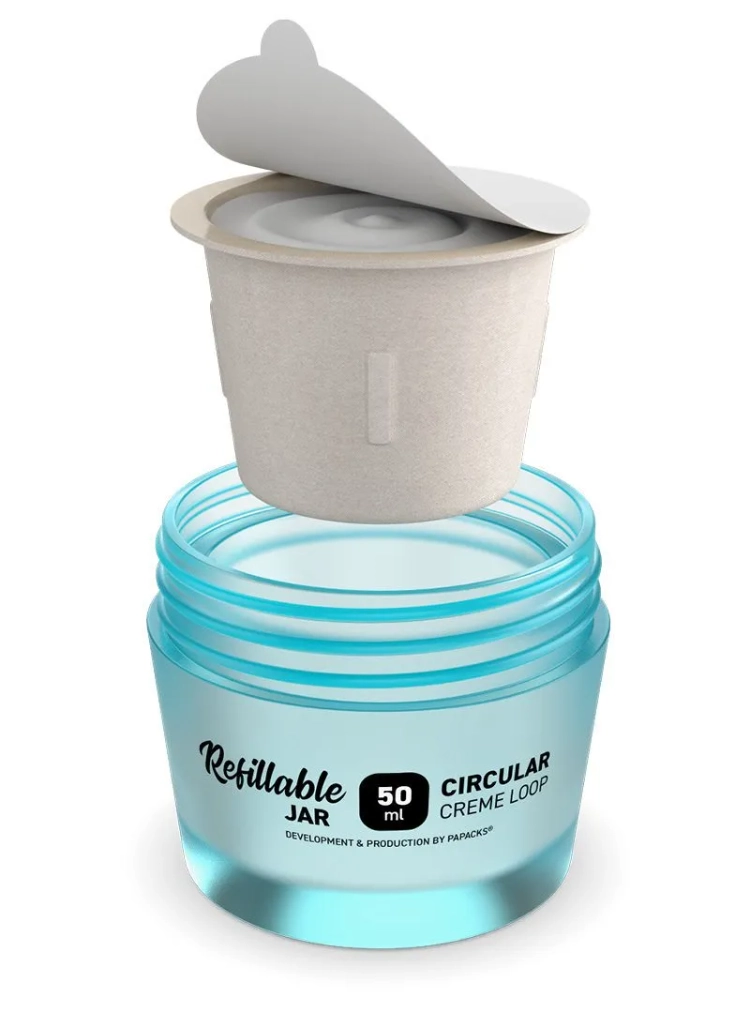
The base material uses fast-growing industrial hemp fiber or other FSC-certified rapidly renewable cellulose, easing pressure on traditional wood sourcing. The core innovation is Papacks’ proprietary organic coating, which eliminates petroleum-based resin entirely while delivering strong barrier performance against oxygen, oil, and water vapor, keeping creams stable and preventing moisture loss or oxidation. The capsule opening also supports high-temperature heat sealing and high-quality custom printing. This fully plastic-free, home-compostable innovation has earned Papacks the POPAI D-A-CH Award and the WorldStar Packaging Award.
4.3 Technicaps and Stoelzle Glass Group: a hybrid glass-and-pulp model
French glassmaker Stoelzle Glass Group, partnering with thermoset and recyclable packaging specialist Technicaps, launched “Le Perpetuel,” a next-generation refillable cream jar system representing one of the most refined commercial compromises currently available.
The system uses a hybrid architecture: a permanent, high-quality thick-bottomed glass outer jar paired with a sustainable, consumable refill cup. To achieve a seamless fit, Stoelzle modified the internal dimensions and wall thickness tolerances of its classic 50ml glass jar so the pulp cup fits precisely into the glass cavity, with reinforced rings and slots delivering a satisfying, audible click on insertion.
Technicaps manufactures the smooth, white, slightly glossy pulp insert. While it currently uses a thin layer of polypropylene as a transitional barrier material, third-party testing confirms this trace PP doesn’t compromise the insert’s recyclability within Europe’s strict paper sorting and pulping systems. This hybrid strategy, pairing a durable, premium glass shell with a low-cost, lightweight pulp insert, is widely considered one of the most commercially mature solutions for balancing luxury feel with strong sustainability credentials.
4.4 AJG Packaging: shaped molding and logistics efficiency
AJG Packaging won the Best Sustainable Product Design award at Luxe Pack New York for its innovation in fiber-molded coated container solutions. For refillable cream jars and serum bottles specifically, AJG offers a complete packaging solution including molded fiber inserts (pods), deep-drawn cups, and caps.
Its core advantage lies in a breakthrough organic, plant-based moisture barrier layer, which delivers strong resistance to moisture, oxygen, and oil, keeping sensitive cream formulas stable while making the entire component fully recyclable and compostable.
AJG’s approach also considers logistics efficiency. Its isosceles triangular bottle design, for example, allows two bottles (such as a shampoo and conditioner set) to combine into a perfect square shape, doubling the number of units that fit in a standard shipping container or truck, extending the environmental benefit from material choice all the way through to logistics.
4.5 Meiyume and GVPAK: Asia-Pacific supply chain innovation
Asia-Pacific manufacturers are also accelerating in this space. Meiyume launched its “Block Party Kit,” covering skincare creams and masks. Its 60ml cream container features an aluminum cap and glass jar paired with a “smart refill system.” Consumers simply push and release to pop out the internal capsule, while the kit’s outer carrying case is made entirely from high-quality plant fiber wet-press molding. Data shows that two refill cycles with this system achieve a 52% overall plastic weight reduction.
GVPAK and Eseneco focus on highly customized molded pulp primary and secondary packaging, making extensive use of bagasse, a high-fiber agricultural byproduct, to produce eco-friendly cream jar inserts, deodorant containers designed for direct filling, and compact powder refills that achieve a precise 1:1 fit with existing outer cases while cutting plastic use by 76%. GVPAK’s own bagasse paper jars follow this same logic for sustainable makeup packaging, pairing a one-piece molded pulp structure with a bio-based barrier coating for leak-proof performance.
4.6 Comparing leading manufacturers’ technology platforms
| Manufacturer |
Core technology/system |
Material composition and barrier application |
Key strengths and recognition |
| Knoll Packaging |
Knoll Ecoform refill and clamshell |
60% bamboo fiber + 40% bagasse, ultra-thin polymer barrier, supports high-frequency hinge closures |
Extreme precision in tolerance and mechanical strength; dominant in luxury market; multiple Dieline and Formes de Luxe awards |
| Papacks |
Refill CAPS |
Hemp/cellulose base + proprietary organic barrier coating |
Full 15-200ml cream capsule range; 100% plastic-free, home compostable; POPAI and WorldStar awards |
| Technicaps and Stoelzle |
Le Perpetuel refill system |
Glass outer jar + smooth white molded pulp cup (thin PP barrier) |
Optimized for existing paper recycling streams; balances glass luxury feel with pulp sustainability; fast commercial adoption |
| AJG Packaging |
Fiber-molded coated pods |
Deep-drawn molded fiber + plant-based moisture/oil barrier |
Complete cap-to-jar molded solution; unique geometric design improves logistics loading; Luxe Pack New York award |
| Morrama (with PPK) |
Maya beauty system |
Wet-pressed bamboo/bagasse outer shell + 3-5% thin heat-pressed liner |
Simplest structural blueprint for plastic reduction; achieves up to 98% plastic reduction |
5. Business logic: refill economics and consumer mindshare
Replacing the interior of heavy glass or high-gloss acrylic cream jars with molded pulp isn’t simply a defensive response to tightening regulation. It reflects a deeper business logic aimed at reshaping consumption patterns, lowering supply chain costs, and strengthening brand loyalty.
5.1 Closed-loop economics and the “Beauty Loop” concept
For premium creams, the outer glass jar or complex metal housing is often extremely costly to produce, sometimes accounting for over 30% of total cost, and carries significant brand identity and mold investment. If consumers had to repurchase the full product every time, it would be both an environmental and financial inefficiency.
Packaging manufacturer Papacks coined the term “Beauty Loop Concept” to describe this shift. The underlying business logic is a lock-in effect. Once a consumer pays a premium for an attractive, durable outer jar, they’ve made a psychological and physical investment. From that point forward, the brand can sell the core formula at a relatively low marginal cost using inexpensive, eco-friendly pulp capsules. Consumers don’t need to change their daily routine; they simply remove the spent pulp capsule, like a coffee pod, recycle it with paper waste, and click in a new one.
This model significantly lowers the financial barrier to repurchase, shifting brands from a one-time high-margin packaging sale to a recurring revenue model centered on selling the core formula repeatedly. This not only boosts customer lifetime value but deepens brand loyalty through repeated interaction.
5.2 Reverse logistics and direct-to-consumer fulfillment savings
The weight advantage of molded pulp is reshaping skincare logistics economics in ways the industry hasn’t fully recognized. Guerlain’s disclosed data shows its pulp refill system weighs ten times less than a traditional plastic or glass refill. In modern e-commerce and subscription-based direct-to-consumer models, a dramatic reduction in packaging weight translates into substantial cost savings.
Lighter pulp refills significantly cut carbon taxes and actual shipping costs on international ocean and air freight. This has also enabled new fulfillment models. UK startup “On Repeat,” for example, provides B2B fulfillment for liquid cosmetics and cream refills. In this model, brands store bulk cream in GMP-grade cleanrooms; when an order comes in through a brand’s website, On Repeat fills it on-demand into a proprietary, fully home-compostable fiber refill pouch compatible with pulp container logistics.
The key logistics advantage: these lightweight pulp or compostable refill pouches fit directly into standard envelopes, qualifying as a “large letter” under Royal Mail size guidelines, allowing for extremely low-cost delivery without bulky cardboard boxes or bubble wrap. Consumers receive freshly filled refills directly in their mailbox, avoiding trips to the post office or the risk of stolen packages. This weight- and volume-optimized supply chain shift converts what would have been logistics expense directly into brand profit margin, while keeping consumers engaged on the brand’s own website rather than losing them to third-party retailers.
5.3 “Raw texture” as the ultimate eco-signal
Consumer perception of premium packaging quality is undergoing a generational shift. Research from the British Beauty Council found that 91% of beauty consumers want less packaging volume and complexity, while 88% strongly want the ability to refill their cosmetics.
In this context, a refill that still looks overly polished, heavily molded, and glossy can trigger a sense of greenwashing among younger consumers, particularly millennials and Gen Z, who currently drive much of the market. The natural fiber texture, irregular grain, uneven edges, and matte finish inherent to molded pulp are becoming a built-in eco-signal that carries its own credibility.
In the past, luxury brands relied on high-gloss acrylic, electroplated metal, or heavy double-walled glass to signal value through weight and shine. Today, top-tier brands like Chanel and Guerlain are deliberately preserving, even engineering, this natural fiber texture. Through this sensory language, without needing extra explanation, they communicate to high-value consumers that the premium they’re paying for is concentrated in the formula itself, not in packaging that will sit in a landfill for 500 years. This shift in visual and tactile design language marks a genuine turning point in premium skincare aesthetics, moving from “manufactured luxury” toward “natural sustainability.”
For brands looking to act on this shift, the path doesn’t require reinventing the entire packaging system from scratch. Working with an experienced molded pulp manufacturer to develop sustainable makeup packaging is often the most practical first step, whether that means a refillable cream jar insert, a bagasse-based bottle, or a fully custom solution built around an existing product line.
6. Industry recognition and design award validation
The establishment of any new packaging material in the luxury industry comes with rigorous award validation. Molded pulp’s use in cream refills and primary skincare packaging has swept top global packaging design awards in recent years, reflecting broad industry recognition of the technology’s maturity.
Pentawards, often called the Oscars of packaging design, has repeatedly recognized molded pulp products. Knoll Packaging’s Ecoform molded pulp refills and related compact designs have made multiple shortlists and wins; Daisyface’s daisy-inspired pulp and aluminum system was also highly rated for its minimalist material logic.
Formes de Luxe Awards in Monaco, the most prestigious recognition in luxury packaging, awarded Best Refill to the Guerlain and Knoll collaboration, representing the highest level of technical validation from the discerning French luxury sector.
At Dieline Awards and Luxe Pack in Green in New York, sustainability took center stage. Knoll’s SkinOffice molded pulp serum casing won a Dieline award, while AJG Packaging’s high-barrier, plant-based coated fiber container won Best Sustainable Product/Solution Design, beating out a wide field of competitors.
At MakeUp in Paris IT Awards, Knoll’s EcoForm molded pulp technology, featuring its rare tab-closure structure, was praised by the judging panel as “compact, sensorial, and well executed,” cementing its technical leadership in precision structural components.
This concentration of awards reflects a clear industry consensus: molded pulp is no longer a compromise made for regulatory compliance, but a material with real design potential, capable of carrying premium brand identity alongside precise mechanical function.
7. Strategic outlook and conclusion
Based on this comprehensive analysis of material science, brand case studies, supply chain transformation, and business and logistics logic, this report draws four forward-looking conclusions about the future of molded pulp refill design in premium skincare.
First, molded pulp refill technology has moved well past the proof-of-concept stage and is now in full-scale commercial deployment across luxury skincare.
Second, the evolution of barrier coating chemistry will ultimately determine the winners in this space.
Third, standardization and “hardware-software decoupling” in modular packaging systems will reshape the foundational infrastructure of the beauty industry.
Fourth, “biocontributing” design, going beyond basic recyclability, will define the next competitive frontier.
First, molded pulp refill technology has moved well past the proof-of-concept stage and is now in full-scale commercial deployment across luxury skincare. Guerlain and Knoll Packaging’s three-year joint development and rigorous testing process proves that, through ultra-thin polymer film lining or high-density pressing, pulp containers are fully capable of housing high-activity water- and oil-based creams. The Guerlain case has set a new patented industry benchmark for dimensional tolerance and airtightness, and this benchmark effect is accelerating adoption across more luxury skincare brands moving toward a “permanent outer jar plus consumable pulp insert” architecture.
Second, the evolution of barrier coating chemistry will ultimately determine the winners in this space. Currently, the dominant, commercially proven approach lines bamboo or bagasse pulp with an ultra-thin PE/PP/PET polymer film, as seen in Morrama’s Maya system, which achieves a 98% plastic reduction. But the real technical frontier, the holy grail, lies in scaling 100% pure plant-based organic coatings, like those from Papacks and AJG Packaging, into industrial production. Once these natural coatings can reliably withstand a 36-month shelf life against high-activity formulas containing ingredients like retinol, vitamin C, or strongly penetrating essential oils, fully fossil-free cream packaging will be positioned to dominate the global market.
Third, standardization and “hardware-software decoupling” in modular packaging systems will reshape the foundational infrastructure of the beauty industry. Just as Technicaps and Stoelzle redesigned the internal dimensions of their bestselling 50ml glass jar to accommodate a standardized pulp refill cup, future skincare packaging will inevitably move toward standardized interfaces. The heavy glass or metal outer container will become a lasting piece of “beauty hardware,” representing brand aesthetics, while the standardized molded pulp insert becomes the “consumable software.” This decoupled model lowers the barrier to repurchase and will fundamentally reshape global packaging procurement, automated filling lines, and multi-SKU inventory management.
Fourth, “biocontributing” design, going beyond basic recyclability, will define the next competitive frontier. As sustainability claims become table stakes, simply being “recyclable” or “biodegradable” is no longer enough to stand out with discerning Gen Z consumers. Pioneering brands like Haeckels, using mycelium that grows naturally into shape, combined with recycled pulp embedded with native wildflower seeds, allow consumers to turn discarded packaging directly into a planting opportunity. This marks a shift from “doing less harm” to “making a positive contribution.” Over the next decade, leading brands’ cream refills may not just biodegrade quietly back into the soil, but could incorporate nutrient bases, trace elements, or carbon-capture technology directly into the pulp formula, achieving genuine net-negative carbon impact and ecological restoration across the full product lifecycle.
In short, molded pulp refill design for creams is far from a fleeting trend or a regulatory compliance gesture. It represents a genuine convergence of polymer material engineering, reverse logistics economics, and consumer psychology, reshaping the future of a beauty industry worth hundreds of billions of dollars at unprecedented speed, technical sophistication, and commercial ambition.