






The most useful sustainable packaging award winners of 2026 are not simply attractive alternatives to conventional packs. They show how structure, material, protection, opening, transport and end-of-life can be reconsidered as one connected design problem. Across food, beauty, electronics, e-commerce and luxury applications, the strongest projects make their sustainability strategy visible in the product image: a wall that nests more efficiently, a closure that removes tape, an insert that becomes part of the product experience, or a refill system that separates durable and consumable components.
This review examines ten confirmed 2026 award recipients from a practical brand and procurement perspective. Each case moves directly from the image to the design logic: what the form reveals, which technical mechanism carries the idea, what evidence supports the claim, and what still needs to be verified before mass production. The later sections compare the projects across material reduction, reuse, recyclability, transport efficiency and evidence quality, so the article works as both a visual design review and a concise sourcing guide.
01 The Fiber Box: Molded Fiber Designed for Cold-Chain Reality
Recognition: DIELINE Plastic Free Innovation, 1st Place; Sustainable Design/Food, 3rd Place.
What the product image reveals
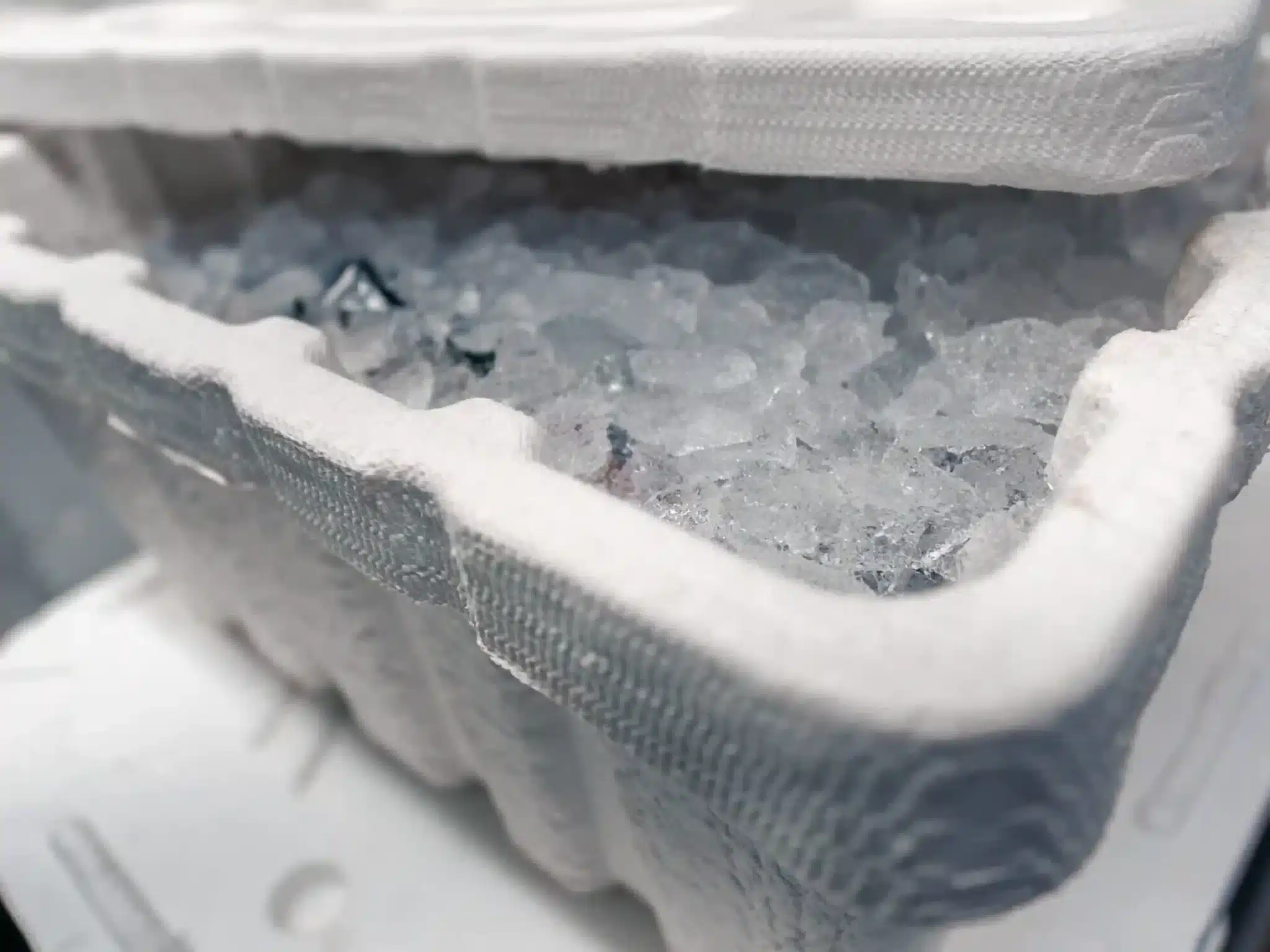
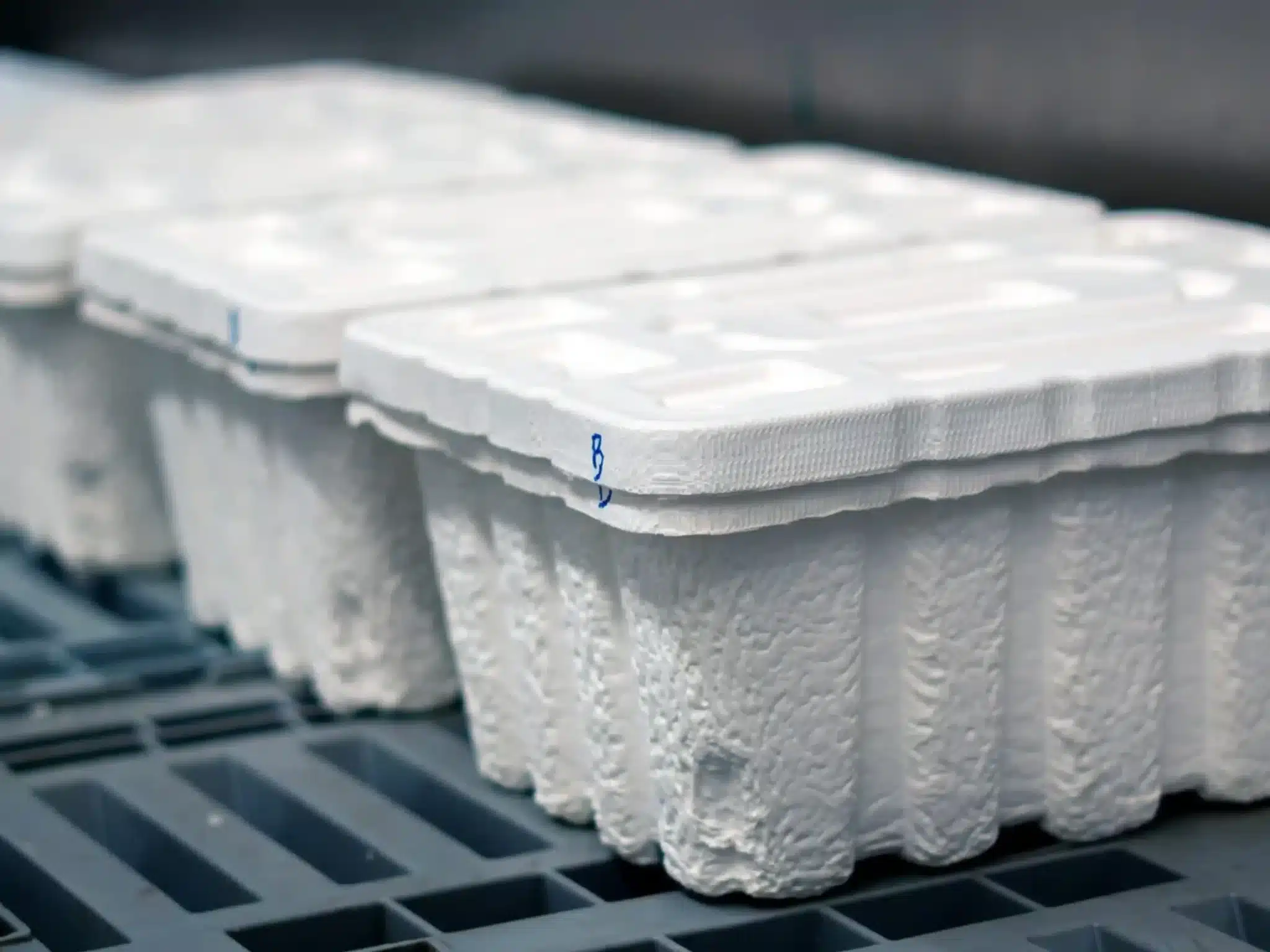
- The thick rim and tapered walls are structural features, not decorative texture.
- The box is shaped to stack when loaded and nest when empty.
- The close internal geometry avoids the visual language of a paper sleeve placed around a plastic solution.
Technical reading. PAPACKS uses wood-based fresh fiber and industrial hemp for a seafood transport box intended to replace expanded polystyrene. The manufacturer reports testing above five days at 0–2°C and 90–95% relative humidity, plus up to 66% lower empty storage and transport volume through nesting.
Boundary: the performance and volume data are manufacturer-reported. Paper-stream acceptance still depends on contamination and local mill requirements.
Buyer takeaway: ask for humidity, compression, leak, stacking and cold-chain test reports for the exact fiber recipe and wall thickness—not a generic molded-pulp datasheet.
02 Fussy Refillable Body Wash: Make the Permanent Pack Worth Keeping
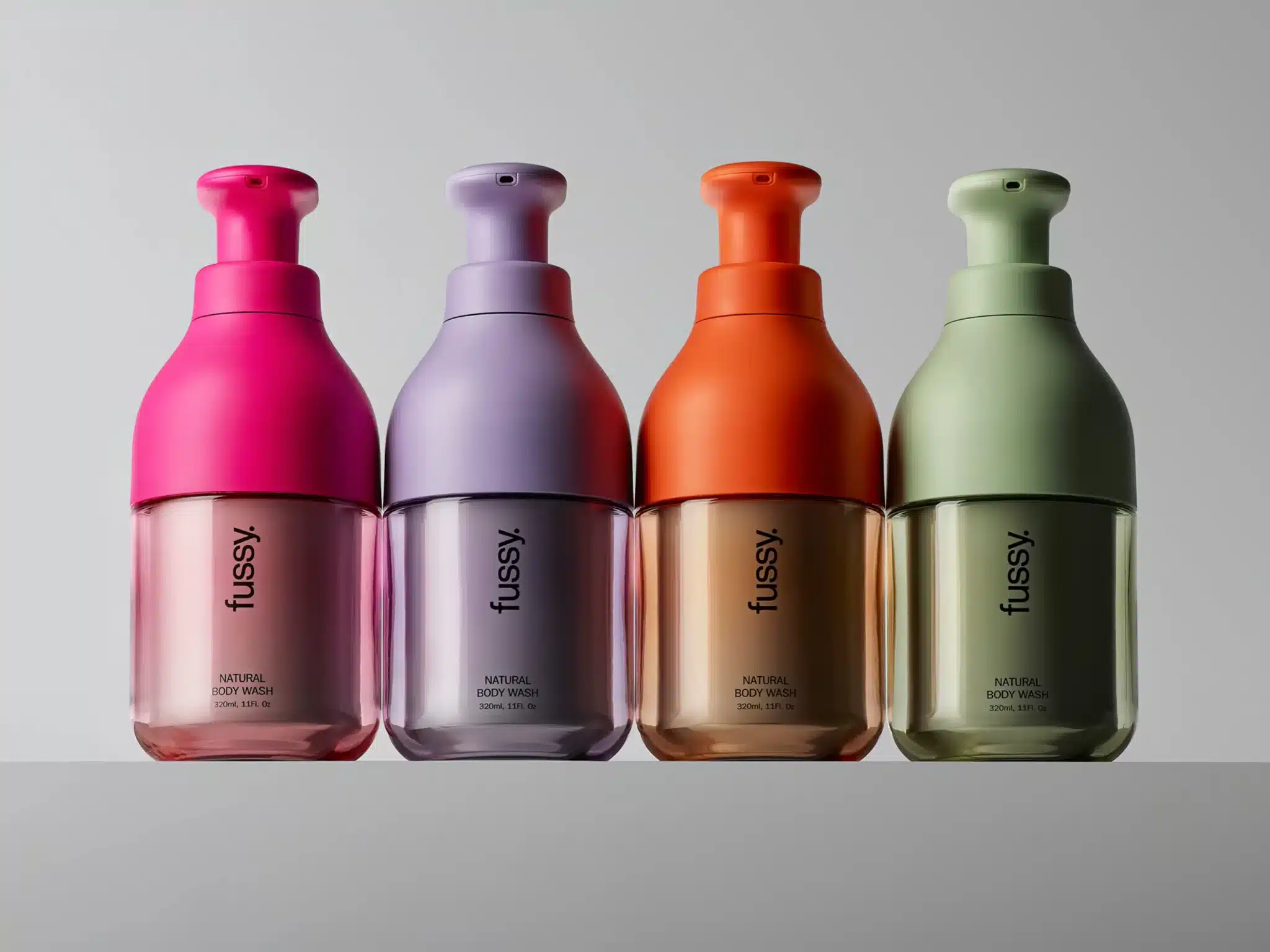
Recognition: DIELINE Editor’s Choice and Sustainable Design, Best of Category.
What the product image reveals
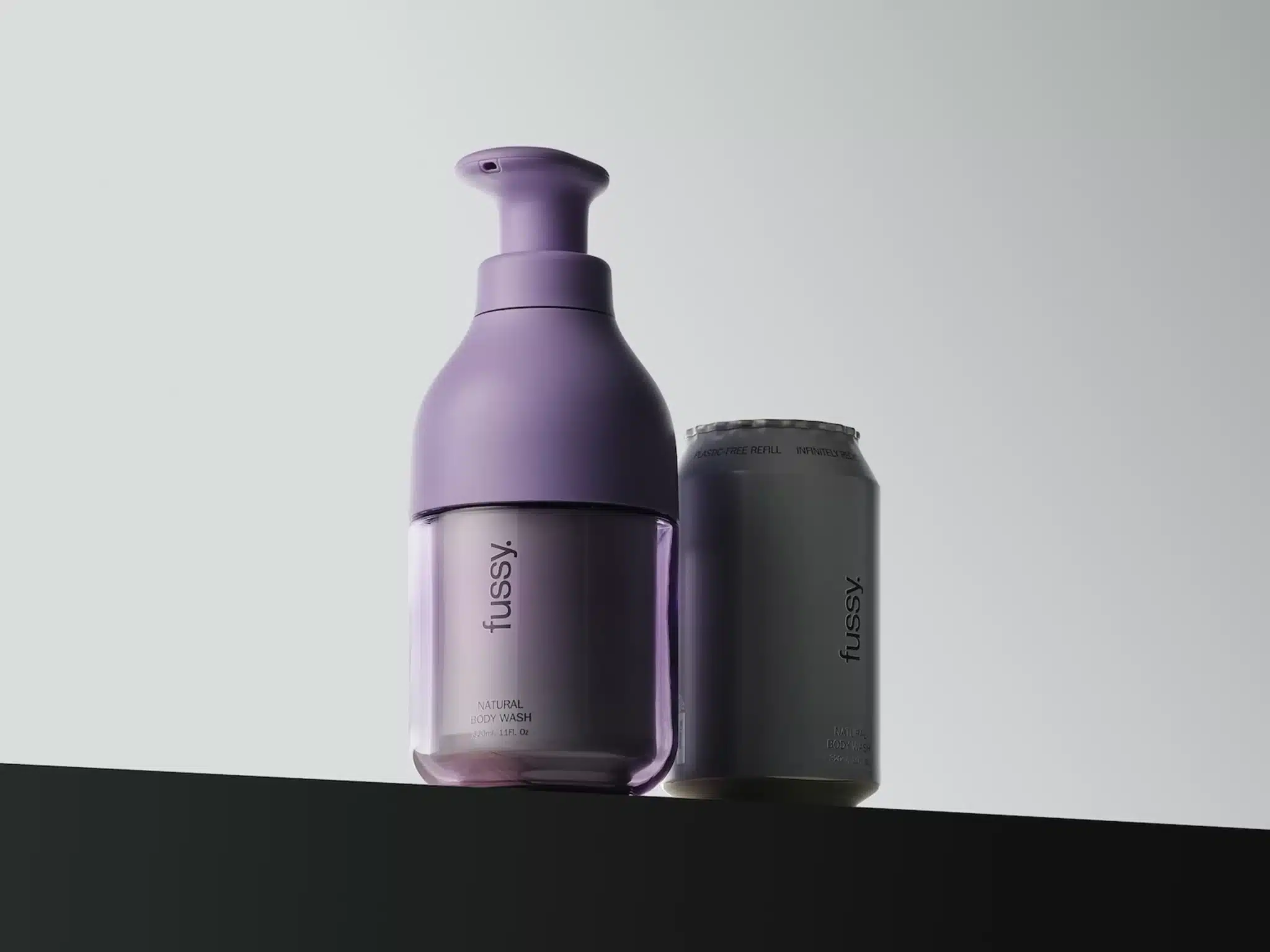
- The tinted outer body lets users understand that a second component sits inside.
- The pump and grip are designed as a bathroom product, not as temporary packaging.
- The refill is visually distinct, which makes the replacement action easier to understand.
Technical reading. The system separates a durable PET/ABS dispenser from a replaceable aluminium refill. That distinction is the entire logic: the heavy, complex user interface stays in service while the consumable component changes.
Boundary: Fussy reports a design life of up to five years, but public sources do not provide verified pump cycles, refill adoption, failure rates or a comparative lifecycle assessment. The design is refillable, not plastic-free.
Buyer takeaway: set a minimum verified cycle life for the pump, seal and refill interface. A refill system only improves material efficiency when customers continue using the permanent component.
03 KIND Paper Wrapper Pilot: Let the Material Change Stay Visually Honest
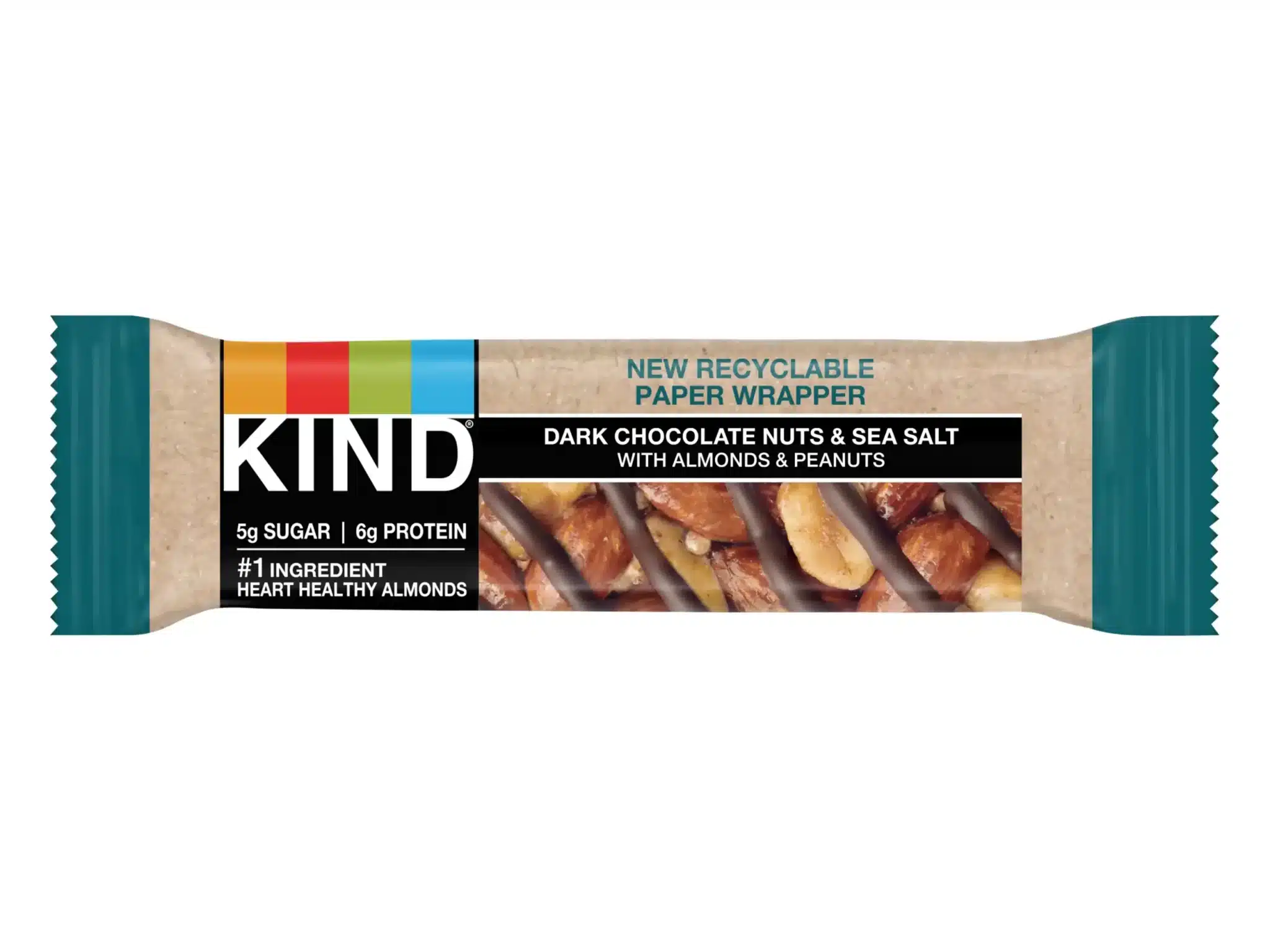
Recognition: DIELINE Sustainable Design/Food, 1st Place.
What the product image reveals
- The wrapper keeps the familiar pillow-pack format, reducing user and line disruption.
- Its matte paper appearance communicates the material shift without adding an oversized eco motif.
- The end seals remain visually conventional because sealing reliability is still the critical function.
Technical reading. KIND and Printpack piloted the wrapper in 160 Whole Foods Market stores. The paper-based format was How2Recycle pre-qualified for a “Widely Recyclable” label, subject to the wrapper being clean, dry and accepted locally.
Boundary: the full barrier structure, shelf-life comparison, yield loss and conversion economics are not public. Paper appearance does not prove acceptance by every paper mill.
Buyer takeaway: preserve the proven pack geometry where possible, then validate seal integrity, shelf life, line speed and local recycling acceptance before expanding the claim.
04 ZERO-glue Express Box: Turn the Closure into the Main Design Feature
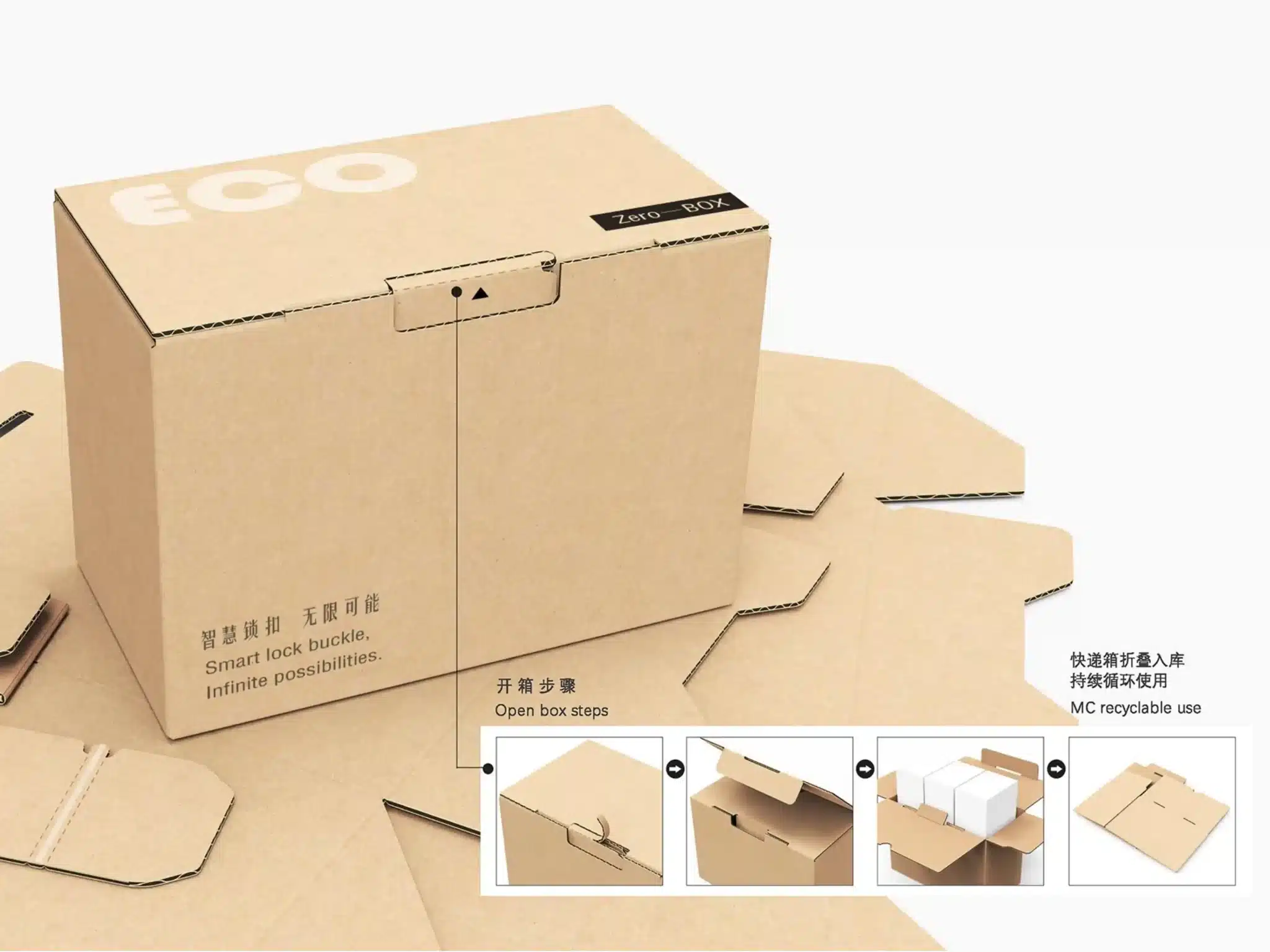
Recognition: iF DESIGN AWARD Gold 2026.
What the product image reveals
- The locking tab is intentionally prominent because it replaces tape and explains opening.
- Fold lines concentrate strength around the closure rather than adding another material.
- The same structure can be reclosed, supporting product returns.
Technical reading. YUTO uses an all-corrugated mechanism to combine sealing, tamper evidence, opening guidance and return use. The sustainability gain comes from functional integration, not simply from calling the box paper-based.
Boundary: the official iF page does not publish weight savings, packing speed, humidity resistance, drop testing or automated-erecting compatibility.
Buyer takeaway: test the lock after compression, moisture exposure and first opening. Component removal is valuable only when packing speed and return security remain acceptable.
05 Honeysticks: Use One Material Language Across the Whole Range
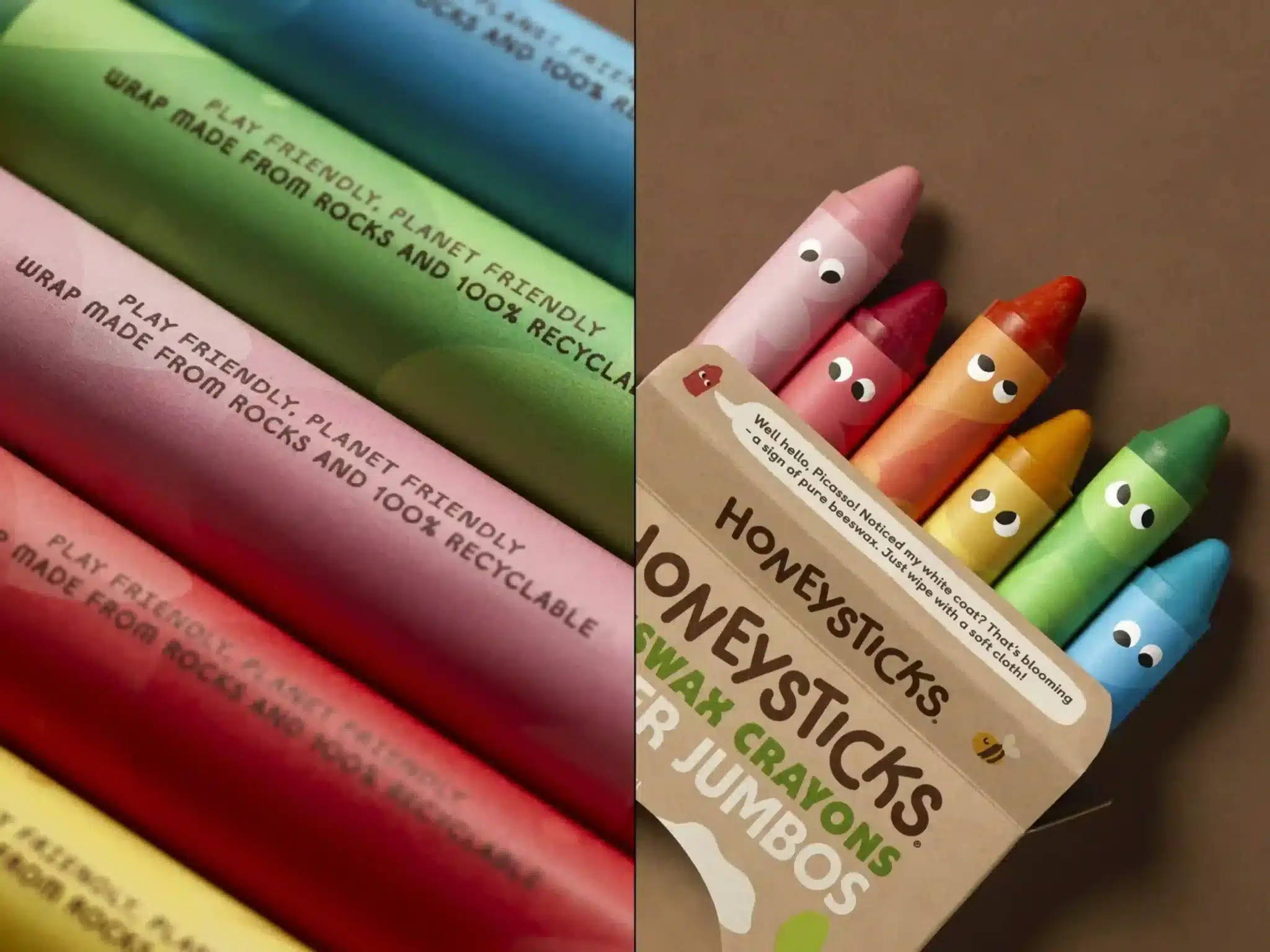
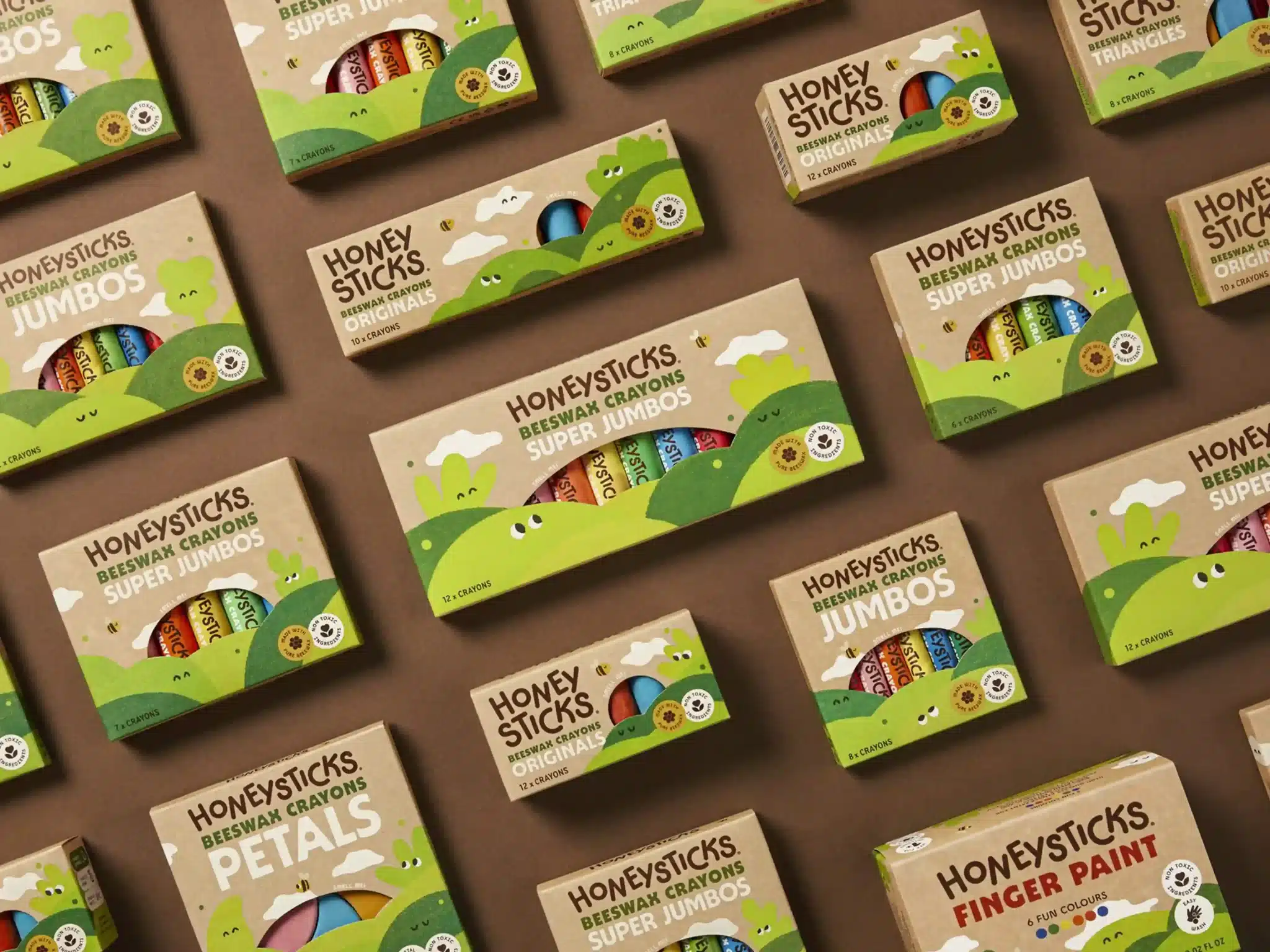
Recognition: DIELINE Plastic Free Innovation of the Year; Sustainable Design/Home, 3rd Place.
What the product image reveals
- Kraft color and illustration create family recognition across different structures.
- Die-cut openings show or expose the product without a conventional clear plastic window.
- Reusable tins appear selectively rather than being forced onto every SKU.
Technical reading. Honeysticks turns plastic elimination into a portfolio system using paperboard, kraft paper, glue-free cartons, vegetable-based inks and selected reusable tins. The strongest design decision is consistency across more than one hero pack.
Boundary: public sources do not provide a complete SKU-level bill of materials or test methods for every coating, label and “biodegradable” component.
Buyer takeaway: approve claims by SKU. One undocumented coating, label or closure can undermine a range-level plastic-free statement.
06 o2 HomeBox 4: Remove Packaging Before Replacing Its Material
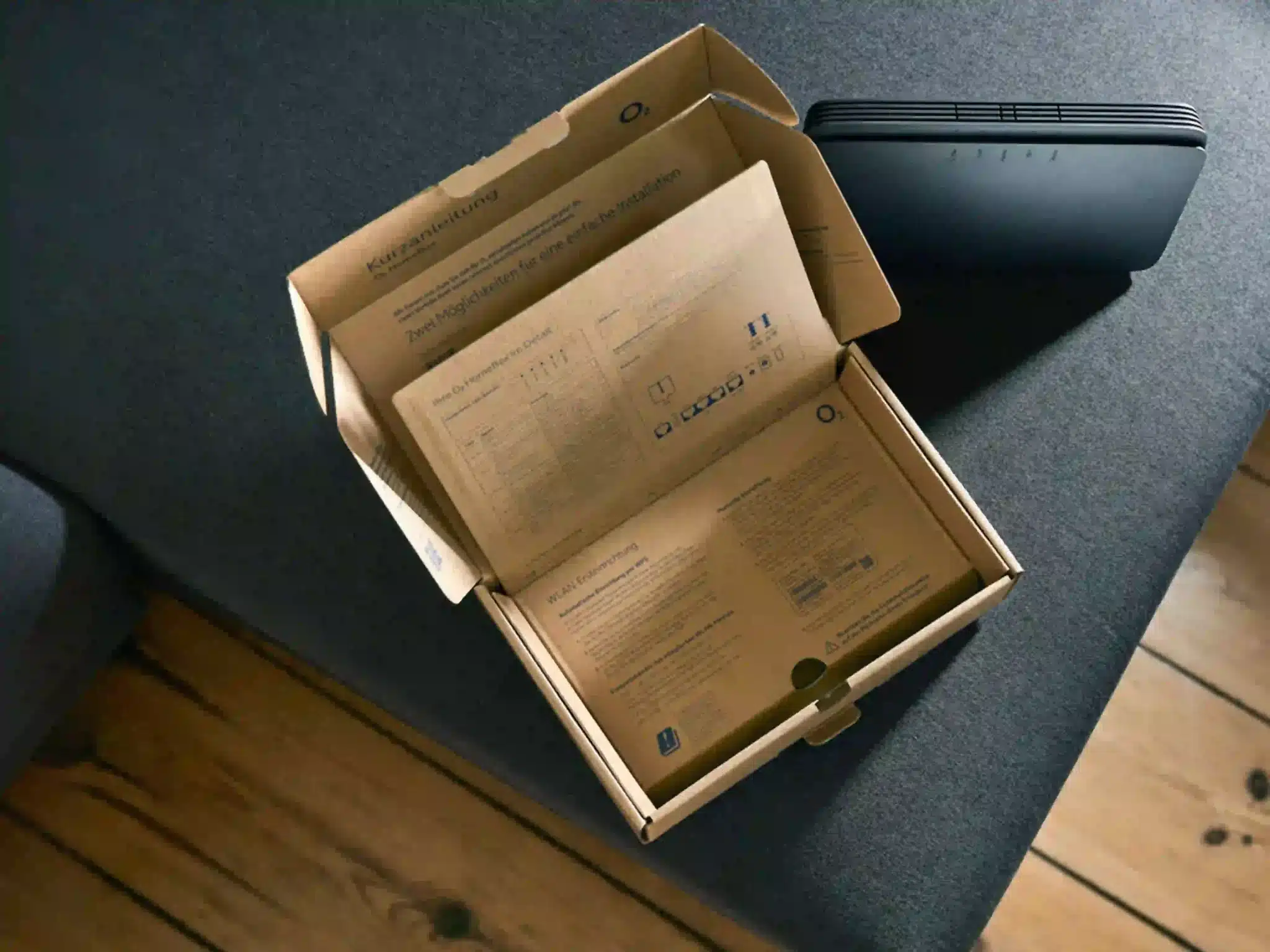
Recognition: German Packaging Award 2026, Design.
What the product image reveals
- The router pack has shipping-grade geometry rather than sitting inside an unseen outer carton.
- Installation graphics occupy the structural surfaces, replacing a separate leaflet.
- Braille is integrated without turning accessibility into a visual afterthought.
Technical reading. The pack is a Ships in Own Container format made from recycled corrugated board. The award jury reports 33% higher container utilisation. The gain comes from compact geometry and removal of the overbox and separate instructions.
Boundary: 33% higher container utilisation is not the same as 33% lower emissions. The climate result depends on actual loads, routes and transport modes.
Buyer takeaway: before specifying a new material, list every box, tray, leaflet and label. Removing one component usually creates a clearer, more defensible saving.
07 Opal Produce Punnet: Product Visibility Is Part of the Engineering Brief
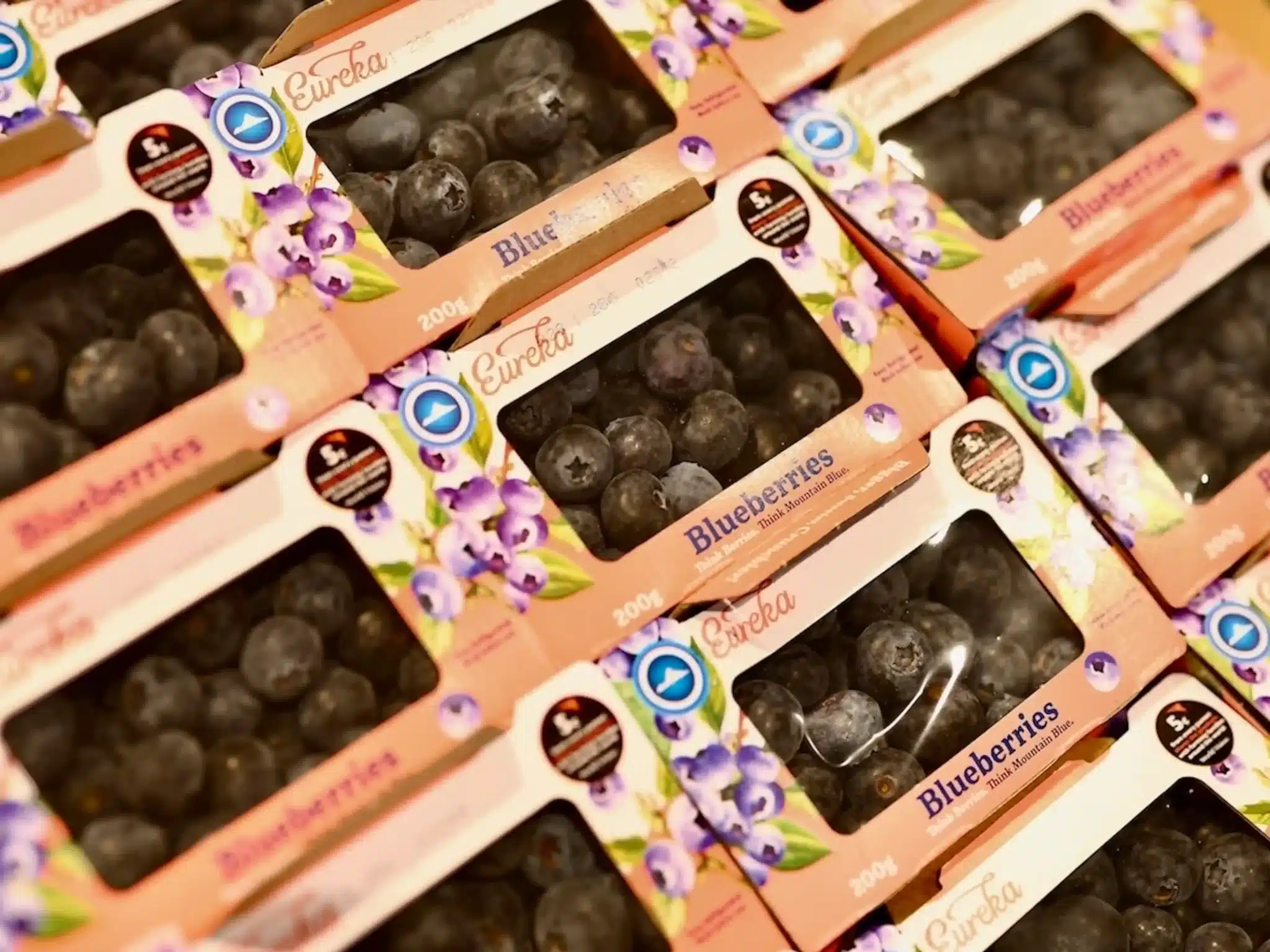
Recognition: WorldStar 2026, Fresh Fruits and Vegetables.
What the product image reveals
- The transparent top preserves the visual inspection shoppers expect from fresh produce.
- Ventilation is distributed through the tray instead of treated as an afterthought.
- The tapered form supports stacking and efficient empty-pack handling.
Technical reading. Opal combines recycled paperboard with transparent wood-pulp film. The format was trialled for two months in 34 Coles stores before a wider trial, indicating that cold-chain and retail handling were part of development.
Boundary: public sources do not clearly state whether the window must be separated or how both components are classified in every collection system.
Buyer takeaway: test pack ventilation and fruit damage together. Reducing packaging material is not useful if condensation or bruising increases food waste.
08 Everamid: Let the Reusable Object Carry the Luxury
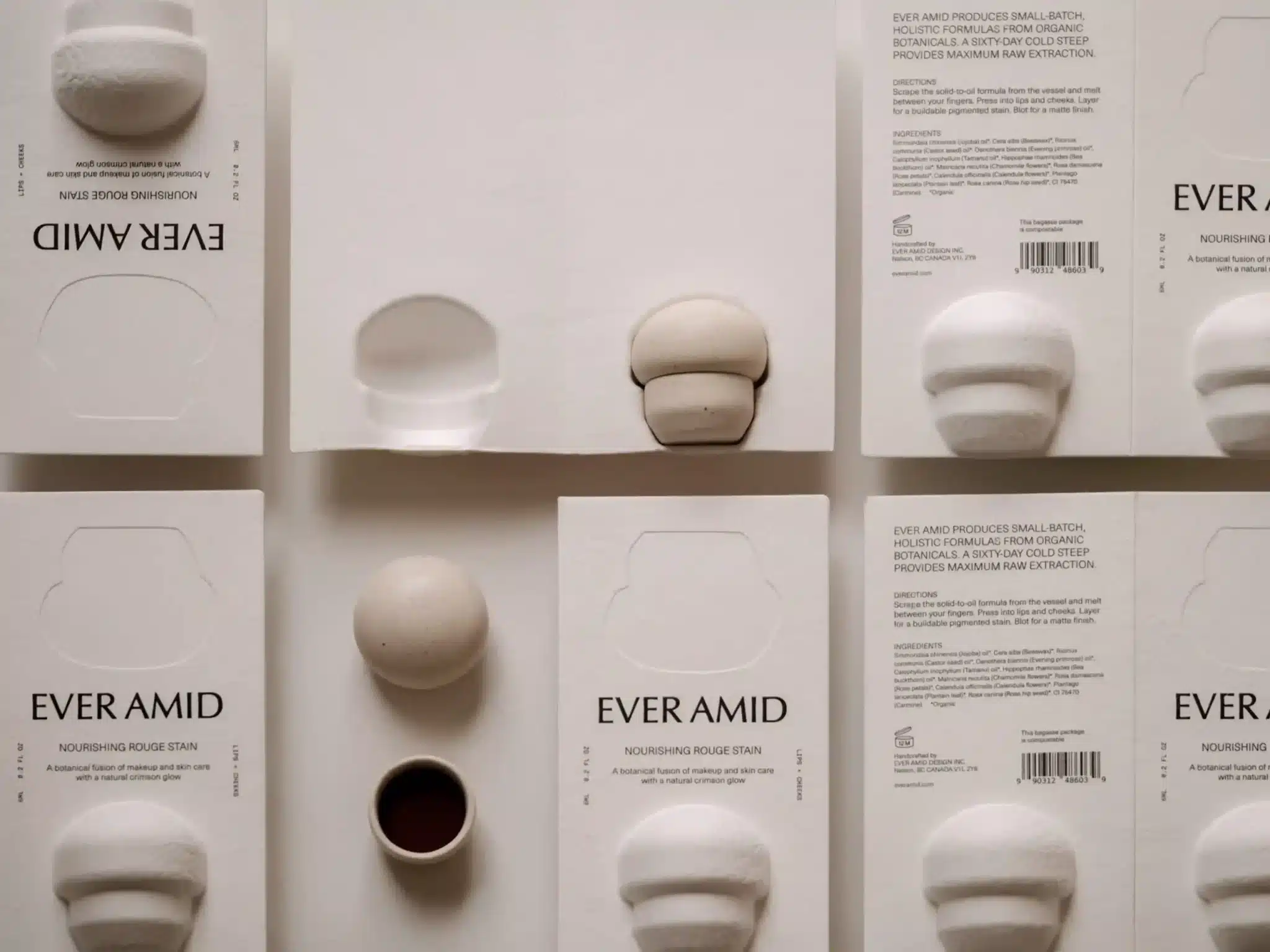
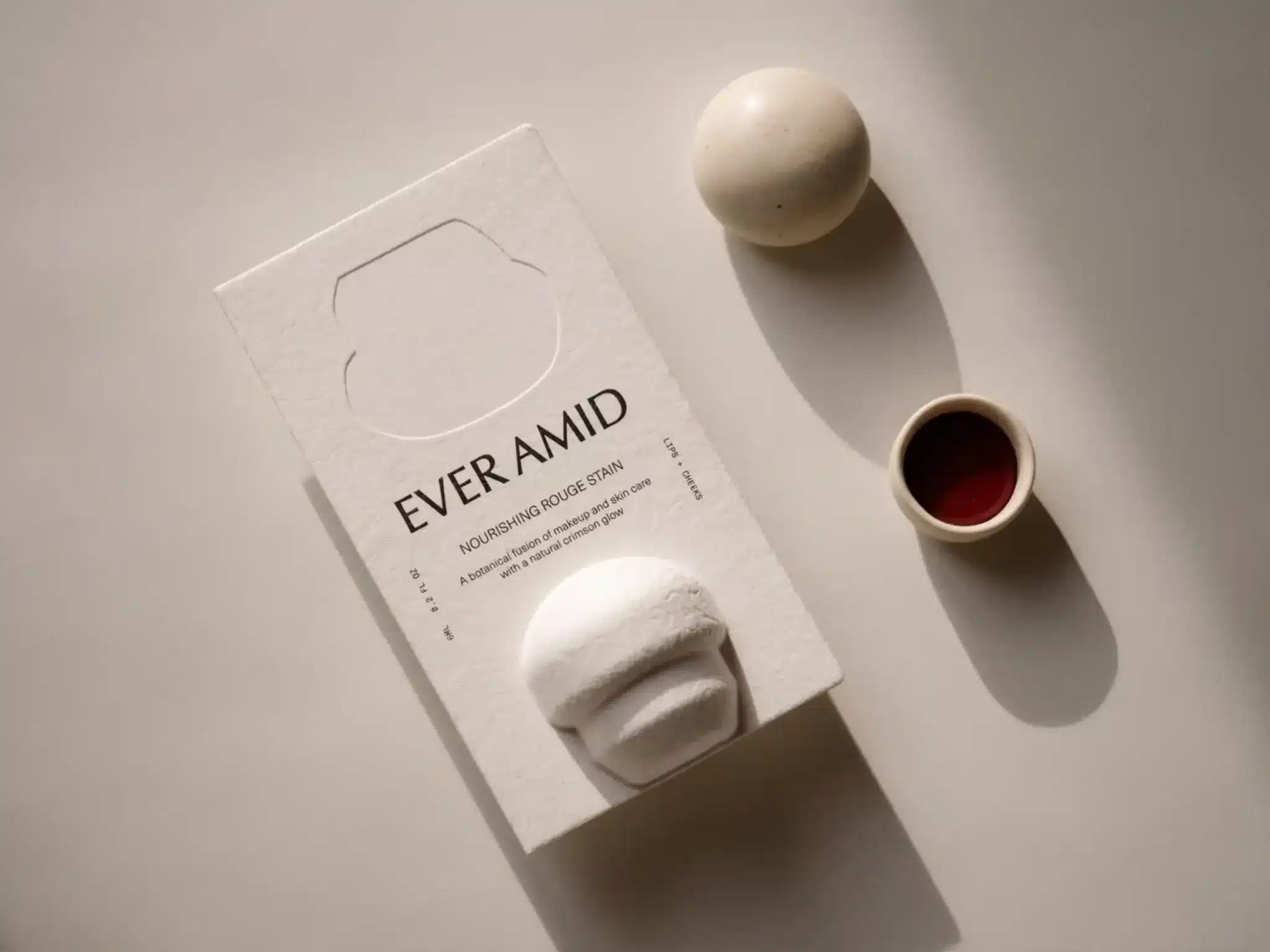
Recognition: DIELINE Plastic Free Innovation, 3rd Place.
What the product image reveals
- The rough molded shell and smooth porcelain vessel create the unboxing contrast.
- Protection follows the vessel closely rather than relying on multiple loose layers.
- The durable object has an obvious after-use role, which is stronger than a generic “keepsake box” claim.
Technical reading. Everamid shifts luxury value into a reusable porcelain component and uses molded bagasse as the protective outer shell. The design reduces visual complexity while preserving ceremony through material contrast.
Boundary: DIELINE describes the bagasse shell as compostable, but the public sources reviewed do not provide a named certification, disposal conditions or a full lifecycle comparison that includes porcelain firing and transport mass.
Buyer takeaway: define a real second use for the permanent component and request the exact compostability standard for the temporary one.
09 UGREEN One-Click: Treat Molded Paper as a Product Platform
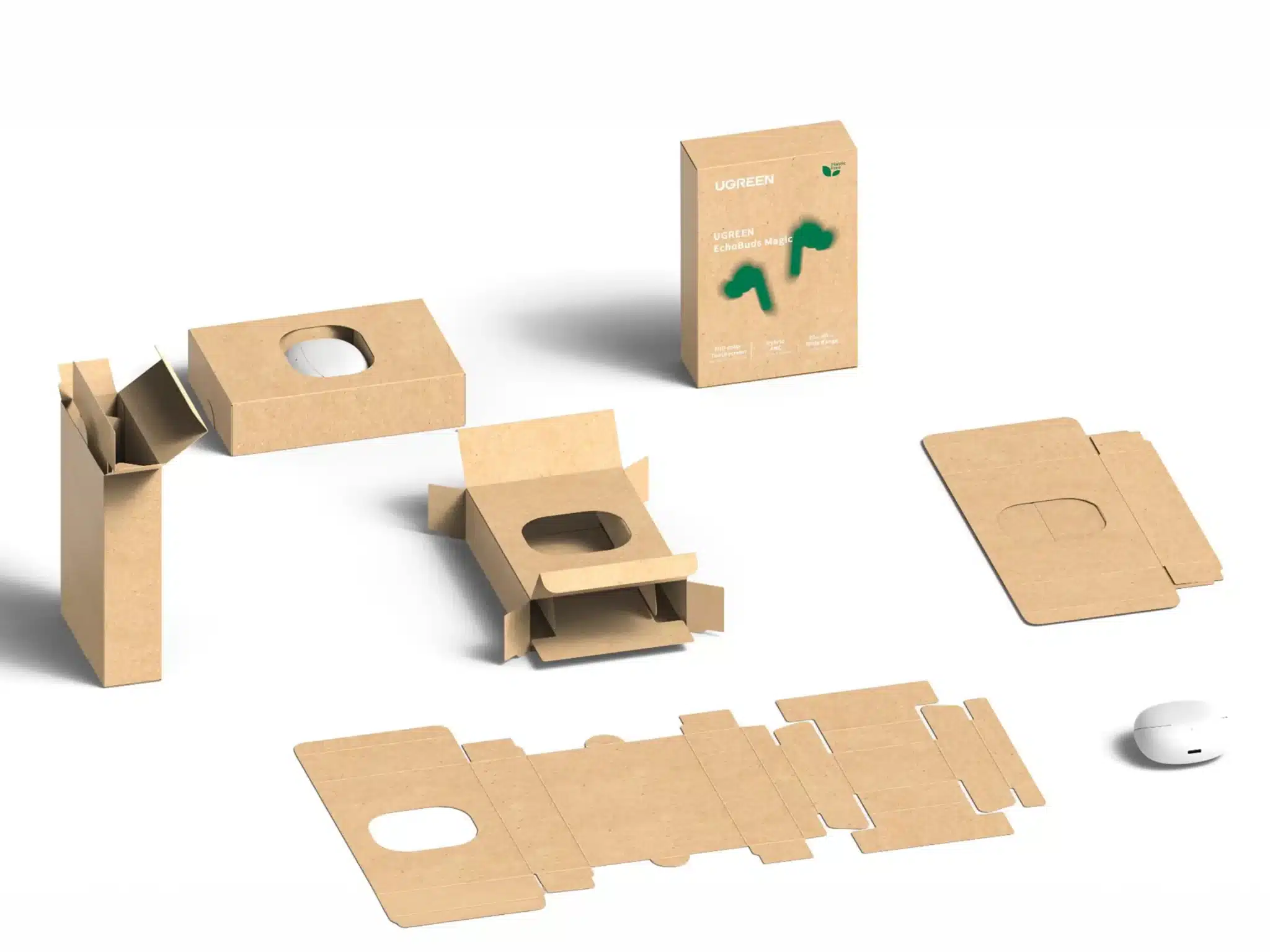
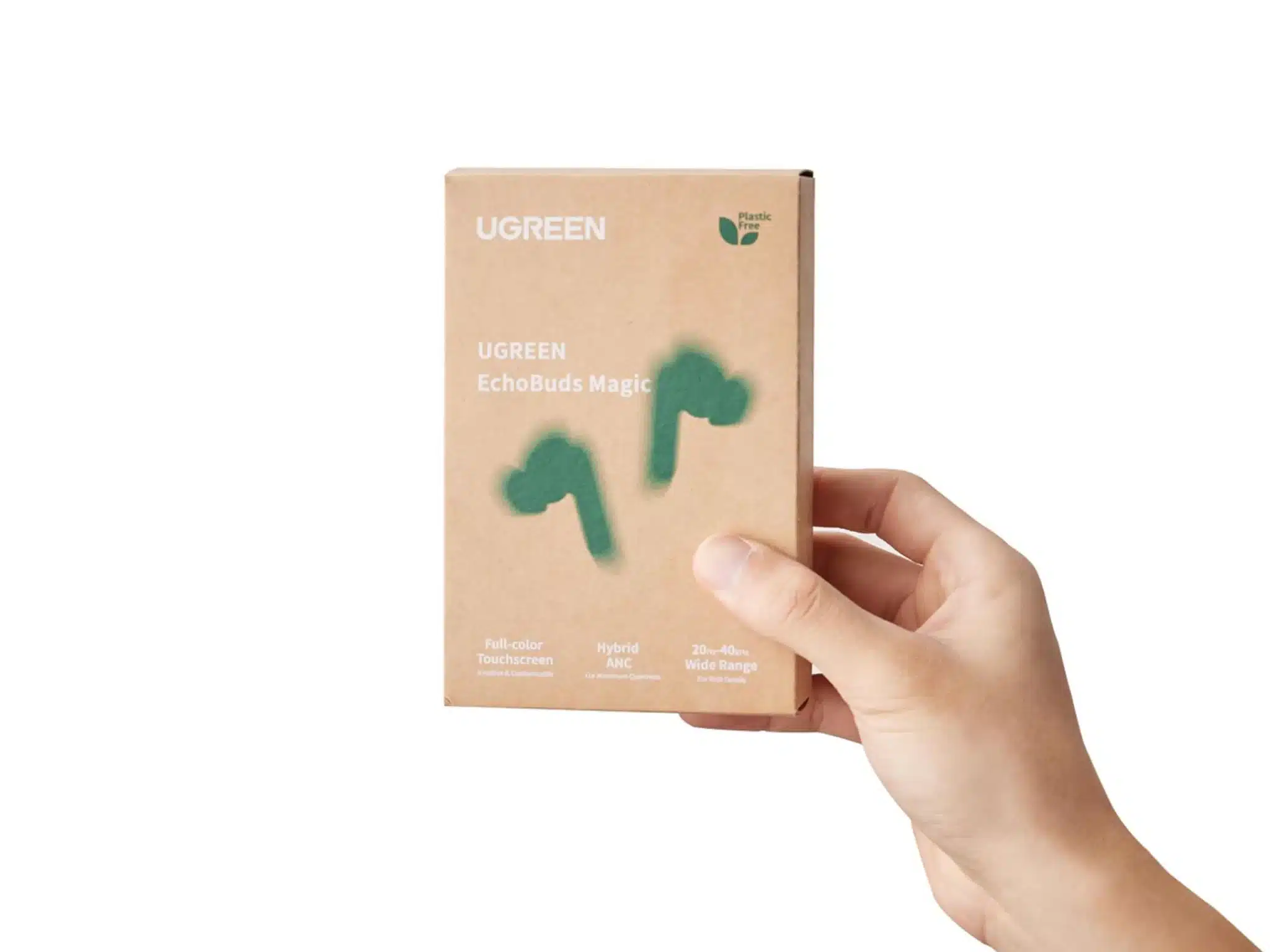
Recognition: iF DESIGN AWARD 2026.
What the product image reveals
- The device and accessories are organized within one molded form.
- Large radii and continuous surfaces suggest draft angles suitable for molded-fiber release.
- The removal gesture is designed into the tray instead of added through a plastic pull tab.
Technical reading. UGREEN uses a one-piece molded-paper inner support across an electronics packaging family. The important idea is repeatability: protection, opening and visual identity become a shared platform rather than a one-off insert.
Boundary: the iF page claims lower labour and transport costs but publishes no baseline, percentage, pack weight, drop-test result, tooling data or production speed.
Buyer takeaway: request dimensional tolerance, drop, vibration, humidity, scuff and compression data. Molded paper is sensitive to recipe, tooling and ambient conditions.
10 EHT Headset Air Purifier: Cushioning That Becomes a Product Stand
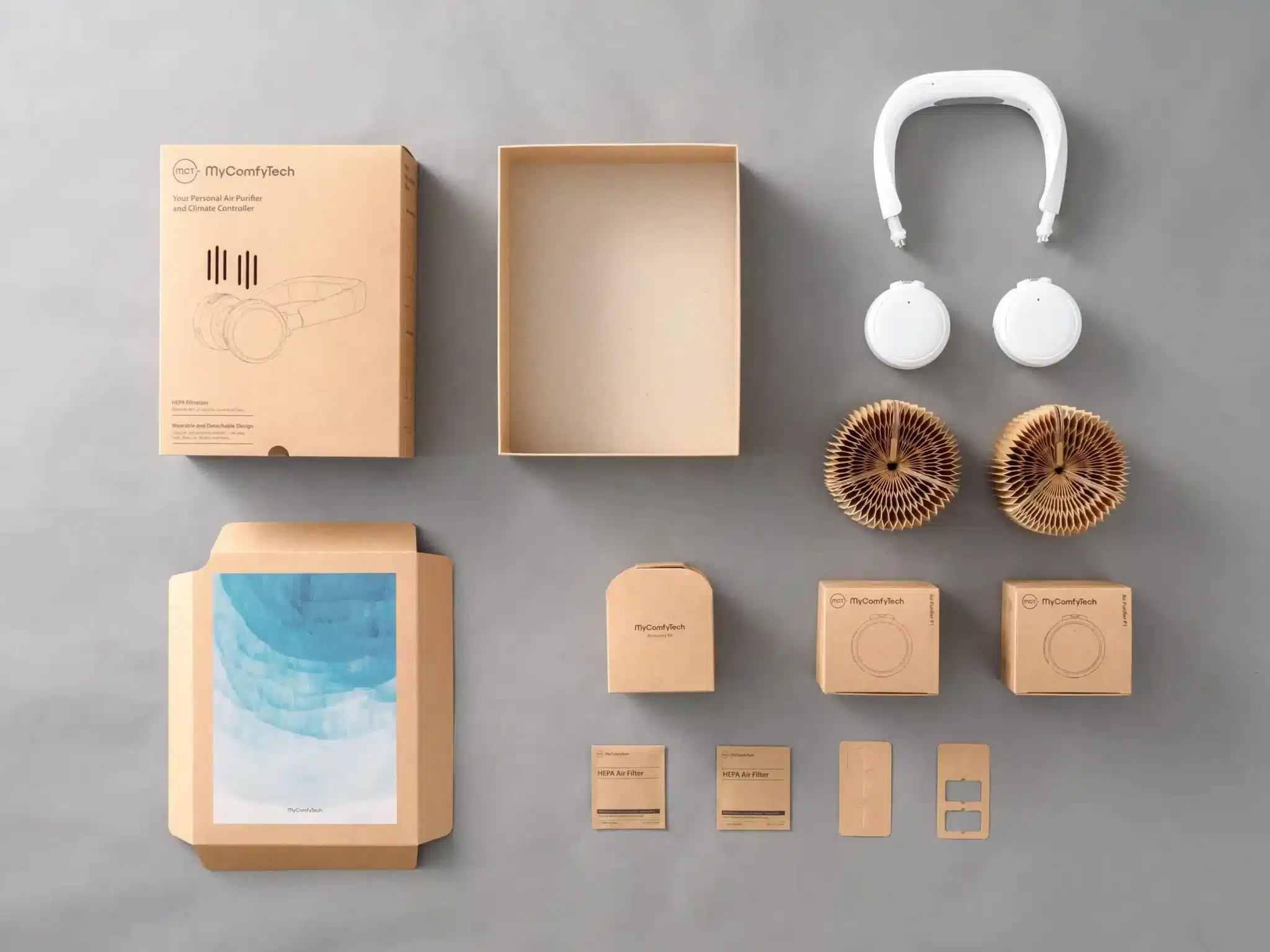
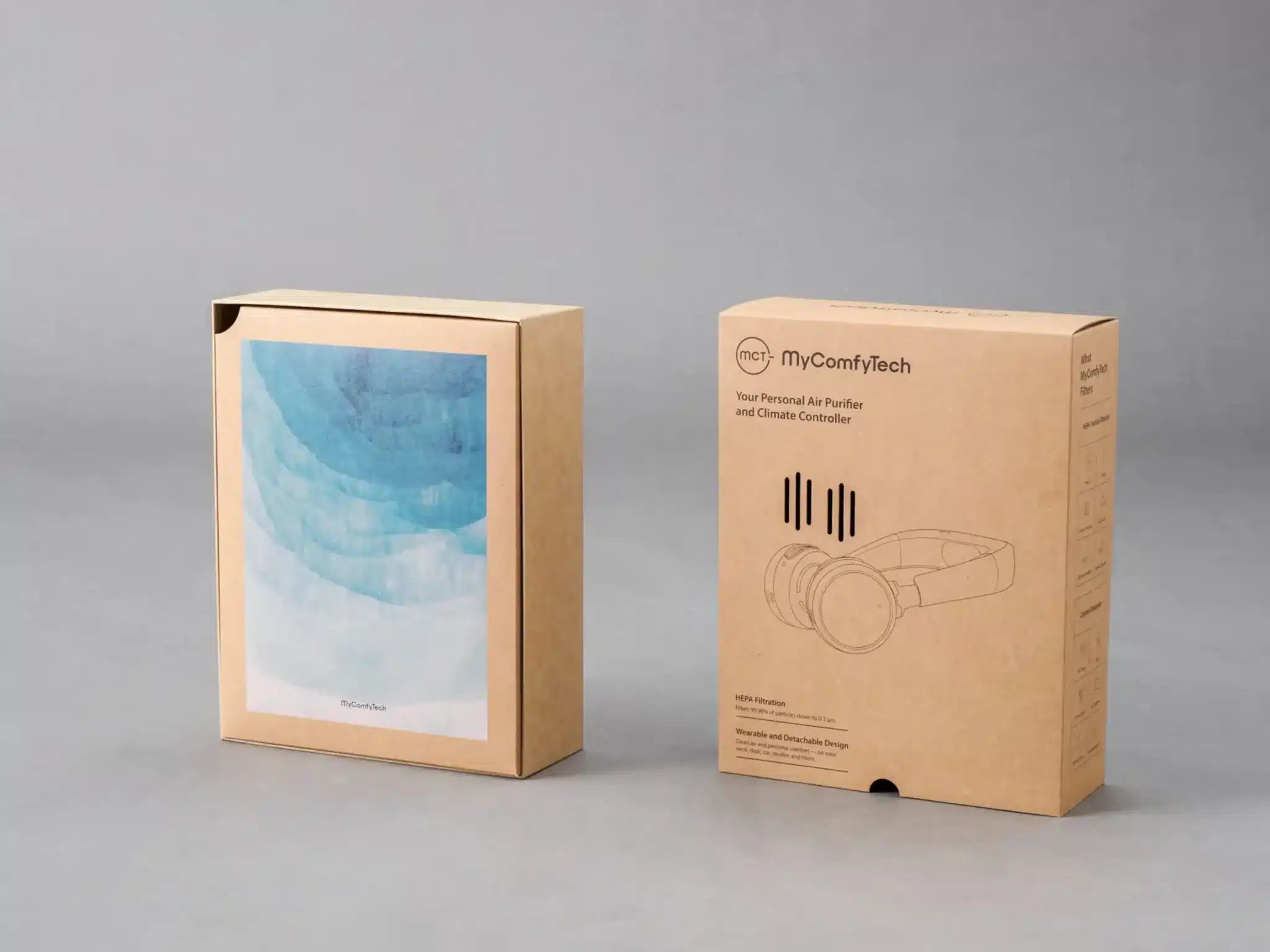
Recognition: DIELINE Awards 2026, Sustainable Design—Home, Shopping & Other Markets, Merit.
What the product image reveals
- The U-shaped honeycomb-paper cushion follows the headset geometry instead of filling the box with unrelated blocks.
- After opening, the expandable paper structure forms two donut-shaped stands that support the detachable purifiers on a desk.
- The semi-arched lid, turbine-like paper cushions and central accessory box organize the device, filters, clips and cable without hiding how the system works.
Technical reading. Zenpack merged protective cushioning with a product accessory. Honeycomb paper absorbs shock around the U-shaped neck area during transit, then expands into adjustable stands that let users direct airflow when the purifier modules are used on a desktop. This extends the useful life of a component that would normally be discarded immediately after unboxing.
Boundary: the public project feature does not provide drop, vibration or compression results, the exact paper grade, coatings and adhesives, quantified packaging-volume reduction, or verified evidence that users keep and use the stands.
Buyer takeaway: design the second function before finalizing the protective structure, then test it twice—as transit cushioning and as a customer-facing accessory. Also confirm whether clips, assembly steps and added material create more value than a simpler recyclable insert.
Official DIELINE Awards 2026 gallery · DIELINE project feature
What the Ten Designs Reveal
Structure beats surface claims
The Fiber Box, ZERO-glue and o2 HomeBox 4 remove or combine functions. Their value is visible in geometry, not a sustainability badge.
Reuse needs a behavioral reason
Fussy and Everamid make the long-life component desirable. The unresolved metric is how long people actually keep using it.
Protection belongs in the claim
KIND, Opal and the Fiber Box show why shelf life, moisture and transit damage must be measured alongside material change.
Packaging can continue working after unboxing
EHT turns a protective paper cushion into adjustable purifier stands. The lesson is not to add a novelty second use, but to make the next function immediate, relevant to the product and easy to understand.
Top 10 Comparison
| Project | Main material system | Design mechanism | Best evidence available | Main open question |
|---|---|---|---|---|
| Fiber Box | Molded wood fiber and hemp | Cold-chain protection plus nesting | Named climate test conditions and commercial use | Independent test report and local paper acceptance |
| Fussy | PET/ABS dispenser and aluminium refill | Durable interface plus replaceable consumable | Documented material architecture | Verified cycles and refill adoption |
| KIND | Paper-based flexible wrapper | Material transition within familiar geometry | Retail pilot and How2Recycle pre-qualification | Barrier details and shelf-life economics |
| ZERO-glue | Corrugated board | Integrated lock replaces tape | Official iF Gold project description | Transit tests and packing speed |
| Honeysticks | Paperboard, kraft paper and selected tins | Portfolio-wide plastic elimination | Top DIELINE recognition and project description | SKU-level bill of materials |
| o2 HomeBox 4 | Recycled corrugated board | SIOC plus printed setup guidance | On-market status and 33% higher container utilisation | Route-specific emissions effect |
| Opal Punnet | Recycled paperboard and wood-pulp film | Visibility, ventilation and cold-chain protection | 34-store trial followed by wider trial | Window separation and market acceptance |
| Everamid | Porcelain and molded bagasse | Reusable object plus close-fit protection | Material and structural description | Composting certification and full LCA |
| UGREEN | One-piece molded-paper insert | Shared electronics-packaging platform | Official project page and 2026 launch | Protection, tooling and cost data |
| EHT Headset Air Purifier | Honeycomb paper and paperboard | Protective cushioning converts into two adjustable desktop stands | Official DIELINE Merit record and project feature | Transit testing, quantified reduction and verified stand reuse |
The projects solve different problems. No responsible comparison can turn these mechanisms into one universal “most sustainable” score without complete, comparable lifecycle data.
Materials and End-of-Life Conditions
| Claim | What it means here | Condition that must be checked |
|---|---|---|
| Recyclable fiber packaging | A possible paper-recycling route | Coatings, contamination, fiber yield and local mill acceptance |
| Refillable packaging | A durable component accepts replacement product units | Verified life, refill availability, leakage, cleaning and user adoption |
| Paper-based flexible packaging | Paper is the dominant visible substrate | Barrier composition, repulpability and local collection rules |
| Plastic-free packaging | The award entry reports no conventional plastic component | Labels, coatings, adhesives, windows and closures must be checked by SKU |
| Compostable packaging | A material may disintegrate under defined composting conditions | Named standard, certification, industrial or home route and local access |
| Reusable paper cushioning | Protective honeycomb paper is designed to become a functional product stand | Transit performance, paper grade, coatings, clips, assembly and actual reuse |
Questions to Put in the Supplier Brief
Material
Request the full bill of materials, recycled-content calculation, coating, adhesive, ink, label, liner and food-contact status.
Protection
Define drop, vibration, compression, humidity, leakage, cold-chain, shelf-life and tamper-evidence requirements before choosing the substrate.
Manufacturing
Confirm tooling, tolerance, line speed, reject rate, manual assembly, pack-out density and compatibility with current filling equipment.
End of life
Specify the target markets, collection stream, required separation, consumer instruction and evidence supporting each environmental claim.
Research Scope and Award Status
Research cutoff: August 5, 2026. The ranking uses innovation, evidence quality, material efficiency, protection, manufacturability, scalability, brand experience and buyer relevance. It is an editorial selection, not a lifecycle assessment ranking.
| Award | Status at cutoff | Editorial treatment |
|---|---|---|
| DIELINE Awards 2026 | Results published | Exact placements and special honors used; Merit not treated as a category win |
| WorldStar 2026 | 234 winners published | Official winner status separated from entrant or manufacturer claims |
| iF DESIGN AWARD 2026 | Winner pages published | Only ZERO-glue is described as Gold |
| German Packaging Award 2026 | 36 standard winners published | o2 HomeBox 4 is not described as Gold before the November result |
| Pentawards 2026 | Shortlist only | No shortlisted project is presented as a winner |
DIELINE results · WorldStar results · iF winner overview · German Packaging Award · Pentawards shortlist
The Practical Conclusion
Do not copy the winning appearance. Copy the discipline behind it: identify the product risk, remove unnecessary components, make the interaction obvious and demand evidence for the exact market and supply chain.
For paperboard, molded pulp and molded-fiber projects, begin the supplier conversation with product dimensions, distribution conditions, required tests, target disposal route and approved claim language. Related GVPAK guides cover molded pulp packaging trends, molded pulp fundamentals and EPR-ready packaging design.